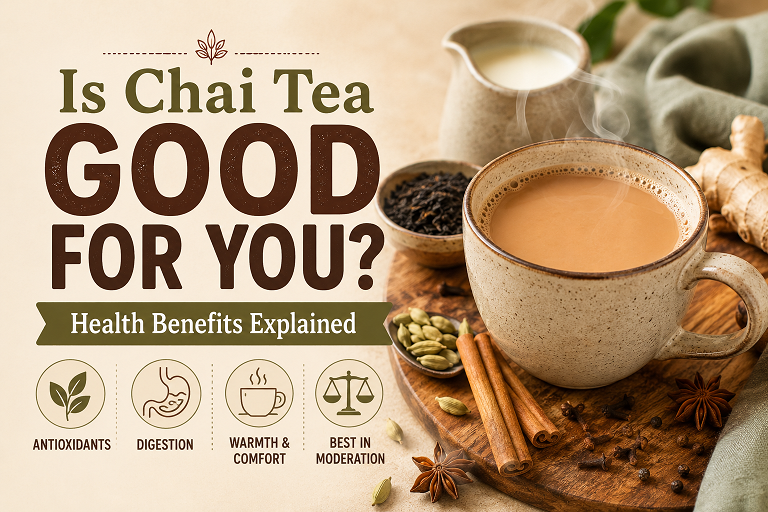
Yes — with reasonable caveats. Chai contains several ingredients with genuinely studied health properties: black tea’s antioxidants, ginger’s anti-inflammatory and digestive effects, cardamom’s digestive properties, cinnamon’s blood sugar associations, and cloves’ high antioxidant content. The evidence is stronger for some ingredients than others. Where chai falls short of some health claims is in the sugar and calorie content of sweetened, milky preparations — and the fact that some benefits seen in lab studies don’t translate directly to a cup of tea. Below is an honest ingredient-by-ingredient breakdown.
A Drink With Real Ingredients — Not Just a Flavored Tea
One thing that makes chai genuinely different from many other tea drinks is that it isn’t just tea — it’s a combination of black tea with whole spices that each have their own properties. Cardamom, ginger, cinnamon, and cloves aren’t added to chai purely for flavor (though they contribute significantly to it). They’ve been used in South Asian culinary and wellness traditions for centuries, and modern research has investigated many of them.
The honest picture: some of the benefits associated with chai ingredients are well-supported by research, some are promising but require more study, and some popular claims stretch further than the evidence currently justifies. Here’s the ingredient-by-ingredient breakdown.
What’s Actually in Chai — Ingredient by Ingredient
Black Tea
Strong evidenceRich in polyphenols — particularly theaflavins and thearubigins — which are antioxidant compounds studied for cardiovascular, metabolic, and anti-inflammatory effects. Black tea is one of the most well-researched tea types globally.
Ginger
Strong evidenceOne of the most researched spices. Gingerols and shogaols — active compounds in ginger — have well-documented anti-inflammatory, antinausea, and digestive properties backed by multiple clinical studies.
Cardamom
Moderate evidenceContains antioxidants and has traditional use as a digestive aid. Some studies show promising effects on blood pressure and digestive comfort, though research is less extensive than for ginger or cinnamon.
Cinnamon
Moderate evidenceStudied for potential effects on blood sugar regulation and insulin sensitivity. Research results are mixed — some studies show meaningful effects, others are less conclusive. Anti-inflammatory properties also studied.
Cloves
Moderate evidenceAmong the highest antioxidant content of any spice. Eugenol, the main active compound in cloves, has anti-inflammatory and antimicrobial properties in lab studies, though clinical evidence in humans is less developed.
Black Pepper (optional)
Early-stage evidencePiperine, the active compound in black pepper, has been studied for its role in enhancing bioavailability of other compounds — potentially making the other spice benefits more effective when pepper is present.
The Evidence-Based Benefits
1. Antioxidant Properties
Black tea’s polyphenols are genuine antioxidants — compounds that help neutralize free radicals associated with cellular damage and aging. Multiple observational studies have linked regular black tea consumption to cardiovascular and metabolic health markers, though the strength of this association varies across populations and studies.
2. Digestive Support
This is probably chai’s most reliably supported functional benefit, driven primarily by ginger. Research on ginger and digestion is extensive — it has been shown to accelerate gastric emptying, reduce nausea (including pregnancy-related nausea and motion sickness), and reduce bloating and digestive discomfort in multiple clinical trials. Cardamom also has traditional and some clinical support as a digestive aid.
3. Anti-Inflammatory Properties
Several of chai’s spices — ginger, cinnamon, cloves, and cardamom — contain compounds with demonstrated anti-inflammatory properties in laboratory research. Chronic inflammation is associated with a wide range of conditions, and while a daily cup of chai isn’t a treatment, habitual consumption of anti-inflammatory compounds as part of a balanced diet is consistent with general wellness recommendations.
4. Moderate Caffeine With Sustained Energy
Chai’s caffeine content — roughly 25-50mg per cup — is lower than coffee’s (80-100mg) but provides a real alertness effect. Black tea also contains L-theanine, an amino acid that works synergistically with caffeine to produce a more sustained, less jittery alert state than coffee alone. We cover this in more detail in our chai vs coffee comparison.
Where the Claims Go Too Far
Claim: “Chai boosts metabolism and aids weight loss”
Some studies show mild metabolic effects from black tea polyphenols and certain spices, but the effect sizes are small and generally not clinically significant when chai is consumed as a normal sweetened drink. Sweetened chai with whole milk adds real calories that easily offset any minor metabolic effect.
Claim: “Chai prevents or treats specific diseases”
No — the research on chai’s ingredients involves potential risk reduction and general wellness properties, not treatment or prevention of specific conditions. Viewing chai as part of a healthy diet is reasonable; viewing it as medicine for a specific condition is not supported by current evidence.
Claim: “Chai lattes are healthy”
A traditional home-brewed chai (moderate sugar, whole milk, real spices) is quite different from a coffeehouse chai latte, which is often made from a heavily sweetened concentrate and can contain 40-50g of sugar per serving. The health properties discussed above apply to home-brewed chai with real spices, not to sweetened concentrate-based drinks.
Caffeine Content — Chai vs Coffee vs Green Tea
| Drink | Caffeine per 8oz cup | Notes |
|---|---|---|
| Drip coffee | 80–120mg | Highest common source; varies by brew strength and bean |
| Espresso (1 shot) | 60–80mg | Small volume, high concentration |
| Black tea / chai base | 25–50mg | Varies by brewing time and tea type; longer boil extracts more |
| Green tea | 20–45mg | Comparable to black tea; varies widely by type |
| Herbal tea | 0mg | Typically caffeine-free |
How to Make Chai That Maximizes Benefits
If you’re making chai specifically with health in mind, a few adjustments to the standard recipe can help:
- Use whole spices rather than powders. Whole spices release their compounds more gradually during the boiling process, and many of the beneficial compounds in spices are better preserved in whole form before use.
- Include ginger generously. Ginger has the strongest research support of any chai spice — using a full inch of fresh ginger rather than a small sliver is a meaningful difference.
- Reduce sugar or switch to natural sweeteners. Sweetened chai is delicious, but reducing added sugar improves the nutritional profile significantly. Honey or a smaller amount of sugar achieves a pleasant sweetness without the full calorie impact.
- Consider less milk or plant-based options. A higher tea-to-milk ratio means more polyphenol content per cup. Some research also suggests that casein in dairy milk may bind to some tea polyphenols and slightly reduce their absorption, though the evidence on this is mixed.
The Bottom Line
Chai made with real whole spices is a genuinely health-supportive drink — not a cure, not a supplement, but a beverage with more going for it nutritionally than most hot drinks. The recipe in our masala chai guide uses whole spices and gives you full control over sugar and milk content, which is where the most meaningful health adjustments live. For a focused look at one of chai’s most potent spices, see our full cardamom health benefits guide.
Curious which chai style suits you best?
Take our quick personality quiz and find your chai match.
Frequently Asked Questions
Is chai tea good for you?
Chai tea contains several ingredients with studied health properties — black tea is rich in antioxidants called polyphenols, ginger has well-documented anti-inflammatory and digestive properties, and spices like cardamom, cinnamon, and cloves each have associated benefits in research studies. Consumed in moderation as part of a balanced diet, chai is a reasonable choice with genuine nutritional value. However, the sugar and milk content in many preparations adds calories, and some health claims about chai go beyond what current research reliably supports.
Does chai tea have antioxidants?
Yes — black tea, which forms the base of most chai varieties, contains polyphenols including theaflavins and thearubigins, which are antioxidant compounds. These are the same class of compounds found in green tea, though the specific types differ due to the oxidation process that produces black tea. The spices in chai — particularly cloves, cinnamon, and cardamom — also contain antioxidant compounds.
Is chai good for digestion?
Several of chai’s core ingredients have properties relevant to digestion. Ginger has been studied for its effects on nausea, gastric emptying, and digestive comfort, with reasonably strong research support. Cardamom has traditional use as a digestive aid and some supporting research. Black tea also contains tannins that can have astringent effects on the gut. Overall, chai is widely associated with digestive support, though the strength of this effect varies by individual and by how much of each spice is used.
How much caffeine is in chai?
A typical cup of chai made with black tea contains roughly 25-50mg of caffeine, compared to approximately 80-100mg in a standard cup of drip coffee. The exact amount varies depending on the strength of the tea used, how long it’s brewed, and the ratio of tea to water and milk. Chai generally has less caffeine than coffee but more than most herbal teas.