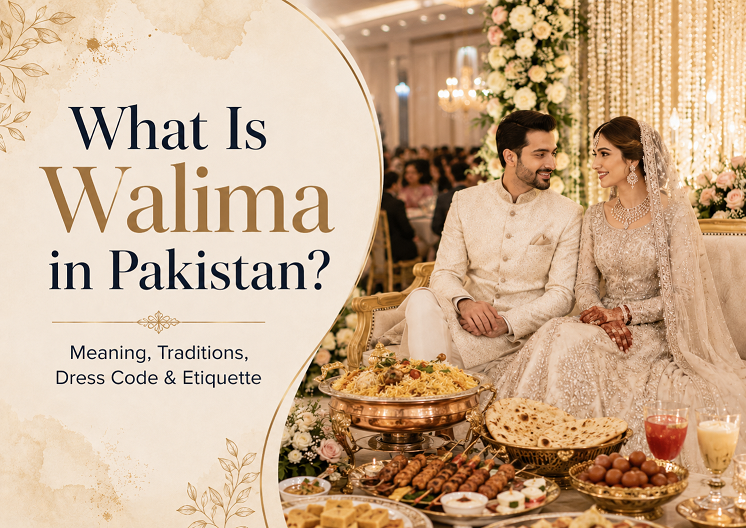
Walima in Pakistan is the marriage feast or reception traditionally associated with the groom’s side. Relatives, friends and other invited guests gather to congratulate the couple and share a meal. It is connected with Muslim marriage tradition, but the venue, clothing, menu and size of the celebration vary considerably.
A Walima is not the Nikah, which is the marriage contract and ceremony. It is also different from Baraat, the groom’s wedding party or arrival, and Rukhsati, the bride’s farewell. If your invitation says “Walima,” you are normally being invited to the reception rather than to witness the marriage contract.
This guide explains the meaning, what guests can expect, what to wear, gift etiquette and practical planning questions. It describes common Muslim Pakistani practices, not the wedding traditions of every religious community in Pakistan or a fixed formula followed by every family.
Meaning and religious context · What happens · Dress code · Gifts · Food · Planning and costs
What does Walima mean?
Walima, also written walimah or waleema, refers to a marriage feast. In Pakistani usage, the word commonly identifies the reception associated with the groom’s side after the marriage. The emphasis is on celebrating and offering hospitality, rather than repeating the Nikah.
For someone attending from the United States, the closest everyday comparison is a wedding reception. That comparison helps explain the meal and congratulations, but it does not mean the event will follow a familiar American reception program with speeches, a first dance, cake cutting or a bar.
What is its religious significance?
The Walima has a basis in Islamic tradition. Sahih al-Bukhari 6386 records encouragement to hold a wedding banquet. It supports understanding Walima as a marriage feast, without establishing a requirement for a hotel, elaborate stage or expensive outfit.
Hospitality should not become a way to measure guests by wealth. Sahih al-Bukhari 5177 includes criticism of wedding feasts that invite the rich while leaving out the poor. For hosts, that is a useful reminder to think about inclusion rather than only appearance.
Detailed questions about religious rulings, timing or a particular family’s circumstances should be discussed with a qualified scholar familiar with the relevant tradition. This article is a cultural and practical guide, not an individual religious ruling.
Walima, Nikah, Baraat and Rukhsati: the differences
| Term | Main meaning | Practical distinction |
|---|---|---|
| Nikah | Muslim marriage contract and ceremony | The marriage ceremony, not simply a reception meal. |
| Baraat | The groom’s wedding party or arrival | Also used conversationally for the celebration receiving that party. |
| Rukhsati | The bride’s farewell and departure | A family occasion that may occur separately from the Nikah. |
| Walima | Marriage feast or reception | A celebration of the marriage, traditionally associated with the groom’s side. |
The words are related, but they are not interchangeable. A couple may hold their Nikah earlier and arrange larger celebrations later. Guests do not need to investigate private arrangements to understand which invitation they have received.
For the complete sequence, including Mehndi and smaller pre-wedding gatherings, see our guide to Pakistani wedding traditions. Here, the focus stays on the Walima itself.
When does a Walima happen?
A Walima often follows the main wedding celebrations, sometimes on the next day and sometimes later. Venue availability, travel and the family’s religious understanding can affect the arrangements. There is no single guest-facing calendar that describes every Pakistani wedding.
Follow the date and time on your invitation rather than assuming “Walima” means the evening after Baraat. If you are travelling, confirm the exact venue, city and local time before booking transport or accommodation.
Do not infer anything about the couple’s private life from the date of the reception. A guest’s role is to celebrate with them, not to ask intrusive questions about the interval between Nikah, Rukhsati and Walima.
Who hosts and pays for Walima?
In Pakistani custom, the groom or his family traditionally hosts the Walima. That describes a familiar arrangement, not a reliable account of who paid for a particular event. Some couples pay themselves, some families share expenses, and others combine arrangements.
Hosts should discuss contributions, guest numbers and spending limits directly. Agreeing who is responsible for the venue, catering and payments prevents misunderstandings that a traditional label cannot resolve.
For guests, the hosting names on the invitation help identify whom to greet and contact. They are not an invitation to question the family about its finances or compare what each side contributed.
What happens at a Pakistani Walima?
A reception may take place in a family home, restaurant, community space, banquet hall, hotel, marquee or outdoor venue. The setting changes the practical arrangements, but guests are generally there to offer congratulations and share food.
Arrival and welcome
Family members or venue staff may welcome guests and direct them to tables. There may be assigned seating, open seating or separate areas. Ask a host if you are unsure rather than assuming you can move reserved chairs or enter every section.
Arrive for the time given. Delays are possible at any large event, but deliberately turning up late can mean missing the couple’s arrival or meal. If there are separate arrival and dinner times, use them to plan your visit.
Meeting the couple
The couple may greet guests from a stage, visit tables or mingle more informally. Follow the queue for congratulations and photographs. Keep your greeting warm and reasonably brief when others are waiting.
A simple “Congratulations to you both” is appropriate. “Shaadi mubarak,” meaning congratulations on the wedding, is another familiar option. You do not need to memorize a formal speech or religious phrase to express goodwill.
The meal and social time
Food may be served at tables, through a buffet or in another arrangement suited to the venue. Wait for the hosts or staff to invite guests to eat. If someone at your table needs help reaching the buffet, offer assistance without making assumptions about what they want.
There may be prayers, announcements or entertainment, but none should be assumed from the word Walima alone. Music, dancing, speeches and cake cutting depend on the family. Do not expect alcohol or bring it as a gift without explicit guidance from the hosts.
Leaving politely
If practical, thank the hosts before leaving. You do not have to remain until the very last photograph, particularly if you have a long journey or other commitments. A brief goodbye to an available family member is better than interrupting an important moment.
What should guests wear to Walima?
Start with the invitation’s dress code, the venue and the hosts’ preferences. Modest formal or semi-formal clothing is a useful starting point for many receptions, but a small daytime meal may be less dressy than an evening banquet.
Outfit options for women
A formal shalwar kameez, a suitably styled long dress, saree or lehenga may work. Choose the outfit’s level of embellishment to suit the gathering rather than assuming every Walima calls for a heavily embroidered ensemble.
If you are unfamiliar with South Asian clothing, ask a friend or the host whether an outfit you already own is suitable. A well-chosen long dress can be more comfortable and appropriate than buying an elaborate outfit without understanding how to wear it.
Outfit options for men
A suit or formal shalwar kameez with an optional waistcoat can be suitable. A sherwani or other traditional formal outfit may also fit the occasion, particularly for close relatives, but it is not compulsory for every guest.
Pay attention to fit, clean shoes and the weather. An outdoor reception and a strongly air-conditioned banquet hall present different comfort needs. You do not need to dress like the groom to look respectful.
Are there colors to avoid?
There is no universal Pakistani Walima rule that bans all guests from wearing white, black or red. Follow a stated theme and avoid an outfit that closely imitates the bride’s full bridal styling. When uncertain, send the host a photograph instead of relying on a blanket internet rule.
Brides may choose pastels, jewel tones, ivory, gold or other colors. Grooms may choose a suit or traditional clothing. These are personal styling decisions, not measures of whether the reception is culturally correct.
Do guests need to cover their heads?
A banquet-hall reception is not automatically subject to the same expectations as a mosque visit. Ask about the setting and family preferences. If the invitation includes a religious venue or ceremony, confirm its clothing and footwear arrangements separately.
Walima gifts and cash-envelope etiquette
Cash in an envelope is a familiar wedding gift in many Pakistani families. Physical gifts, a registry contribution or no gifts may also be appropriate, depending on what the couple requests. The invitation or a close mutual contact is a better guide than a universal gift list.
Money given as a wedding gift or blessing may be called salami. It is not the same as mahr, the bridal due associated with the marriage contract. Guests are not responsible for the couple’s mahr arrangements.
How much money should you give?
There is no fixed minimum amount that applies to every Walima. Consider your relationship with the couple, your budget and the family’s practice. You do not need to match the price of the meal, imitate a wealthier guest or borrow money to attend respectfully.
If you already gave a wedding gift at another function, a second gift is not automatically required. Ask privately if you are genuinely unsure. A thoughtful note and warm congratulations still matter.
How should you present the gift?
Write your name on the envelope or accompanying card and give it to the couple or the designated gift collector. Avoid leaving money on an unattended table. For a physical gift, consider whether the couple will have to transport it across cities or countries.
Do not photograph another person’s gift amount or discuss it publicly. If the hosts request no gifts, respect that request rather than creating a public display they have asked to avoid.
Walima food: what might be on the menu?
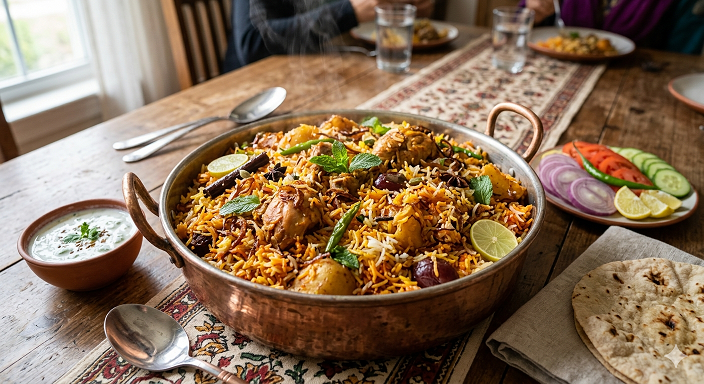
Menus vary by family preference, location, caterer, budget and applicable local restrictions. Possible dishes include biryani or pulao, qorma, karahi, kebabs, naan, raita and desserts such as kheer or gulab jamun. Not every reception serves all of these.
If the names are unfamiliar, our beginner’s guide to Pakistani cuisine explains common dishes. You do not need to know every recipe before attending; ask what something contains and start with a small serving.
Dietary requirements and allergies
Tell the hosts about significant dietary needs before the day and confirm ingredients with the caterer when necessary. Do not assume rice is vegetarian, a pale sauce is dairy-free or a dessert contains no nuts. Shared utensils and preparation areas can matter too.
Politely decline anything you cannot eat. Hospitality does not mean you must accept a dish that conflicts with your needs. Hosts can help by arranging clear ingredient information and identifying a staff member who can answer questions.
Tea and drinks
Chai, green tea, soft drinks or water may be offered, depending on the menu. Tea is not guaranteed at every reception. For a small home gathering, our karak chai recipe provides a measured starting point for a cardamom-led milk tea.
Food handling for a home reception
Arrange refrigeration and safe service before preparing large quantities. FoodSafety.gov’s basic guidance says to refrigerate perishables within two hours, or one hour when exposed to temperatures above 90°F (32°C), and keep the refrigerator at 40°F (4°C) or below. A large buffet needs a proper holding and replenishment plan, not simply more serving dishes.
Photography, privacy and family boundaries
Ask before posting photographs or videos of the couple and guests. Permission to stand in a group photo does not automatically mean permission to publish it on a public social account.
Respect women-only areas, requests for no filming and any restrictions involving children. Do not livestream a reception without the hosts’ agreement. Keep aisles clear and avoid blocking the photographer during a short family-photo session.
Greetings also vary. A friendly verbal greeting is enough when you are unsure whether someone is comfortable with a handshake or hug. Let the other person guide physical contact rather than treating one family’s custom as universal.
Advice for first-time guests in the United States
A Pakistani Walima held in the United States may use a hotel ballroom, community hall, restaurant or family home, just as receptions in Pakistan can use different settings. The location does not tell you the family’s approach to seating, dress or entertainment.
Do not assume there will be a separate ceremony immediately before the reception, a cocktail hour or an open bar. Read the invitation carefully. If it lists only Walima, ask whether there is anything else you need to attend rather than planning around a different wedding format.
RSVP by the requested date and confirm whether your invitation includes a partner or children. Ask about parking, accessibility and any dress expectations in one concise message. There is no need to apologize for being unfamiliar with the customs.
If travelling to Pakistan, treat flights, entry requirements and personal travel planning as separate tasks that need current information. A cultural guide cannot establish what documents or arrangements you personally require.
Planning a Walima: costs and booking questions
There is no meaningful single Walima price for all of Pakistan. A home meal for close relatives and a large hotel reception are different events. Begin with the guest count, city, date and a spending limit the hosts can afford.
Request written quotes for the same requirements so you can compare them fairly. A low headline per-person price can be misleading if seating, service, taxes or other essentials are charged separately.
Questions for the venue and caterer
- What guest minimum applies, and when must the final number be confirmed?
- Which menu items, drinks, service staff, crockery and furniture are included?
- Are taxes, service charges, setup and cleaning included in the written total?
- What are the venue’s entry, service and closing times?
- How are allergies, dietary requests and food holding handled?
- Is there step-free access, suitable parking and enough accessible seating?
- What happens during rain, power interruptions or an equipment failure?
- What are the cancellation, rescheduling and refund terms?
Ask the venue to confirm current rules that apply to its location and event date, including food-service and timing restrictions. Do not use a general article as authority for legal limits or assume that arrangements allowed in one city apply elsewhere.
Photography, clothing and decoration
For photography, agree on coverage hours, team size, travel charges, deliverables, editing, delivery dates and permission to use images in advertising. A package title such as “premium” does not explain what you will actually receive.
For clothing, include alterations, shoes, accessories and cleaning in the budget. For decoration, compare the specific setup rather than inspirational photographs alone. Confirm who supplies each item and what happens if a promised element is unavailable.
Keeping the reception manageable
Prioritize comfortable seating, clear directions, reliable food service and access for guests who need assistance. Reducing the number of decorative elements is often easier than trying to compensate for an unsuitable venue on the day.
A smaller reception can still be generous and welcoming. Agree on a realistic guest list and avoid spending based on social comparison. The meal is an opportunity to celebrate a marriage, not a requirement to demonstrate wealth.
A short checklist for guests
- Confirm the date, venue, arrival time and who is included in your invitation.
- Reply on time and mention important access or dietary needs early.
- Choose clothing appropriate to the invitation rather than a universal color rule.
- Follow the couple’s gift preference and stay within your budget.
- Arrive on time, greet the hosts and follow seating instructions.
- Ask before posting photographs and respect private areas.
- Thank the hosts before leaving when practical.
Frequently asked questions
Is Walima the wedding ceremony?
It is the marriage feast or reception. The Nikah is the Muslim marriage contract and ceremony. Some arrangements bring events close together, but the terms still have different meanings.
Is Walima always the next day?
No. The next day is one arrangement, not a universal schedule. Guests should follow the invitation, while couples can seek qualified religious advice for questions about their own timing.
Can non-Muslim guests attend?
If invited, guests from other backgrounds can celebrate with the family. Ask about any religious-venue arrangements and observe respectfully when unfamiliar with a prayer or custom.
Is a new outfit required?
No. An outfit you already own may be perfectly suitable. Check the dress code and overall formality; fit, comfort and respect for the setting matter more than buying something new.
Is a cash gift compulsory?
There is no universal guest cash requirement or fixed amount. Follow the couple’s preference and your own budget. If you have already given a wedding gift, do not assume another is automatically expected.
Will men and women sit separately?
Some families arrange separate seating and others use mixed or family seating. Ask the hosts if this affects your plans and follow the arrangement when you arrive.
Does Walima have to be a large dinner?
No. A reception can be small, and the meal need not be an elaborate evening banquet. Its size and presentation do not determine the sincerity of the celebration.
The main thing to remember
Walima is a celebration of marriage through hospitality and a shared meal. Knowing the meaning helps, but being a considerate guest is mostly practical: respond, arrive, dress appropriately, respect privacy and congratulate the couple.
To understand the other events without confusing their roles, continue with our Pakistani wedding ceremony guide. For the menu, explore our introduction to Pakistani food.
1 thought on “What Is Walima in Pakistan? Meaning, Dress Code and Etiquette”