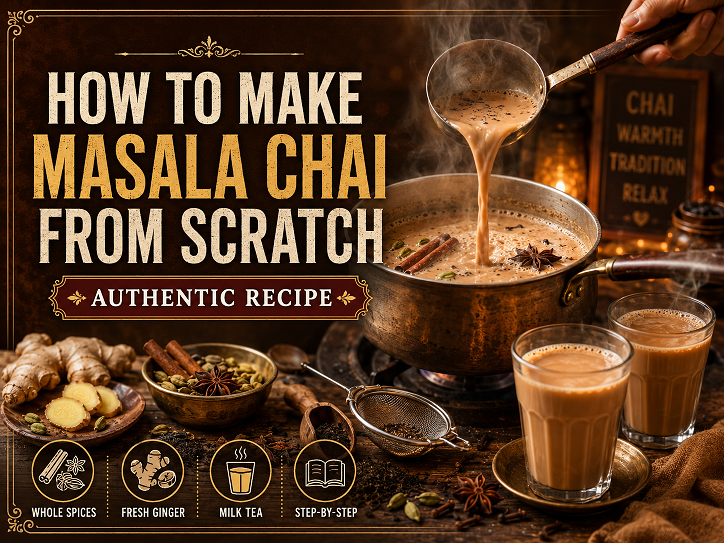
Real masala chai is made by boiling whole spices in water first (so their flavor infuses the liquid), then adding tea leaves, then milk and sugar, and letting everything simmer together for several minutes before straining. The whole process takes under 20 minutes and doesn’t require any special equipment — just a small pot and a strainer. The most common mistakes are using ground spices instead of whole ones, adding milk too early, or not simmering long enough. Below is the full recipe, ingredient notes, and troubleshooting for common issues.
The Recipe Most Chai Tutorials Get Wrong
Search “masala chai recipe” and you’ll find hundreds of versions — many of which involve steeping a tea bag in hot milk for two minutes and calling it a day. That’s not masala chai. That’s tea with milk and a sprinkle of spice powder.
Real masala chai — the kind made in homes across Pakistan multiple times a day — involves actually boiling everything together. It’s a simmered drink, not a steeped one. The good news: once you understand the order and the timing, it’s genuinely simple and takes less than 20 minutes.
Ingredients
You’ll Need
- 2 cups water
- 1 cup whole milk
- 2 teaspoons loose black tea (or 2 tea bags)
- 2-3 green cardamom pods, lightly crushed
- 1 small piece cinnamon stick (about 1 inch)
- 2-3 whole cloves
- 1 small piece fresh ginger, crushed or sliced
- 2-3 teaspoons sugar, or to taste
A note on the tea: strong black teas work best here. Assam, CTC (crush-tear-curl) black tea, or a strong breakfast blend will all hold up to the milk and spices. Delicate teas like green tea or light black teas tend to get lost in this recipe.
Step-by-Step Instructions
Start the spices in water. Add the water, crushed cardamom, cinnamon stick, cloves, and ginger to a small pot. Bring to a boil over medium heat.
Let the spices infuse. Once boiling, let the spices simmer in the water for 2-3 minutes. You’ll notice the water start to take on color and aroma from the spices — this step is doing a lot of the flavor work.
Add the tea. Add the black tea (loose leaves or bags) and let it boil for 1-2 minutes, until the water turns a deep reddish-brown color.
Add milk and sugar. Pour in the milk and add sugar to taste. Stir well and bring the mixture back to a boil.
Simmer. Reduce the heat slightly and let the chai simmer for 3-5 minutes, stirring occasionally. This is where the chai develops its final color, strength, and richness — don’t rush this step.
Strain and serve. Strain into cups, leaving the spices and tea leaves behind, and serve hot.
Why the Order of Ingredients Matters
This sequence isn’t arbitrary — each step builds on the last:
- Spices go in water first because they need direct contact with boiling water to release their oils and flavor compounds. Adding them to milk, or adding them at the end, results in a much weaker spice presence.
- Tea goes in after the spices so it doesn’t over-extract while the spices are still infusing — and so the tea and spice flavors develop together rather than the tea being boiled separately.
- Milk goes in last because boiling milk for too long can cause it to develop a slightly “cooked” taste and increases the risk of it curdling or scorching, especially with acidic tea already in the mix. Adding it after the tea base is established gives you more control.
- The final simmer allows the tea, spices, milk, and sugar to fully combine into one cohesive flavor — this is the step that separates “tea with milk added” from actual chai.
The One-Sentence Version
If you remember nothing else: boil the spices and water together first, then tea, then milk — and don’t rush the simmer at the end. That order is the entire difference between “real” chai and tea with stuff added to it.
Adjusting the Spice Blend to Your Taste
The recipe above is a solid, balanced starting point — but masala chai is genuinely personal, and there’s no single “correct” ratio. Here’s how to adjust based on what you like:
| If you want… | Try adjusting… |
|---|---|
| A stronger, more “punchy” chai | Increase the tea slightly, or reduce the water-to-milk ratio (use a bit less water) |
| A sweeter, more aromatic profile | Add an extra cardamom pod or a small piece of star anise |
| A warming, “cold remedy” style chai | Increase the ginger noticeably — this is the most common adjustment for a cold or sore throat |
| A more peppery, bold flavor | Add 2-3 whole black peppercorns along with the other spices |
| A lighter, less rich chai | Use a slightly higher water-to-milk ratio (more water, less milk) |
If you want to explore other spice-forward variations, our guide to 18 chai varieties covers everything from ginger-heavy Adrak chai to saffron-infused Zafrani chai — all built on this same basic method with different spice emphasis.
Common Mistakes (and How to Fix Them)
Mistake: Chai Tastes Bitter
This almost always comes from boiling the tea leaves too long, using too much tea, or keeping the heat too high after adding tea. Try reducing the tea slightly, and lower the heat as soon as you add the milk. For a full breakdown of every bitterness cause and fix, see our dedicated guide on how to make chai less bitter .
Mistake: Chai Tastes Watery or Weak
Usually means the simmering step was skipped or cut short. The final simmer (step 5) is where the flavors actually come together — give it the full 3-5 minutes, and don’t be afraid to go a bit longer if it still tastes thin.
Mistake: Milk Curdles or Forms a Skin
This can happen if the milk is boiled too aggressively or for too long, especially with very acidic tea. Try adding the milk slightly later in the process, and keep the heat at a gentle simmer rather than a hard boil once milk is added.
Equipment That Helps
You don’t need anything special to make masala chai — a small pot and a fine-mesh strainer are genuinely enough. That said, a few tools can make the process easier or more consistent if you make chai often:
Fine-Mesh Tea Strainer
Catches loose tea leaves and small spice pieces cleanly — especially useful if you use whole spices regularly rather than tea bags.
Check on Amazon →Small Saucepan with Pour Spout
Makes pouring directly into cups much easier and reduces spills — a small detail that matters if you’re making chai daily.
Check on Amazon →Variations to Try Next
Once you’re comfortable with this base recipe, a few directions worth exploring: if you want a dairy-free version, see our vegan chai latte with oat milk, which adjusts the milk-boiling technique for plant-based milk. If you want to batch-prep chai for the week, our homemade chai concentrate recipe uses a similar spice approach but makes a larger batch you can store and reheat. And if you’re curious about the espresso-added “dirty chai” trend, our dirty chai latte recipe builds on this same chai base. If you’re baking while your chai simmers, these same spices work beautifully in our chai-spiced banana bread recipe .
Where This Recipe Comes From
This method — spices in water first, then tea, then milk, then a proper simmer — is the standard approach in most Pakistani households, with each family adjusting the spice ratios slightly to their own taste. If you’re curious about the broader cultural context behind why chai is made (and consumed) this way, see our piece on chai culture in Pakistan.
Curious which chai style matches your personality?
Take our quick quiz to find out whether you’re a Karak, Doodh Pati, Sulaimani, or Masala chai person.
Frequently Asked Questions
What is the secret to good masala chai?
The most important factors are boiling the spices in water first before adding tea (so their flavor infuses the base liquid), using whole spices rather than pre-ground powder for a fresher flavor, and allowing the chai to simmer properly after adding milk rather than just heating it briefly. Patience during the simmering stage makes a noticeable difference in depth of flavor.
Can I make masala chai without whole spices?
Yes — ground spices or a pre-made chai masala blend can be used as a substitute, though the flavor will generally be less nuanced and can turn slightly bitter or gritty if too much is used. If using ground spices, start with about half the amount you’d use of whole spices, since ground spices are more concentrated and release flavor faster.
What kind of tea is best for masala chai?
Strong black teas work best for masala chai, as they can hold up to the milk, sugar, and spices without becoming too weak in flavor. Assam tea, CTC (crush-tear-curl) black tea, or strong breakfast-style black teas are commonly used. Lighter teas like green tea or delicate black teas are generally not used for traditional masala chai.
Why does my chai taste bitter?
Bitterness in chai is most commonly caused by boiling the tea leaves for too long, using too much tea relative to the amount of liquid, or boiling at too high a heat after adding the tea. Reducing the boiling time after adding tea, using slightly less tea, and lowering the heat once milk is added can all help reduce bitterness.
12 thoughts on “How to Make Masala Chai from Scratch: Easy Stovetop Recipe”