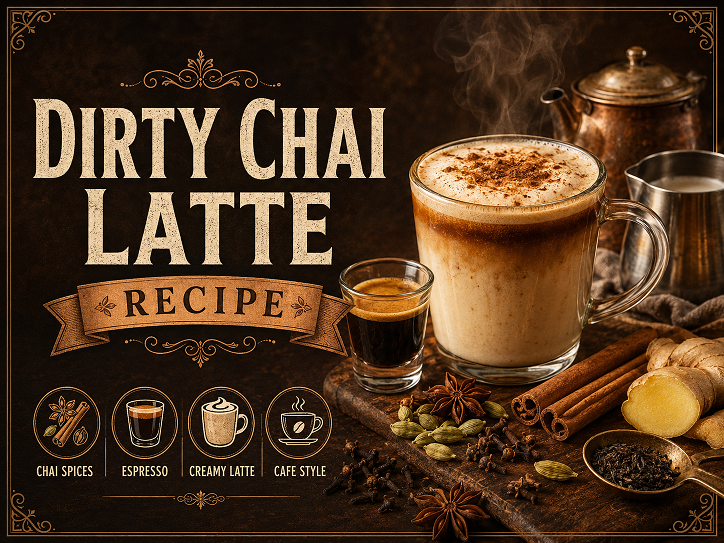
A dirty chai latte is simple in concept — chai latte plus a shot of espresso — but easy to get wrong if the chai is too weak or the coffee overwhelms the spices. The trick is making a properly simmered, spiced chai base first (the same method as our masala chai recipe), then adding a single shot of strong espresso at the end rather than diluting everything with a large cup of weak coffee. Below is the full recipe, ratio guidance, and how to adjust it to your taste.
Chai Plus Coffee — A Cafe Invention That Actually Works
If you’ve spent any time in American coffee shops, you’ve probably seen “dirty chai latte” on the menu — and if you’re coming at this from a South Asian chai background, you might reasonably wonder: what exactly is “dirty” about it, and is this a real chai variety?
Short answer: no, it’s not traditional. As we covered in our guide to 18 chai varieties, traditional South Asian chai doesn’t include coffee. Dirty chai is a Western cafe invention — but it’s a genuinely good one, when made properly. The “dirty” part just means a shot of espresso has been added to the chai latte, and the result is a drink that’s warming, spiced, and has a real caffeine kick from two sources at once.
Ingredients
You’ll Need
- 3/4 cup whole milk (or milk of choice)
- 2 teaspoons loose black tea (or 1 chai tea bag)
- 2-3 green cardamom pods, lightly crushed
- 1 small piece cinnamon stick
- 1-2 whole cloves
- 1 small piece fresh ginger, crushed
- 1-2 teaspoons sugar or honey, to taste
- 1 shot espresso (about 1 oz, or 1/4 cup strong coffee)
Step-by-Step Instructions
Heat the milk with spices. In a small pot, combine the milk, crushed cardamom, cinnamon, cloves, and ginger. Heat over medium-low heat, stirring occasionally so it doesn’t scorch.
Add the tea. Once the milk is hot but not boiling, add the black tea. Let it steep and gently simmer for 4-5 minutes, stirring occasionally.
Sweeten. Add sugar or honey to taste and stir until fully dissolved.
Brew your espresso. While the chai simmers, brew a shot of espresso (or make a small amount of strong coffee using a moka pot, AeroPress, or strong instant coffee).
Strain the chai. Strain the spiced chai milk into a mug, leaving the tea leaves and whole spices behind.
Combine and serve. Pour the espresso shot into the chai and stir gently. Serve immediately while hot.
Getting the Chai-to-Coffee Ratio Right
The most common mistake with dirty chai is using too much coffee relative to chai — which results in a drink that just tastes like spiced coffee, losing the chai character entirely. The reverse problem — too little coffee — just gives you chai with a faint coffee aftertaste that doesn’t add much.
| Ratio | Result | Best For |
|---|---|---|
| 3/4 cup chai + 1 shot espresso | Balanced — both chai and coffee flavors are clearly present | Most people, especially first-timers |
| 1 cup chai + 1 shot espresso | Chai-forward, coffee plays a supporting role | People who love chai and want just a caffeine boost |
| 1/2 cup chai + 1 shot espresso | Coffee-forward, chai adds spice and sweetness | Coffee lovers who want a spiced twist |
Start with the balanced ratio (3/4 cup chai to 1 shot espresso) and adjust from there based on which direction you’d prefer to lean.
What “Dirty” Actually Means
In cafe terminology, “dirty” generally refers to adding espresso to a drink that wouldn’t otherwise contain coffee — a “dirty chai” is chai plus espresso, just as a “dirty matcha latte” would be matcha plus espresso. It’s not a comment on quality or cleanliness — it’s just industry shorthand for “with coffee added.”
Worth Knowing If You’re Ordering This Out
If you order a “chai latte” at most US coffee shops, you’ll likely get a sweetened, spiced milk drink made from a chai concentrate or syrup — not the boiled, fresh-spice chai described in our masala chai recipe. A “dirty chai latte” is that cafe-style chai latte plus espresso. The homemade version in this recipe uses real spices and a proper simmer, which generally tastes noticeably better than the syrup-based cafe version — even before adding the coffee.
No Espresso Machine? Here’s What to Use Instead
You don’t need an espresso machine to make a good dirty chai. A few alternatives that work well:
- Moka pot: Produces a concentrated coffee very similar in strength to espresso — a great substitute.
- AeroPress: Can produce a strong, concentrated coffee shot with the right grind and brew ratio.
- Strong instant coffee: Dissolve 1-2 teaspoons of instant coffee in just 2-3 tablespoons of hot water for a quick, concentrated substitute.
- Strongly brewed drip coffee: Use a small amount (around 1/4 cup) of coffee brewed stronger than usual — use less water than normal in your coffee maker for a more concentrated result.
The key principle is the same regardless of method: you want a small volume of strong coffee, not a large volume of regular-strength coffee, so it doesn’t overwhelm or over-dilute the chai.
How Much Caffeine Is in This?
A dirty chai latte combines caffeine from two sources: the black tea base and the espresso shot. Black tea typically contains roughly 30-50mg of caffeine per cup, while a standard espresso shot contains roughly 60-80mg. That puts a typical dirty chai latte in the range of 90-130mg of total caffeine — somewhat more than a regular cup of tea, and somewhat less than a large drip coffee.
If you’re sensitive to caffeine or drinking this later in the day, consider using a smaller espresso shot (a “short” or ristretto-style shot) or a decaffeinated tea base for the chai portion while keeping the espresso.
Variations Worth Trying
Once you’ve got the base recipe down, a few directions to explore: for a dairy-free version, swap the milk for oat milk using the same method in our vegan chai latte recipe — oat milk’s natural sweetness pairs particularly well with espresso. If you want to batch-prep the chai portion ahead of time, our chai concentrate recipe lets you make a larger batch and just add a fresh espresso shot each morning. And if you’re curious about the full range of chai styles this recipe draws from, see our guide to 18 South Asian chai varieties.
Milk Frother (Handheld)
If you want a slightly frothier texture on top, a simple handheld milk frother takes seconds and makes the drink feel more cafe-style.
Check on Amazon →Moka Pot
A reliable, inexpensive way to make espresso-strength coffee at home without a full espresso machine — useful well beyond just this recipe.
Check on Amazon →Curious which chai style matches your personality?
Take our quick quiz to find out whether you’re a Karak, Doodh Pati, Sulaimani, or Masala chai person.
Frequently Asked Questions
What is a dirty chai latte?
A dirty chai latte is a spiced chai latte with a shot of espresso added, combining the warm, spiced flavor of chai with the boldness and caffeine boost of coffee. The term “dirty” refers to the addition of coffee to what would otherwise be a coffee-free drink.
Is a dirty chai latte traditional Pakistani chai?
No. A dirty chai latte is a Western cafe invention that combines chai-style spiced milk with espresso, a combination not found in traditional South Asian chai preparation. Traditional masala chai does not include coffee. Dirty chai is best understood as a fusion drink inspired by chai rather than an authentic regional variety.
How much caffeine is in a dirty chai latte?
A dirty chai latte typically contains caffeine from both the black tea base (roughly 30-50mg per cup) and a shot of espresso (roughly 60-80mg), putting a typical dirty chai latte in the range of 90-130mg of caffeine total, though this varies based on the strength of the tea and the size of the espresso shot used.
Can I make a dirty chai latte without espresso?
Yes — strong brewed coffee, a shot from a moka pot, or even strong instant coffee dissolved in a small amount of hot water can substitute for espresso, though the flavor and texture will be slightly different. The key is using a small, concentrated amount of coffee rather than diluting the chai with a large volume of weaker coffee.
1 thought on “Dirty Chai Latte Recipe: Easy Hot and Iced Versions”