Short answer: Pakistanis often drink chai several times a day because tea is woven into household routines, workplace breaks, hospitality, travel, and conversation. The “five times a day” phrase describes a familiar pattern, not a national rule or a reliable average for every person. Some Pakistanis drink one or two cups, some drink more, and some avoid tea entirely.
A cup may begin the morning, give coworkers a reason to pause, welcome a visitor, accompany an evening snack, or keep a late conversation going. That is why asking why Pakistanis drink so much tea is not only a question about taste or caffeine. It is also a question about how people make time for one another.
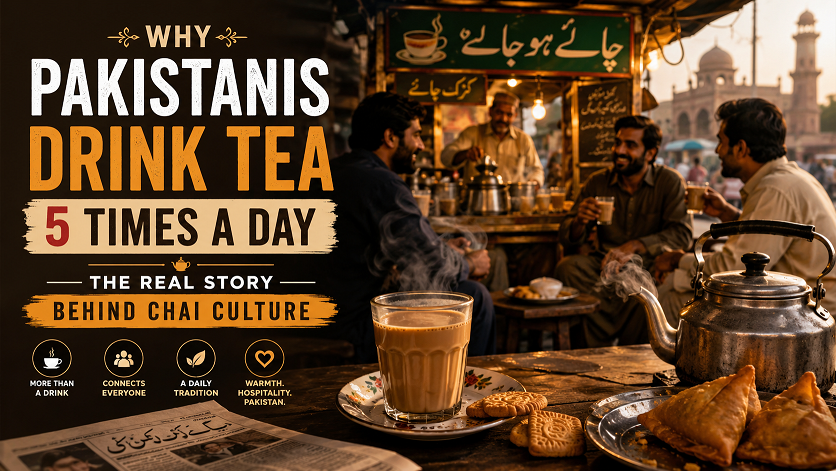
Do Pakistanis Really Drink Tea Five Times a Day?
Not necessarily. There is no official custom requiring five cups, and a catchy number should not be mistaken for a scientific estimate. Tea habits differ between individuals and households. Work schedule, age, weather, income, sleep, health, family routine, and whether guests are present can all change the number of cups served on a particular day.
Still, five separate opportunities for chai can easily appear: breakfast, a midmorning work break, a visitor’s arrival, late afternoon, and an evening gathering. One person may join all five; another may join only breakfast and evening tea. In offices and shops, the timing can be different. On a wedding day, a road trip, or a winter weekend with relatives, tea may appear more often than it does on an ordinary weekday.
The careful answer is therefore: many Pakistanis drink tea frequently, but there is no single national cup count. Pakistan’s continuing tea trade does show the drink’s economic importance. The Pakistan Bureau of Statistics publishes official external-trade data, including regularly updated import tables. Those records are better evidence of large national demand than an unsupported claim about exactly how many cups every Pakistani drinks.
Why Is Chai So Popular in Pakistan?
1. It turns an ordinary pause into shared time
Chai gives a gathering a simple shape. Someone fills the kettle or saucepan, cups are collected, and people sit long enough to speak. The preparation is modest, but it signals that the conversation deserves a few minutes. At home, tea can bring family members into one room. At work, it creates a common break. At a roadside stall, it gives friends a reason to remain at the table.
This social function matters more than any single recipe. The cup may be milky or light, sweet or unsweetened, plain or fragrant with cardamom. What remains recognizable is the pause around it.
2. Tea is practical to make and share
Everyday Pakistani chai usually needs familiar ingredients: black tea, water, milk, and optional sugar. A household can prepare one cup or expand the saucepan for several people without special equipment. Biscuits, rusks, toast, savory snacks, or leftovers from a celebration can turn the drink into a small meal.
That accessibility helps explain why chai works in very different settings—from homes and offices to workshops, university canteens, dhabas, railway platforms, and highway stops. The cup can be simple, yet the act of offering it still feels complete.
3. The flavor suits local food and conversation
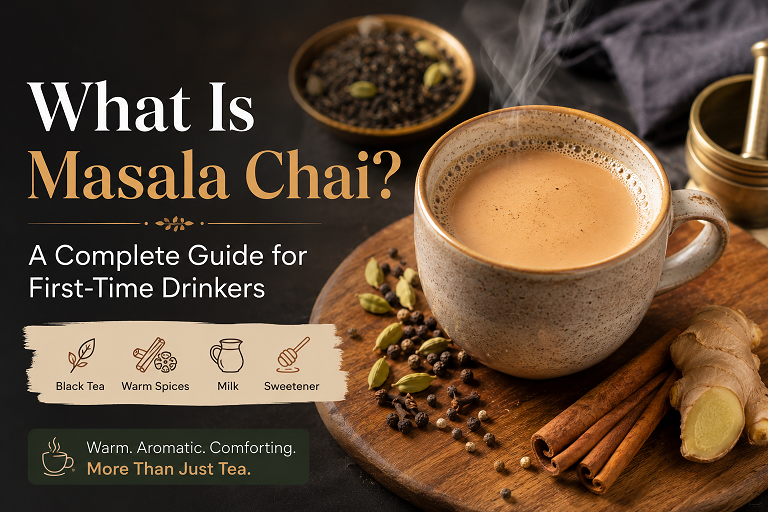
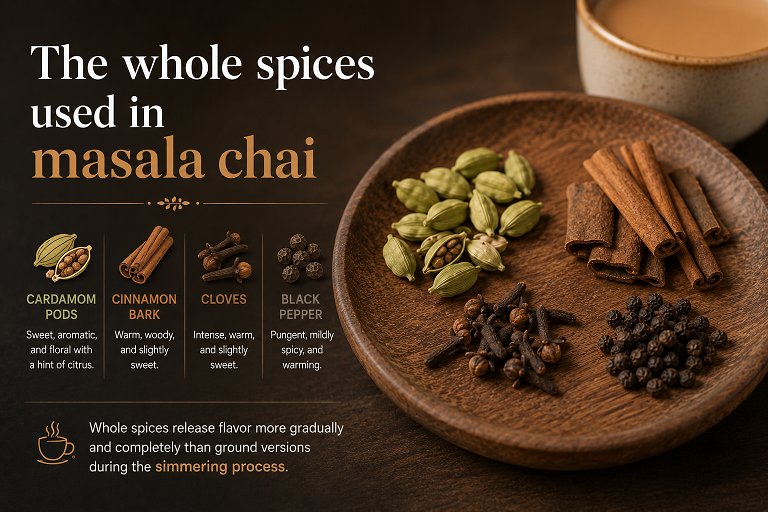
Strong black tea can stand up to milk and sugar, while cardamom, ginger, cinnamon, or cloves can be added when desired. Chai also pairs naturally with familiar snacks such as pakoras, samosas, biscuits, cake rusk, paratha, and bakery items. It can follow a savory breakfast or accompany a long evening without needing a formal menu.
For readers encountering these flavors for the first time, our guide to masala chai explains what spiced chai tastes like and how it differs from a café chai latte.
4. Habit carries memory
People often learn their preferred chai at home: the amount of milk a parent used, how long a grandparent simmered the leaves, which cups came out for visitors, or which biscuit was always placed beside the saucer. Later, even when a person moves to another city or country, reproducing that cup can make an unfamiliar kitchen feel connected to home.
This does not mean every Pakistani shares one nostalgic story. Pakistan is linguistically, geographically, and culturally diverse. It means a repeated household practice can become personally meaningful, and tea is one of the most visible examples.
5. Pakistan adapted tea into local life
Tea drinking in the region has a history shaped by trade, colonial-era cultivation and marketing, and generations of local adaptation. Pakistani chai today is not merely a copy of British afternoon tea. Households transformed black tea through their own preferences for boiling, milk, sweetness, spice, serving style, and food pairings. Our longer article on the history of chai separates that development from the simplified claim that South Asians have always consumed modern milk chai in its present form.
Five Familiar Chai Moments—Without Treating Them as Rules
The following moments explain where the article’s “five times” idea comes from. They are examples, not a mandatory timetable.
Morning chai
For many tea drinkers, the first cup accompanies breakfast or begins the kitchen routine. It may be served with paratha, egg, bread, rusk, or whatever the household normally eats. Some people prefer a strong cup immediately after waking; others wait until they have eaten. People who do not tolerate caffeine well may choose a weaker brew, decaffeinated tea, or another drink.
Work or study-break chai
A workplace tea round is both refreshment and a brief reset. In an office, one person may collect orders; in a market, cups may arrive from a nearby tea stall; at a workshop or construction site, tea may be brewed on-site. Students may meet in a canteen between classes. The break allows quick conversation that would not happen during focused work.
Not every employer schedules tea formally, and not every worker participates. The broader point is that chai is an easy shared beverage in many professional and informal workplaces.
Guest chai
When relatives, neighbors, friends, or professional visitors arrive, a host commonly offers a drink. Chai is popular because it can be prepared quickly and served with whatever is available. Depending on the time and household, the tray might include biscuits, nuts, fruit, mithai, samosas, or no snack at all.
Offering matters, but calling tea “non-negotiable” is too absolute. A guest may decline because of caffeine sensitivity, diabetes management, fasting, medication, a full stomach, or simple preference. A considerate host can offer water, unsweetened tea, green tea, or another available drink without treating a polite refusal as disrespect.
Late-afternoon or evening chai
This is often the most recognizable family tea time. Work and school may be ending, the afternoon heat may be easing, or the weather may be turning cool. Tea provides a bridge between the day’s responsibilities and the evening meal. In some homes it comes with fried snacks; in others, only a biscuit or rusk.
During Ramadan, routines change completely because food and drink are avoided during the daily fast. Tea may instead be served after iftar or later in the evening, depending on the household. Read our guide to Ramadan traditions and food in Pakistan for the wider context.
The unscheduled cup
Rain begins. A friend arrives. A family discussion grows longer. Someone suggests tea during a road stop. This extra cup is not attached to a fixed hour; it responds to the moment. It helps explain why a person who planned two cups can end up drinking several on a social day.
What Chai Communicates in Pakistani Hospitality
Hospitality is not measured only by the value of the food served. Attention matters: asking what a guest would like, preparing something, and sitting with them. Chai fits that pattern because it is warm, familiar, and shareable.
The Urdu question “Chai piyenge?” means “Will you drink tea?” A host may also ask “Chai ya thanda?”—tea or a cold drink. The exact wording and options vary. In some families, a second offer is a form of warmth because guests sometimes decline initially to avoid causing trouble. That custom should not be turned into pressure. A clear, courteous refusal is acceptable, especially when accompanied by a brief thanks.
Tea also appears during major family events, but it does not replace the event’s own customs. At engagements, weddings, condolence visits, Eid gatherings, and community meetings, what is served depends on region, budget, time, and family practice. For a broader look at hosting and ceremony, see our Pakistani wedding traditions guide.
Pakistani Chai Is Not One Standard Drink
Calling every Pakistani cup “masala chai” creates confusion for American readers. Many everyday cups contain no spice at all. Recipes overlap and names are used differently between families, so the table below describes broad tendencies rather than strict definitions.
| Style | Common characteristics | Useful clarification |
|---|---|---|
| Everyday milk chai | Black tea brewed with water and milk; sugar is optional | There is no universal milk-to-water ratio |
| Doodh patti | Milk-forward tea in which leaves are cooked with milk, often with little or no water | Method and name vary between households and shops |
| Karak chai | Strong, concentrated milk tea, sometimes flavored with cardamom | Popular in Pakistan and across the Gulf; recipes differ |
| Masala chai | Black tea, milk, and a chosen combination of aromatic spices | No single spice blend is compulsory |
| Kashmiri or pink tea | Green-tea-based drink prepared to develop a pink color, often served with milk and garnishes | Sweet and savory versions exist; it is not ordinary black milk tea dyed pink |
| Kahwa | Light aromatic tea associated especially with Kashmir and northern traditions | Often served without milk; ingredients and spelling vary |
| Green or black tea without milk | Tea infused in water, sometimes with lemon, mint, or spices | Common in some regions and individual routines |
For a wider comparison, explore 18 types of chai across South Asia. If you want to make the strong milk tea commonly called karak, use our tested karak chai recipe rather than assuming that longer boiling always produces a better cup.
What Often Surprises American Visitors
The tea may be boiled rather than simply steeped
Many American drinkers are accustomed to pouring hot water over a tea bag and adding a splash of cold milk afterward. Pakistani milk chai is often cooked in a saucepan, allowing the tea and milk to combine over heat. The cook watches closely because milk can rise and spill quickly. Repeatedly boiling for a long time is not required and may make the drink harsh.
Sweetness may already be in the saucepan
In some homes and stalls, sugar is cooked into the whole batch. Guests who prefer less sugar should mention it before the tea is prepared when possible. Other hosts serve sugar separately, making adjustment easy.
A small cup can still taste strong
Serving size does not tell you how much tea leaf was used or how long it brewed. A small, concentrated cup may taste bolder than a large mug made from one lightly steeped bag. Color is also an imperfect guide because milk changes the appearance.
The invitation is often about company
When someone says, “Come for chai,” the invitation may imply more than consuming a beverage. It can mean sitting together, talking, and being included. The closest American comparison may be “Let’s get coffee,” where the meeting matters as much as the drink.
Caffeine, Sugar, and Drinking Chai Sensibly
Chai is not caffeine-free. Black tea naturally contains caffeine, but the amount in a cup changes with the leaf quantity, tea type, brewing time, water temperature, and serving size. Milk does not remove caffeine. A heavily diluted cup and a strongly boiled cup should not be assumed to contain the same amount.
The U.S. Food and Drug Administration’s caffeine guidance notes that sensitivity varies substantially. It cites 400 milligrams per day for most adults as an amount not generally associated with negative effects, but that is general guidance—not a target and not suitable for everyone. Pregnancy, certain medicines, medical conditions, anxiety, and sleep problems can change what is appropriate. Anyone with a specific concern should ask a qualified healthcare professional.
Sugar deserves separate attention. A lightly sweetened home cup, an unsweetened cup, and a large café beverage made with sweetened concentrate are not nutritionally equivalent. The Dietary Guidelines for Americans provide current federal advice about added sugars. Practical ways to adjust a frequent chai routine include:
- measure sugar instead of adding it by eye;
- gradually reduce sweetness so the change is easier to maintain;
- request sugar on the side when ordering;
- choose a smaller cup when you want the ritual but not a large serving;
- switch a late cup to decaffeinated tea, while remembering decaf may still contain some caffeine;
- avoid treating chai as a substitute for water throughout the day;
- pay attention to whether late tea disrupts your sleep.
It is also better to avoid vague promises that chai “boosts immunity,” “detoxes the body,” or treats illness. Spices can add aroma and flavor, but a cultural article should not turn customary ingredients into medical claims.
A Simple Chai-Etiquette Guide for Visitors
- Accept if you would enjoy it. A simple “yes, thank you” is enough.
- State preferences early. Ask for less sugar, no sugar, less milk, or a small cup before the batch is finished.
- Decline politely when needed. Thank the host and say you cannot have tea right now. You do not owe a medical explanation.
- Expect regional and family variation. One household’s doodh patti is not the national definition.
- Do not rank a home cup against a chain-café latte. They are made for different settings and may use completely different methods.
- Return the warmth. Conversation and appreciation matter more than knowing special terminology.
Why the Chai Ritual Continues Abroad
Pakistani families in the United States, Canada, the United Kingdom, the Gulf, and elsewhere often keep tea in the daily routine even when work patterns and ingredients change. Tea bags may replace loose leaf, lactose-free milk may replace dairy, or a travel mug may replace the cup and saucer. The method adapts, but the invitation—sit down, have something warm, tell us how you are—remains recognizable.
This is also why a commercial “chai latte” can be enjoyable without being identical to Pakistani home chai. A café drink often uses a sweetened concentrate or syrup and steamed milk. Home chai is commonly brewed on the stove and adjusted by the cook. Neither label tells you everything; ingredients and method do.
The Real Meaning Behind “Five Times a Day”
The headline works because five cups are imaginable in a culture where tea can accompany morning, work, visitors, evening snacks, and spontaneous conversation. But the deeper story is not a number. Chai is useful, affordable relative to elaborate hosting, easy to share, and emotionally familiar. It gives people permission to stop for a few minutes.
So, why do Pakistanis drink so much tea? Because chai performs several jobs at once. It is a beverage, a break, a welcome, a snack companion, and a way to extend company. Different people participate differently, yet the language of offering and sharing tea is understood across much of the country.
Frequently Asked Questions
How many cups of tea do Pakistanis drink each day?
There is no reliable number that applies to every Pakistani. A person may drink one or two cups on an ordinary day and more during workplace breaks, travel, cold weather, or family visits. “Five times a day” describes possible tea occasions, not a requirement or universal average.
Why is tea important in Pakistani culture?
Tea is closely connected with hospitality, household routine, work breaks, and conversation. It is relatively simple to prepare for one person or a group, and it pairs with common sweet and savory snacks.
Is Pakistani chai the same as Indian masala chai?
They overlap, but neither country has one standard recipe. Much everyday Pakistani chai is plain black milk tea with no spice, while masala chai specifically includes spices. Recipes and names vary across South Asia, regions, shops, and families.
Is it rude to refuse chai in Pakistan?
A host may offer more than once as a gesture of warmth, but a polite refusal is generally acceptable. Thank the host and, if you wish, accept water or another available drink. Health and personal preferences should be respected.
What is commonly served with Pakistani tea?
Biscuits and cake rusk are common simple choices. Depending on the time and occasion, tea may also be served with paratha, pakoras, samosas, mithai, nuts, bakery items, or other household snacks.
Does Pakistani chai always contain cardamom?
No. Cardamom is popular, but many everyday cups contain only tea, water, milk, and optional sugar. Ginger, cinnamon, cloves, or other spices may be added according to preference, especially in masala chai.
Does milk tea contain caffeine?
Yes, when it is made with caffeinated tea leaves. Milk changes flavor and concentration per sip but does not remove caffeine. The amount varies with the tea, leaf quantity, brew time, and serving size.
Cultural note: Pakistan contains many regional, linguistic, religious, and household traditions. This guide describes widely recognizable patterns without claiming that every Pakistani drinks tea or follows the same etiquette.
1 thought on “Why Do Pakistanis Drink So Much Tea? The Culture Behind Chai”