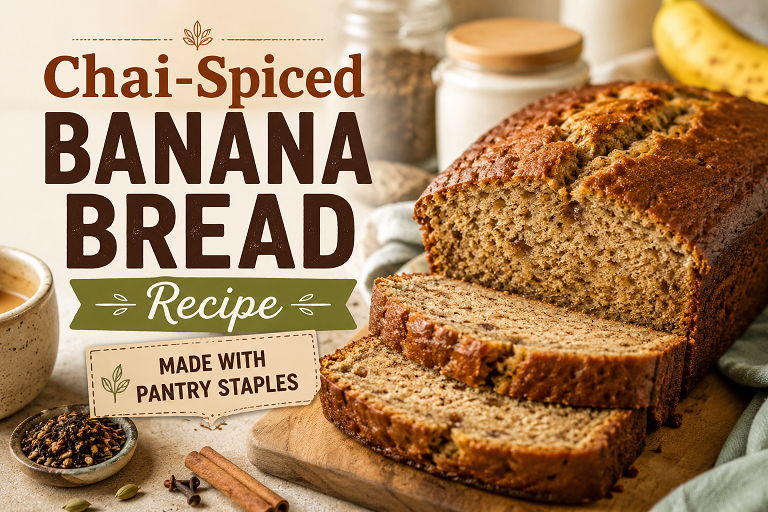
This chai spiced banana bread combines ripe bananas with cinnamon, cardamom, ginger and cloves for a fragrant loaf to serve with tea. It uses melted butter, ordinary all-purpose flour and one egg, with no mixer or brewed tea required. The spices go into the dry ingredients so their flavor spreads through the bread instead of collecting in pockets.
The most useful details are simple: measure the mashed banana, use the specified loaf pan, and check the center before taking the bread out of the oven. Banana size, packed flour and different pans can change the result much more than a small adjustment to the cinnamon.
Jump to recipe · Spice substitutions · Troubleshooting · Storage and freezing · FAQs
Chai Spiced Banana Bread Recipe
Yield: one 9 × 5-inch loaf, approximately 10 slices. Preparation: 15 minutes. Baking: approximately 50–60 minutes. Cooling: allow at least 1 hour before slicing. Plan on approximately 2 hours 10 minutes from starting to serving, using the middle of the baking range; a warm loaf may need longer to cool.
Ingredients
- 300 g peeled, mashed ripe banana, approximately 1¼ cups or about 3 medium bananas; use the weight when possible
- ⅓ cup unsalted butter, 76 g, melted and cooled until just warm
- ¾ cup packed light brown sugar, approximately 160 g
- 1 large egg
- 1 teaspoon vanilla extract
- 1½ cups all-purpose flour, 180 g, spooned into the cup and leveled if not weighed
- 1 teaspoon baking soda
- ½ teaspoon fine table salt
- 1 teaspoon ground cinnamon
- ½ teaspoon ground green cardamom
- ½ teaspoon ground ginger
- ¼ teaspoon ground cloves
- Optional: a small pinch of finely ground black pepper, up to ⅛ teaspoon
Equipment: a 9 × 5-inch metal loaf pan, approximately 23 × 13 cm; two mixing bowls; a fork; a whisk; a flexible spatula; parchment paper; and a wire cooling rack. A kitchen scale is helpful but not essential. Use US measuring cups and level measuring spoons.
1. Prepare the oven and pan
Heat a conventional oven to 350°F (175°C), with a rack near the center. Lightly grease the pan. Line the base and two long sides with a strip of baking parchment, leaving enough overhang to help lift out the loaf. Grease any exposed ends. Keep parchment away from heating elements and follow its temperature instructions.
2. Mash and measure the bananas
Peel the bananas and mash them with a fork until mostly smooth; small soft pieces are fine. Weigh out 300 g, or measure approximately 1¼ cups. Save any extra banana for another use instead of adding it automatically. “Three bananas” is only an estimate because their sizes vary.
3. Mix the wet ingredients
In the larger bowl, stir the mashed banana, melted butter and brown sugar together. Add the egg and vanilla, then mix until the egg is fully incorporated. The butter should be warm rather than hot when it meets the egg. Break up any firm lumps of sugar with the spoon or whisk.
4. Whisk the dry ingredients
In the second bowl, whisk the flour, baking soda, salt, cinnamon, cardamom, ginger, cloves and optional pepper. Pay attention to little clumps of baking soda or ground spice. Even distribution here means you will need less stirring after the flour meets the banana mixture.
5. Fold together
Add the dry mixture to the wet mixture. Fold with a spatula, scraping the bottom and sides, until no dry flour pockets remain. Stop once incorporated; the batter does not need to become perfectly smooth. Small banana lumps are fine, but visible streaks of dry flour should be folded in.
6. Bake the loaf
Scrape the batter into the prepared pan and gently level the top. Bake for approximately 50–60 minutes, beginning to check around 50 minutes. Insert a clean wooden skewer into the center and another nearby spot. It should come out without wet batter; a few moist crumbs are fine. If the center is still wet, continue baking and check again after a short interval.
If the top has browned sufficiently while the middle needs more time, loosely cover the top with aluminum foil. Do not press it against the batter. Ovens and pans vary, so the clock is a guide rather than proof that the loaf has finished baking.
7. Cool before slicing
Rest the pan on a rack for 10–15 minutes. Carefully loosen the exposed ends, lift the loaf out using the parchment and let it finish cooling on the rack. Allow at least an hour of cooling overall and longer if the middle is still warm. Slice gently with a serrated knife rather than pressing down with a blunt blade.
What Does “Chai Spiced” Mean Here?
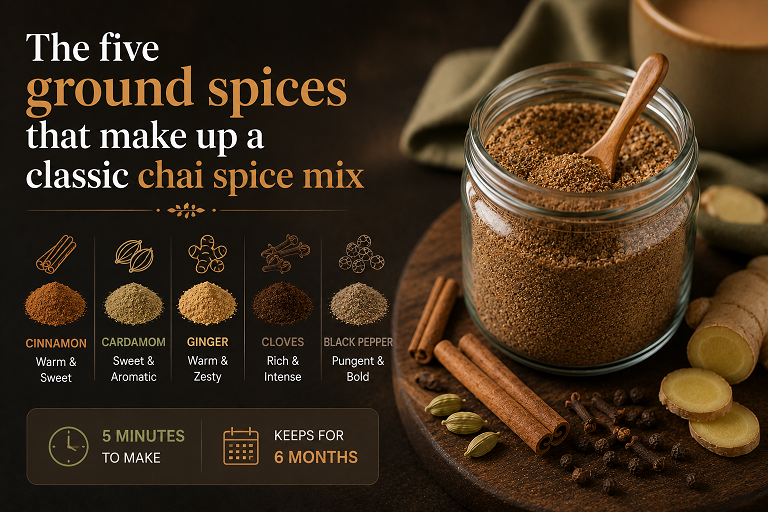
In this recipe, the name describes a blend of spices associated with masala chai. It does not mean the batter contains brewed black tea. Cinnamon provides the familiar baking aroma, cardamom adds a more distinctive fragrant note, ginger contributes gentle warmth, and cloves round out the blend in a smaller quantity.
There is no single spice combination used in every household’s chai. This loaf is a chai-inspired bake, not a claim that banana bread is a traditional South Asian tea recipe. Our guide to what masala chai is explains the drink behind the flavor idea.
Keeping brewed tea out also keeps the batter straightforward. A cup of chai concentrate would add a substantial amount of liquid and possibly sugar. It is not a drop-in substitute for a few teaspoons of ground spices, and this recipe has not been formulated for that addition.
Choosing and Measuring Bananas
Look for ripe bananas that mash easily, with yellow peels marked by brown spots. The fruit should smell pleasantly of banana, not show mold or signs of decay. A dark peel alone does not tell you everything about the flesh inside, so check the fruit when peeling it.
The recipe uses a measured amount because extra banana is not simply extra flavor. It also adds moisture and changes how the center sets. If three large bananas produce considerably more than 300 g, using them all can make the loaf harder to bake through without overbrowning the outside.
If your bananas are firm and green, allow them to ripen before making this version. Heating bananas can soften them, but it should not be treated as a guaranteed way to reproduce naturally ripe fruit in an unchanged recipe. Planning ahead is the more repeatable approach.
Using frozen bananas
Previously frozen ripe bananas are a practical option. Thaw them in a covered container in the refrigerator, then mash and measure. Include their thawed liquid when measuring the banana portion rather than adding it afterward as extra liquid. If the mixture seems unusually watery, save it for a recipe designed around that ingredient rather than guessing at extra flour.
Freezing peeled banana in measured portions makes future baking simpler. Label a portion with its weight, then still check the amount after thawing if any liquid has been lost. This avoids the common mismatch between a recipe’s banana count and the actual quantity in the bowl.
Why Flour Measurement Matters
For this recipe, 1½ cups of all-purpose flour means 180 g. That uses the 120 g-per-cup convention in King Arthur Baking’s ingredient weight chart. Other recipes may define a cup differently, which is why the weight printed in the recipe should take priority.
Without a scale, loosen the flour in its container, spoon it into a dry measuring cup and level the top without packing. Scooping directly from a compacted bag can collect more flour than intended. Adding extra flour to an already thick banana batter is not a reliable way to improve it.
Use plain all-purpose flour, not self-rising flour. Self-rising products already contain raising agents and salt, so substituting one while keeping the listed baking soda and salt can change both flavor and rise. Likewise, almond flour and coconut flour are not direct replacements for wheat flour in this formula.
Adjusting the Chai Spice Blend
The four main ground spices total 2¼ teaspoons. Start there before increasing the whole blend. The goal is to taste banana as well as spice, and cloves in particular can dominate a small loaf.
| Preference | Suggested adjustment for a later loaf |
|---|---|
| More cardamom aroma | Increase cardamom from ½ to ¾ teaspoon |
| Less clove intensity | Reduce cloves from ¼ to ⅛ teaspoon |
| More ginger warmth | Increase ground ginger from ½ to ¾ teaspoon |
| No peppery finish | Leave out the optional black pepper |
| A gentler first batch | Keep cinnamon and cardamom as listed; halve ginger and cloves |
Change one element at a time so you can tell what worked. Smell the spices before using them: an old jar with little aroma may not give the result you expect, even if you measure accurately.
Can you use a premixed chai masala?
Yes, as a flavor variation, if it is a plain ground spice blend. Use about 2¼ teaspoons in place of the four listed spices as a starting point, not in addition to them. Check the label first. Some blends are pepper-heavy, while instant chai powders can contain tea, sugar or milk powder and are not equivalent.
Our homemade chai spice mix is useful if you want to keep a blend ready for baking and drinks. Pumpkin pie spice can make a pleasant alternative loaf, but it is not identical to this mixture and may contain little or no cardamom.
Butter, Oil and Other Substitutions
Melted butter gives this loaf its baseline flavor. For an oil variation, use ⅓ cup (80 mL) neutral oil instead of the butter. The texture and flavor will differ because oil and butter are not compositionally identical. Keep the rest of the recipe unchanged for the first attempt rather than changing the sugar and flour at the same time.
Using oil removes the butter, but check every ingredient and any serving toppings before describing a loaf as dairy-free. The recipe still contains egg and wheat, so it is not vegan or gluten-free.
White granulated sugar can replace the brown sugar by the same measured volume for a variation, but it will not contribute the same molasses flavor. For the closest repeat of the main recipe, use the listed brown sugar weight. Large sugar reductions or liquid sweeteners such as honey change more than sweetness; they also affect moisture and browning.
Egg-free and gluten-free baking need their own dependable formulas. Rather than promise that a flax mixture or any gluten-free flour will work identically here, use a recipe developed for that requirement and add a compatible amount of chai spice. Dietary substitutions should not be described as tested unless they have actually been baked and assessed.
Optional Nuts or Chocolate
For a simple variation, fold in up to ½ cup chopped walnuts or pecans after the flour is nearly incorporated. Chop them into small pieces so slices cut cleanly. Nuts introduce an additional allergen, so let anyone you serve know they are included.
Alternatively, use up to ½ cup chocolate chips. This creates a sweeter loaf and can make the spices seem less prominent. Check doneness away from a melted chocolate pocket; chocolate on a skewer is different from uncooked batter. These are optional adaptations, and baking time can change.
Avoid adding several handfuls of different mix-ins to the first loaf. Too many additions make it harder to judge whether the basic banana-to-flour balance is right. Bake the plain version first if you are unfamiliar with your pan or oven.
Troubleshooting Chai Banana Bread
| Problem | Possible causes | What to change |
|---|---|---|
| Wet or gummy middle | Underbaking, extra banana or slicing while hot | Measure banana, check several central spots and cool before cutting |
| Dry, crumbly loaf | Too much flour or excessive baking | Weigh flour and begin checking at the early end of the time range |
| Dark top, unfinished center | Pan material, oven heat or deep batter | Tent loosely with foil and continue checking the center |
| Tough texture or tunnels | Too much mixing after adding flour | Fold only until the dry pockets disappear |
| Sunken middle | Center not set, excess moisture or inaccurate leavening | Check ingredient measurements and bake through before removing |
| Strong clove taste | Blend too intense for your preference | Reduce cloves in the next loaf instead of adding extra sugar |
A gummy loaf is not always an overmixing problem. Before changing the method, ask whether the bananas were measured, whether the flour was weighed, and whether the center was checked. Those details help distinguish an ingredient-ratio issue from a mixing issue.
What if the pan is a different size?
The recipe specifies a 9 × 5-inch pan so the timing has a clear reference. A smaller loaf pan creates a deeper batter and may require longer baking; a larger pan makes a shallower loaf. Do not fill an unfamiliar pan close to the rim. Choose the specified size for the first bake rather than assuming every pan called “standard” holds the same amount.
Glass, ceramic, dark metal and light metal can brown differently. If you regularly see burned edges and an underdone middle, check the pan and oven temperature before blaming the spices. A separate oven thermometer can help identify an oven that runs hotter or cooler than its setting.
Do not taste the raw batter
Raw flour and raw egg can contain harmful germs. The FDA’s flour safety guidance advises against eating raw batter and recommends cleaning hands, equipment and surfaces after handling it. Judge the spice level from a fully baked, cooled slice, then adjust a future batch.
Storing and Freezing the Loaf
Let the plain, unglazed loaf cool fully before wrapping it. Wrapping while it is still warm traps condensation against the crust. Cut only the slices you need if you want to limit exposed surfaces.
For planning, aim to enjoy a wrapped plain loaf within about two days in a cool, dry room, or freeze the surplus once cool. This is a practical freshness target, not a tested safety guarantee for every climate. In a hot or humid kitchen, favor refrigeration or freezing rather than leaving a moist loaf on the counter.
King Arthur Baking’s banana bread guidance similarly describes short room-temperature storage and freezing for longer keeping. That is general baking context, not shelf-life testing of this particular spiced loaf. Adding cream cheese frosting or another perishable topping changes the storage requirements.
Freeze individual slices for convenience
Slice the cooled bread, separate pieces with parchment if needed, and wrap or pack them in a suitable freezer container. Label with the date and plan to use them within about two months for quality. This gives you smaller portions to thaw instead of repeatedly unwrapping a whole loaf.
Thaw a slice in its wrapping until ready to serve, or warm it gently in an oven or toaster oven according to the appliance instructions. A fragile or crumbly slice is better supported on a tray than dropped into a slot toaster. Do not put foil or wrapping into appliances unless their instructions explicitly permit it.
Discard bread that develops mold or shows spoilage; do not trim a moldy area and serve the remainder. When storage conditions are uncertain, choosing not to eat it is safer than relying on a taste test.
What to Serve with Chai Spiced Banana Bread
A plain slice is enough for a tea break. Warm it gently if you like, then add a little butter at serving time rather than coating the entire stored loaf. The bread is already sweet, so an unsweetened or lightly sweetened drink can provide a useful contrast.
- Masala chai: a natural pairing if you enjoy the same spices in your cup and on your plate.
- Karak chai: an option when you prefer a more tea-forward drink alongside a sweet bake.
- Homemade chai concentrate: useful for preparing a drink quickly once the loaf has cooled.
- Dirty chai latte: a coffee-and-chai variation for a café-style snack.
For guests, put the cooled slices on a plate and keep any spreads separate. Mention wheat, egg and butter, plus nuts if added. Do not label the bread as allergy-friendly solely because one ingredient has been replaced.
Frequently Asked Questions
Does this bread contain black tea?
No. The main recipe uses ground spices, not tea leaves or brewed chai. Adding tea would be a separate adaptation, and adding liquid concentrate without reformulating the batter can affect how it bakes.
Can I make it in one bowl?
Two bowls are recommended so the spices, baking soda and salt are evenly distributed before they meet the wet ingredients. It is still a quick hand-mixed recipe, with no electric mixer to clean.
Can I make muffins instead?
The batter may be adapted to a muffin pan, but the loaf baking time does not apply. Muffin size and fill level affect the yield and timing. Use a separately tested muffin recipe with this spice profile if you need dependable quantities for an event or a published recipe card.
Why did my loaf crack on top?
A central crack is common in quick breads as the interior expands after the surface starts to set. It is not, by itself, a problem or proof of doneness. Check inside the loaf rather than relying on the appearance of the crack.
Can I double the recipe?
Double the ingredients and divide the batter between two matching 9 × 5-inch pans. Do not put a double batch into one pan. Leave space for air circulation in the oven and check each loaf separately; their baking times may differ.
Bottom line: measure the bananas and flour, distribute the spices in the dry ingredients, fold without leaving flour pockets, and bake until the center is set. Those details make this chai-inspired loaf easier to repeat than relying on banana count or baking time alone.
1 thought on “Chai Spiced Banana Bread: Easy Homemade Recipe”