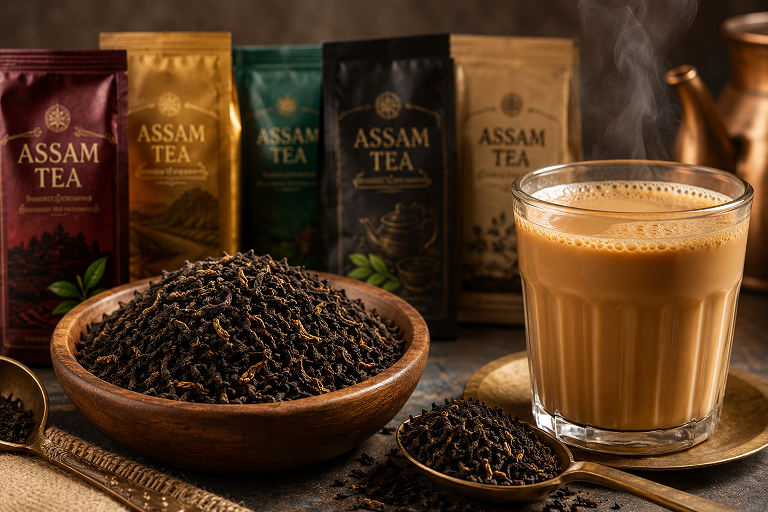
Karak chai needs a tea that stays present after milk, sugar and spices are added. That is why Assam is one of the best starting points: its naturally malty, brisk black-tea profile can remain recognizable in a rich, simmered cup instead of disappearing behind dairy and cardamom.
This guide explains which Assam tea styles work best for karak chai, how to compare US-available brands, what to buy for different budgets, and how to brew a balanced pot at home. It is written for shoppers in the United States, where tea availability, pack sizes and prices vary by retailer and region.
Jump to picks · Buying guide · How to brew · Assam versus other tea · FAQs

What is the best Assam tea for karak chai?
For most home cooks, the best choice is a fresh CTC Assam black tea or a similarly fine-cut Assam blend designed to brew strongly with milk. CTC means crush, tear, curl: a processing method that creates small pellets which infuse quickly and make a dark, assertive tea. That is useful when you are making stovetop karak chai rather than sipping a delicate plain black tea.
If you want a more refined cup and do not mind a longer brew, choose a loose-leaf orthodox Assam. Orthodox leaves can taste layered and malty, but they may not create the same deep color and immediate strength as CTC. There is no universal winner. The right purchase depends on whether your priority is bold everyday chai, a smoother premium pot, convenience, or the ability to drink the tea plain as well.
Twinings describes Assam as a full-bodied black tea with a rich, malty and earthy profile that works with milk and sugar. That is exactly why it is a natural fit for karak chai. See its Assam tea guide for background on the region and flavor profile.
Best Assam tea for karak chai: quick picks
| Best for | Tea | Why it works for karak chai |
|---|---|---|
| Best overall for daily chai | VAHDAM Premium CTC Assam Black Tea | Fine CTC particles brew quickly and bring bold maltiness through milk. |
| Best premium loose leaf | Upton Tea Halmari Estate Assam | A loose-leaf choice for shoppers who want estate detail and a more nuanced cup. |
| Best smooth all-purpose option | Adagio Assam Melody | Single-estate Assam with a malty profile that can be enjoyed plain or with milk. |
| Best convenient grocery option | Twinings Assam tea bags | Easy to find, portioned, and useful for a quick small batch. |
| Best budget strategy | Fresh CTC Assam from a high-turnover South Asian market | Often the most practical way to buy enough tea for frequent household chai. |
Do not treat this table as a permanent price ranking. Stock, harvest, retailer pricing and packaging change. Choose a small pack first, especially if you are switching from a familiar local tea. A tea that is excellent for one family’s very milky karak chai may feel too strong or too brisk for another.
1. VAHDAM Premium CTC Assam Black Tea — best for daily karak chai
CTC Assam is generally the most practical format for karak chai because it infuses fast, produces a deep color and holds up to milk. VAHDAM’s US collection includes Assam black teas and masala chai products, making it a convenient brand for readers who want to buy tea and related spices from one retailer. It is a good match for people who make chai most days and want a familiar bold result rather than a delicate tasting-session tea.
Use a modest amount at first. CTC is powerful: too much tea or too long a boil can make a cup rough and drying. For two small servings, start with 2 teaspoons in water, then add milk. If your usual chai needs more strength, increase the tea slightly in the next batch rather than simmering it aggressively for much longer.
Best for: traditional milk tea, Gulf-style karak chai, and households that prefer a dark, full-bodied cup. Less ideal for: drinkers who want to taste subtle floral notes without milk.
2. Upton Tea Halmari Estate Assam — best premium loose leaf
Upton Tea carries a range of loose-leaf Assams, including current Halmari Estate listings. This is the direction to take when you want more information about the tea’s origin and enjoy comparing different leaves. A premium loose Assam can give karak chai a smoother, more complex maltiness, although it will generally cost more per cup than a straightforward CTC tea.
Use slightly more leaf or a longer controlled steep than you would for a plain cup, because karak chai includes milk. Strain the leaves before the final milk simmer when possible. This protects the cup from over-extraction and makes it easier to adjust strength.
Best for: weekend chai, gifting, and people who also drink black tea without milk. Visit Upton Tea’s Assam collection to check currently available estate teas and pack sizes.
3. Adagio Assam Melody — best smooth all-purpose Assam
Adagio’s Assam Melody is a single-estate loose Assam marketed with malty tasting notes. It is a useful middle ground: strong enough for milk tea but not exclusively a CTC chai product. If you want one tea that can make a calm morning cup and a weekend karak chai, a loose Assam like this can be more flexible than a very finely cut CTC.
The trade-off is speed. Loose leaves need room and time to unfurl, while CTC is built for rapid extraction. Use a fine strainer and give the tea a brief controlled steep before milk goes in. Do not expect it to behave exactly like the tea used in a roadside chai stall; the result can be lighter in color but more layered in flavor.
4. Twinings Assam tea bags — best convenient option
Tea bags are not automatically inferior. They are useful when you want consistent portions, short cleanup and a small one- or two-cup pot. Twinings identifies its Assam as rich and full-bodied, and its bags can make a workable karak-inspired cup when you do not have loose tea available.
For two small servings, begin with two bags. Steep them in hot water, remove them before the tea becomes harsh, then add warm milk and sweetener. Do not leave the bags in the saucepan throughout a long boil. If you make chai daily for several people, loose CTC tea will usually be more economical and allow more control.
5. High-turnover South Asian grocery CTC tea — best budget strategy
In many US cities, Indian, Pakistani, Bangladeshi and Middle Eastern markets sell large packs of CTC tea intended for milk tea. This can be the best value for a family that drinks karak chai often. The brand matters less than freshness, a sealed pack and retailer turnover. Ask staff which tea local customers buy for strong milk chai, then try the smallest practical pack.
Check the label for added flavoring if you want plain Assam rather than a pre-spiced blend. Also check whether the product is a blend: many excellent everyday chai teas contain Assam alongside other black teas. That is not a problem; simply buy according to taste instead of assuming every strong black-tea blend is single-origin Assam.

How to choose Assam tea for karak chai
Choose CTC when strength matters most
CTC is the best starting point for classic stovetop karak chai. It develops color quickly and can handle milk. Fine particles extract quickly, however, so use measured amounts and strain promptly.
Choose orthodox leaf when flavor detail matters
Loose orthodox Assam is better for a slower, more aromatic cup. It suits cooks who enjoy tasting tea and do not mind using a strainer. It may not look as dark as CTC chai, but color is not the only measure of quality.
Read the package, not only the marketing name
“Breakfast tea,” “chai tea,” and “Assam blend” can all mean different things. Look for whether the tea is CTC or loose leaf, whether flavoring is included, how much tea is in the pack, and whether it is intended to be brewed with milk.
Buy a size you can finish while fresh
Black tea keeps better than ground spices, but it still loses aroma once a packet is repeatedly opened. Store it in an airtight container away from steam and sunlight. A giant bag is only economical if your household will use it.
How to make karak chai with Assam tea
This method makes two small servings and gives you a starting point. “Karak” means strong, not bitter, so adjust one variable at a time.
- 1 cup water
- 2 teaspoons CTC Assam, or 2½ teaspoons loose orthodox Assam
- 1 cup whole milk or unsweetened oat milk
- 2 to 3 lightly crushed green cardamom pods
- Sugar to taste
- Bring the water and cardamom to a gentle simmer for 1 to 2 minutes.
- Add the Assam tea. Let CTC brew briefly; give larger loose leaves a little more time.
- Add milk and sugar. Bring the pan to a lively simmer over medium heat, watching closely.
- Lower the heat and cook for another minute or two. Do not leave it unattended; milk can foam quickly.
- Strain into cups and taste. Next time, change either the tea amount, milk ratio or brewing time—not all three.
For a more detailed method, use our karak chai recipe. You can also make a fresh blend with our homemade chai spice mix.
Why Assam is better than delicate tea for karak chai
Karak chai is milk-forward and often sweetened. A delicate Darjeeling or a light floral black tea can be enjoyable, but its finer notes may disappear once milk, sugar and spices are added. Assam’s bold maltiness and brisk structure stand up better. That does not make Assam superior in every context; it simply makes it more practical for this particular drink.
| Tea type | How it behaves in karak chai | Best use |
|---|---|---|
| CTC Assam | Dark, quick, bold and milk-friendly | Daily traditional karak chai |
| Orthodox Assam | Malty with more nuance; slower to brew | Premium or less rushed chai |
| English Breakfast blend | Varies by brand, often includes Assam | Convenient grocery-store option |
| Darjeeling | Lighter and more delicate | Usually better brewed without heavy milk |
Common mistakes when buying Assam tea
Buying based only on the darkest dry leaf
Very dark dry tea is not automatically fresher or stronger. Processing, leaf grade and lighting affect appearance. Brew a small test cup before committing to a large bag.
Confusing “chai” with one fixed blend
Chai means tea in many languages. A packaged chai can be a pre-spiced blend, a latte concentrate or simply black tea. Read the ingredients and decide whether you want to control the spices yourself.
Trying to fix weak tea with an excessively long boil
Long boiling can make tea taste astringent. Use a little more tea, a more robust grade, or less milk in the next batch. See our guide to fixing bitter chai if the cup turns harsh.
Ignoring caffeine
Assam is black tea and naturally contains caffeine. The actual amount in a homemade cup depends on the leaf, amount used and brewing method. If you are sensitive to caffeine, choose decaffeinated tea or keep serving size and timing in mind rather than relying on a generic caffeine number.
Storage and freshness
Keep Assam tea in a sealed, opaque container in a dry cupboard. Do not store it above the stove, where repeated heat and steam can dull the aroma. Avoid using a wet spoon. If you buy several bags, open one at a time and leave the others sealed until needed.
Tea that smells flat or musty will not become better after adding milk or extra sugar. Replace it instead. Fresh tea has a clean dry-tea fragrance; brewed tea should smell malty and inviting, not stale or smoky unless the product is deliberately smoked.
Frequently asked questions
Is Assam tea the same as karak chai?
No. Assam is a type of black tea from Assam, India. Karak chai is a strong milk tea preparation that can use Assam or another robust black tea.
Which Assam is best: CTC or loose leaf?
Use CTC for the strongest, quickest milk chai. Choose loose leaf for more aroma and a slower, more nuanced cup.
Can I use Assam tea bags?
Yes. They are convenient for small batches. Remove the bags before a long milk simmer to avoid harshness.
How much Assam should I use per cup?
Start with about 1 teaspoon of CTC per cup of total liquid, then adjust. Leaf size, milk ratio and personal taste all matter.
Should I add cardamom to Assam karak chai?
Cardamom is optional but common. Use two or three lightly crushed green pods for two servings, or select a quality product from our best cardamom brands guide.
Final verdict
For most US households making karak chai, fresh CTC Assam is the best value and most reliable choice. VAHDAM is a convenient online option, while a fresh high-turnover South Asian grocery pack can be ideal for regular drinkers. Upgrade to a loose estate Assam from Upton Tea or Adagio when you want more flavor detail and are happy to spend a little longer brewing. Start modestly, use fresh milk and spices, and let the tea’s maltiness—not excessive boiling—provide the strength.
2 thoughts on “Best Assam Tea for Karak Chai: 5 Strong, Malty Picks for 2026”