Disclosure: This independently written guide may contain affiliate links. Chaewala may earn a commission at no extra cost to you. Check the package date, origin, and current ingredients before buying.
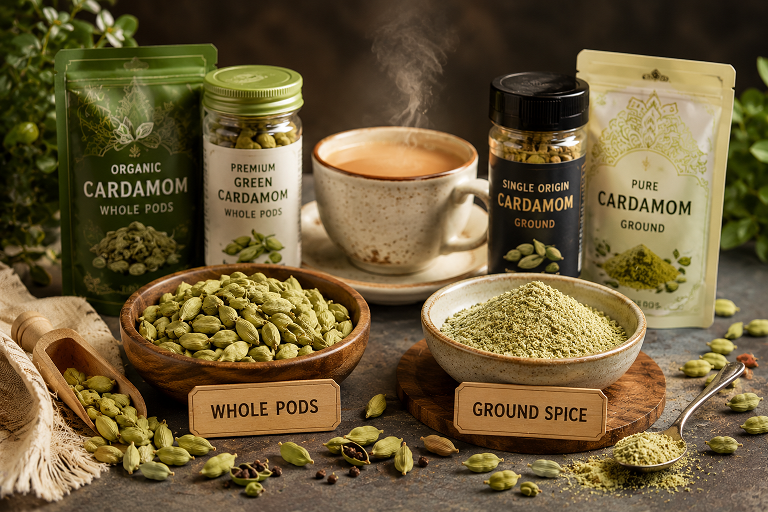
The best cardamom for chai is usually whole green cardamom pods, not a large jar of pre-ground powder. Whole pods protect the tiny aromatic seeds from air and heat. Lightly crush one or two pods just before simmering them with water and tea, and you will get a brighter flavor with less risk of a dusty or bitter cup.
Quick picks
| Brand | Best for | Buy this form |
|---|---|---|
| Rani | Everyday home chai | Whole green cardamom pods |
| Spicewalla | Small-batch spice buyers | Green cardamom pods or ground cardamom |
| Simply Organic | Organic ground-cardamom convenience | Ground cardamom in a small jar |
| Frontier Co-op | Refilling pantry jars | Whole or ground cardamom |
1. Rani Green Cardamom Pods: best everyday choice
Rani is a practical brand to compare if you make chai frequently and want full pods rather than a blended “chai spice.” Buy a sealed packet of green cardamom pods, then transfer only the amount you will use soon into an airtight jar. Choose pods that are greenish, dry, and fragrant; very pale or brittle pods can be old.
2. Spicewalla: best for smaller fresh quantities
Spicewalla is a good option when you prefer buying smaller amounts more often. Ground cardamom is convenient for baking and quick drinks, but for a traditional simmered chai, whole pods remain the better first choice. Buy ground cardamom only in an amount you can finish promptly.
3. Simply Organic: best ground-cardamom convenience
Ground cardamom is useful when you do not want to strain broken pods or when making a quick chai latte. Simply Organic Ground Cardamom is a useful type of product to compare for this purpose. Use it sparingly: start with a small pinch per cup. Too much can make chai taste perfumed rather than balanced.
4. Frontier Co-op: best for pantry refills
Frontier Co-op offers both whole and ground spice options. It is a sensible choice for households that already buy spices in refill bags. Keep whole pods away from sunlight and steam, particularly if your spice rack is near the stove.
Jump to: How to choose · Brand comparison · Pods vs ground · How to use in chai · FAQs
How we choose the best cardamom for chai
Cardamom is expensive enough that a poor jar is immediately frustrating. For this guide, the useful criteria are freshness, form, packaging, availability in the United States, and how the spice behaves in a milk-based chai—not a claim that one brand is medically better than another. Fresh green pods should smell sweet, eucalyptus-like, and citrusy when gently cracked. They should be dry and reasonably plump, not dusty, soft, or nearly scentless.
For traditional chai, whole green cardamom is normally the best purchase. The papery pod protects the seeds and slows aroma loss. Ground cardamom has a place in fast chai, baking, and latte-style drinks, but it exposes much more surface area to air. Buy it in a smaller jar, close the lid promptly, and replace it when the aroma becomes flat.
| Buying factor | What to look for | Why it matters for chai |
|---|---|---|
| Form | Whole green pods for most chai | They deliver brighter aroma and are easy to crush before simmering. |
| Color and condition | Dry green to olive-green pods | Very pale, shattered, or odorless pods may be old. |
| Pack size | Small packet for occasional cooks | Freshness is more valuable than a large bargain bag you will not finish. |
| Ingredient list | Plain cardamom with no unnecessary fillers | You control the rest of your chai blend yourself. |
| Storage | Sealed, opaque container | Heat, steam, light, and air gradually mute the spice. |
Best cardamom brands for chai: detailed comparison
Rani: best overall for everyday green-cardamom chai
Rani is a strong first brand to check when you want familiar, straightforward green cardamom pods for regular chai. Its practical advantage is that it is commonly available in sizes that make sense for home cooks, and it is sold as an individual spice rather than an already sweetened drink mix. A sealed pouch of Rani Green Cardamom is suited to people who brew chai several times a week.
Use one or two lightly crushed pods for two cups of chai, then adjust after tasting. The best way to assess any packet is at home: open it and crack a single pod. If the scent feels clear and lively, you have a good base. If it is dusty or faint, use it for cooking but choose a fresher pouch for a chai where cardamom should be noticeable.
Spicewalla: best for smaller, freshness-minded purchases
Spicewalla is worth comparing when you prefer a smaller spice collection and replace spices frequently. That buying style can be smart for cardamom because no one benefits from keeping a huge jar for years. Check the available format and package size before ordering; whole pods remain the better option for simmered chai, while a small ground jar can be useful for baking or occasional quick lattes.
This is also a sensible choice for giftable spice buying, but packaging should not decide the purchase on its own. Compare the exact product, form, amount, and price per ounce at the time you shop. For chai, freshness and a clean cardamom aroma are more important than a dramatic label.
Simply Organic: best ground-cardamom convenience
Simply Organic Ground Cardamom is a practical type of option for someone who wants organic ground spice in a compact jar. It works well when you are making one mug and do not want to crush pods, or when a recipe calls for powder. Start extremely small: a pinch can be enough for a mug, especially when cinnamon, ginger, and clove are also present.
Do not mistake convenience for identical flavor. Powder blends into milk smoothly but loses the bright pop you get when you crack a pod just before brewing. Keep the jar tightly closed and away from the kettle. A spice rack directly above a hot stove is convenient, but it is one of the worst places for fragrance.
Frontier Co-op: best for refill-focused home kitchens
Frontier Co-op is a useful brand to compare when you already refill pantry jars and cook with a wide range of spices. Its main benefit is choice: shoppers can often find whole or ground cardamom in quantities that suit their routine. Choose whole pods for chai first, and do not buy a bulk amount unless your household will actually use it within a reasonable period.
Refill bags can reduce the number of small jars you buy, but the storage responsibility shifts to you. Transfer only part of the bag to a small airtight container, seal the remainder, and write the purchase month on it. This simple habit helps you identify when a spice needs replacing.
Whole pods vs ground cardamom for chai
Whole pods are the best default for a stovetop masala chai. Lightly bruising them releases the seeds and lets their oils infuse into the water before milk goes in. You can strain the pieces at the end, and the flavor is usually rounder and fresher.
Ground cardamom is not wrong—it is simply more concentrated and less forgiving. It disperses through the drink and can leave fine sediment, particularly if you use too much or use a coarse strainer. It also becomes perfumed quickly. Begin with a small pinch; you can always add more in the next cup, while it is difficult to correct an over-cardamomed saucepan.
| Form | Best use | Starting amount | Watch for |
|---|---|---|---|
| Whole green pods | Traditional stovetop chai | 1–2 lightly crushed pods for two cups | Do not boil aggressively for a long time. |
| Ground cardamom | Quick mug chai, lattes, baking | Small pinch per mug | Too much can taste dusty or perfume-like. |
| Black cardamom | Occasional savory cooking | Not a standard chai substitute | Its smoky flavor changes the drink completely. |
How to use cardamom in chai without overpowering it
For two cups, crush one or two green pods with the side of a knife or a mortar. Simmer them in water with fresh ginger if using, then add black tea. Once the tea has colored the water, add milk and sweetener to taste. Keep the heat moderate and strain into cups. You are looking for a sweet floral aroma in the background, not a mouthful of spice.
Cardamom works especially well with an assertive black tea. A delicate tea can disappear once milk and spices are added, which is why CTC Assam is popular for this style. See our best Assam tea for karak chai guide for strong tea choices, then follow our masala chai from scratch guide for a reliable basic method.
If your chai turns bitter, do not immediately add more sugar. Check whether you used too much tea, boiled it too long, or used too much ground spice. Cardamom should not be treated as a bitter ingredient, but old powder and over-extraction can make a cup feel harsh. You can also make a satisfying cup with less added sugar; our karak chai without sugar guide explains how to keep flavor high while adjusting sweetness.
What not to buy for traditional chai
Skip generic “cardamom flavor” products when you want real chai flavor. Artificially flavored syrups, sweetened instant powders, and blends without clear ingredients can be convenient, but they do not replace fresh pods. Also avoid using black cardamom as a one-for-one swap: it has a smoky, savory character that can be delicious in rice and stews yet unfamiliar in a classic milk tea.
Be cautious with very large bargain bags if you only make chai once or twice a month. The lower price per ounce can be misleading when the final third of the bag sits unopened for a year. A smaller fresh packet is usually the better commercial decision for a casual drinker.
Storage and food-safety basics
Spices are shelf-stable when kept dry, but their quality depends on storage. Keep cardamom away from moisture and strong odors. Do not use pods or powder with signs of dampness, mold, or an unusual smell. Use a clean, dry spoon for ground spice. If you have allergy concerns or a medical question about ingredients, consult a qualified clinician rather than relying on general food content.
Cardamom contains naturally occurring flavor compounds, but it is not a medicine and this article does not make health-treatment claims. For general information about food labeling and ingredients in the United States, consult the U.S. Food and Drug Administration’s food-labeling resources.
Frequently asked questions
What is the best cardamom for chai?
Whole green cardamom pods are the best choice for most homemade chai. They keep their aroma longer than powder and are easy to lightly crush before simmering.
How many cardamom pods should I use in chai?
Start with one or two lightly crushed green pods for two cups. Use less if your other spices are strong, then adjust in the next batch.
Can I use ground cardamom instead of pods?
Yes. Use a very small pinch per mug, because powder is concentrated and can quickly dominate the tea. A fine strainer helps if sediment bothers you.
Is green cardamom the same as black cardamom?
No. Green cardamom is floral and bright; black cardamom is smoky and robust. Green cardamom is the usual choice for chai.
Which tea works best with cardamom?
A bold black tea, particularly Assam or CTC black tea, holds its flavor well after milk and cardamom are added. For a latte, brew the tea base strong before adding frothed milk.
Final verdict
For the best cardamom chai, buy whole green pods from a reputable brand, beginning with Rani if you want a practical everyday option. Spicewalla is worth comparing for smaller purchases, Simply Organic is convenient for ground-cardamom recipes, and Frontier Co-op suits refill-minded kitchens. The brand matters, but freshness, storage, and the form you buy matter just as much.
Keep the recipe simple: crush fresh pods, use a robust black tea, control the heat, and strain before serving. That small ritual produces a warmer, more aromatic cup than relying on an old jar of powder or an overly sweet premade mix.
Whole pods vs ground cardamom
| Whole green pods | Ground cardamom |
|---|---|
| Best aroma and freshness | Fastest and easiest to measure |
| Ideal for simmered masala chai | Useful for quick chai lattes and baking |
| Needs crushing and straining | Can become stale quickly |
How much cardamom for chai?
For two cups, lightly crush 2 green pods. For ground cardamom, begin with 1/8 teaspoon. Add it with water at the start so the flavor has time to infuse. Cardamom pairs well with ginger, cinnamon, clove, and black pepper, but it should not be hidden by too many spices. Follow our masala chai guide for a balanced base.
Buying and storage tips
- Choose green cardamom for chai; black cardamom has a smoky profile and is not a direct substitute.
- Buy from sellers with good turnover, then seal the spice tightly.
- Keep pods whole until you use them.
- Do not store spices over the stove, where heat and steam weaken them.
Frequently asked questions
Can I use cardamom powder in chai?
Yes. Use a small pinch; it is stronger by volume and less fresh-tasting than newly crushed pods.
What is the best type of cardamom for chai?
Green cardamom pods are the standard choice. Their sweet, floral aroma works naturally with black tea and milk.
Should I remove the pods before serving?
Strain the chai before serving. Crushing pods helps release the seeds but makes straining important.
Final verdict
For the best everyday chai, buy whole green cardamom pods from a trusted brand such as Rani and crush them immediately before brewing. Choose a small jar of ground cardamom only when convenience matters more than peak aroma. Pair it with a robust tea from our best Assam tea for karak chai guide for a fuller cup.
1 thought on “Best Cardamom Brands for Chai: Whole Pods vs Ground Spice”