Disclosure: This buying guide is editorially written for home chai makers. Some outbound links may be affiliate links if you add your affiliate tracking. Prices, stock, and package sizes can change, so check the seller’s current page before purchasing.
Cardamom is the small spice that can make chai feel unmistakably special. A few freshly crushed green pods bring a sweet, floral, citrusy lift that sits beautifully against black tea and milk. But not every bag of cardamom delivers that aroma. Old pods can be dry and hollow; pre-ground spice can taste muted; and smoky black cardamom can take a classic chai in an entirely different direction.
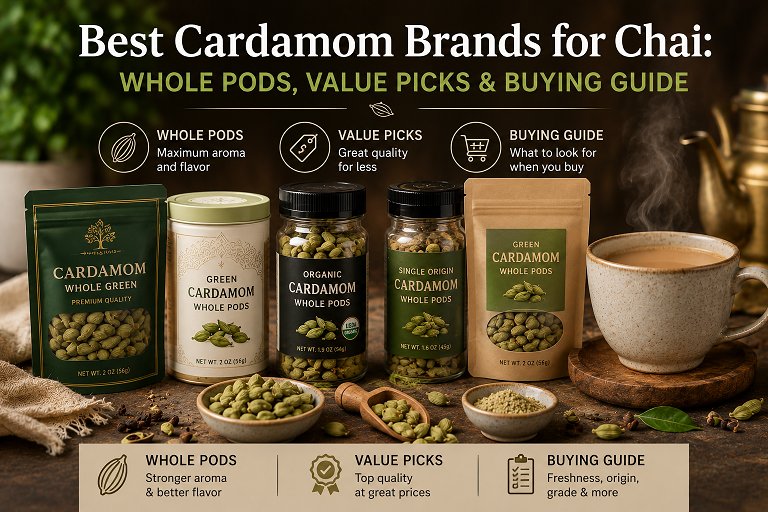
This guide to the best cardamom brands for chai is designed for U.S. home cooks who want to buy once, brew confidently, and avoid filling a cupboard with spices they will not use. The short answer is simple: for most stovetop chai, choose a small pack of fragrant whole green cardamom pods. Then pick a retailer or brand that makes sense for your budget, batch size, and cooking habits. A premium spice is worthwhile when cardamom is the star; a lively, well-packed grocery-store option is often smarter for everyday tea.
Below, you will find specific shopping routes, a format comparison, freshness checks, realistic serving guidance, and answers to the questions people ask before adding cardamom to masala chai or karak chai. This is flavor advice, not medical advice: cardamom belongs here because it tastes wonderful in tea.
Jump to the quick picks · How to choose · Pods vs. ground · How to use it · Storage · FAQs

Best cardamom brands for chai: quick picks
| Best for | What to buy | Why it works for chai |
|---|---|---|
| Premium whole pods | Diaspora Co. Baraka Cardamom | A focused whole-pod option for cooks who want vivid cardamom aroma in a small batch. |
| Everyday value | Whole green pods from a busy South Asian grocery | Usually the most practical route for frequent chai drinkers; turnover matters more than ornate packaging. |
| Easy ground-cardamom option | Simply Organic Ground Cardamom | Convenient for quick lattes, baking, and occasional chai; buy a small jar and use a light hand. |
| Pantry refills | Frontier Co-op Ground Cardamom | A sensible route for households that genuinely use ground cardamom often, not a substitute for fresh pods. |
| Ready-made spice profile | Diaspora Co. Chai Masala | A blend for people who prefer a consistent shortcut over measuring several whole spices. |
The “best” choice depends on how you make chai. Whole green pods are the default recommendation in this guide because they are easy to strain, forgiving in milk tea, and more likely to stay fragrant in the pantry. Ground cardamom is useful—but it is a convenience format, not the first choice when you want the clearest fresh aroma.
Our top choices explained
1. Diaspora Co. Baraka Cardamom: best premium cardamom for chai
Diaspora Co. Baraka Cardamom is a strong choice for the chai drinker who notices cardamom first and wants whole pods rather than a generic pre-ground jar. The product is positioned by the company for chai, coffee, breads, and baking, which makes it especially useful if you want one high-quality spice to move between sweet and savory cooking.
Why choose a premium pod? The advantage is not that a more expensive label magically fixes a recipe. The benefit is the opportunity for a more expressive, fragrant spice when the pods are fresh and you use them right before brewing. In a simple chai made with tea, water, milk, and a little sugar, that aroma has room to show up.
This is best for small household batches, gifts, and cooks who will also use cardamom in rice pudding, coffee, cookies, or a homemade spice mix. It may not be the value pick for a family making several pots of chai every day. If volume is your priority, compare the cost by weight with a nearby South Asian market and buy the amount you will actually finish while it is lively.
2. Whole green cardamom from a high-turnover South Asian grocery: best everyday value
For many U.S. households, the most sensible answer is not one national brand. It is a sealed pack of whole green cardamom from a busy Indian, Pakistani, Bangladeshi, Middle Eastern, or international grocery where spices move quickly. These stores often carry practical pack sizes and may give you better value per ounce than a specialty jar.
Use your senses rather than buying on name alone. Look for mostly intact pods, not a bag full of broken husks and loose dust. At home, crack open one pod. The seeds should smell bright, sweet, and distinctly aromatic. A pod can be green on the outside yet old inside, so color alone is not a guarantee. Start with a modest bag from a new store; once it performs well in your tea, it can become your dependable pantry source.
This option is ideal for traditional stovetop masala chai and for richer karak chai. It also makes it easy to increase or reduce the spice one pod at a time. That control is especially helpful when guests have different preferences.
3. Simply Organic Ground Cardamom: best convenient option
Simply Organic Ground Cardamom is a practical option when you want an easy-to-measure spice for baking, overnight oats, or an occasional chai latte. Ground cardamom disperses quickly, so there is no need to crack pods. That convenience is useful on busy mornings, particularly when you are making a single mug rather than a saucepan.
There are tradeoffs. Ground spice exposes much more surface area to air, which means its fragrance fades faster after opening. It can also leave a fine sediment in the cup. For one large mug, begin with a tiny pinch—roughly 1/16 to 1/8 teaspoon—rather than adding a full spoonful. You can always add more on your next brew; you cannot take an overly perfumed or gritty spice note out of the current cup.
Think of ground cardamom as the best secondary format. Keep it for quick recipes, but buy whole pods if chai is a weekly ritual.
4. Frontier Co-op Ground Cardamom: best for frequent ground-spice cooking
Frontier Co-op Ground Cardamom can make sense for serious bakers, shared kitchens, or people who use ground cardamom across many recipes. Bulk is only a good value if you use it promptly. If your cardamom appears mainly in weekend chai, a smaller jar is normally the better purchase because fresher spice is more useful than a larger quantity.
For chai, add the powder late in the simmer and stir well. Ground cardamom is more direct than a lightly opened pod, so pair it with restrained quantities of clove and black pepper. This option suits someone who values convenience and already knows they will use the spice beyond tea.
5. Diaspora Co. Chai Masala: best shortcut when you do not want separate jars
A ready blend is not a cardamom brand in the narrow sense, but it solves a genuine buying problem: you may want a reliable spiced cup without sourcing, crushing, and balancing multiple ingredients. Diaspora Co. Chai Masala is sold as a tea-free spice blend, so you still choose your own black tea and milk.
This is useful for beginners, gift baskets, and households that make chai occasionally. It will not taste identical to a pot built from freshly crushed cardamom pods, ginger, cinnamon, and tea leaves, but it can reduce friction on a weekday. If cardamom is your favorite note, taste the blend by itself before adding extra pods; piling spices into an already seasoned pot is a common route to a harsh cup.
How to choose cardamom for chai
Shopping well matters more than memorizing a long list of brands. Use these checks whether you buy online, at a supermarket, or from a neighborhood spice shop.
Choose green cardamom for classic chai
Green cardamom is the familiar choice for masala chai. It has a floral, sweet, eucalyptus-like lift that works with dairy and black tea. Black cardamom is a separate ingredient: it is larger, darker, and smoky, and it is more at home in savory braises, lentils, and rice dishes. Do not buy black cardamom expecting a direct swap in your favorite chai recipe.
Prefer intact whole pods
Whole pods protect the tiny seeds inside. That natural shell helps preserve aroma until you are ready to brew. Avoid a package made up mostly of empty-looking shells, fragments, or powder. A little variation is normal; the goal is a pack that feels like pods rather than sweepings from the bottom of a bin.
Buy the pack size your routine can support
It is tempting to buy the biggest bag because the unit price looks attractive. Yet a 2-ounce packet that you use in a few months can be more valuable than a pound that fades at the back of the cupboard. A frequent chai household may finish a larger pack happily. An occasional drinker should start small. Cardamom has no prize for being stored indefinitely.
Look for clean, simple labeling
For pure cardamom, the ingredient panel should be straightforward. For chai blends, read the label so you know whether tea, sugar, milk powder, flavorings, or extra spices are included. A tea-free spice blend gives you more control over the tea strength and sweetness; a sweetened latte mix is a different kind of convenience product.
Whole pods vs. seeds vs. ground cardamom
| Format | Best use | How to use in chai | Main drawback |
|---|---|---|---|
| Whole green pods | Stovetop chai and maximum freshness | Lightly crush 2–3 pods for two small servings, then simmer and strain. | Requires a small amount of prep. |
| Loose cardamom seeds | Recipes that need a concentrated flavor | Use a small pinch; crush before brewing. | Easy to overdo and less protected in storage. |
| Ground green cardamom | Quick lattes, baking, and single mugs | Add a tiny pinch near the end of the simmer. | Fades faster and may leave sediment. |
| Black cardamom | Savory cooking | Usually skip it for standard chai. | Smoky profile changes the drink. |
Whole green pods win for the widest range of chai styles. They offer a soft release of flavor instead of an instant blast, and they are simple to fish out or strain. If you make masala chai with fresh ginger, the pod format also lets each spice arrive at a slightly different pace.
What makes cardamom taste fresh?
A fresh pod has a noticeable perfume when cracked, with dark seeds inside that smell lively rather than dusty. Do not expect every pod to be identical in size or shade. Agricultural products vary. Instead, assess the overall package: are the pods mostly closed and firm? Is there a good ratio of seeds to husk? Does one opened pod actually smell like cardamom?
Freshness is why a smaller, recently opened packet from a reliable source often beats an impressive glass jar that has sat near a sunny stove for years. It is also why whole cardamom tends to provide a better experience than ground spice for tea. The moment you grind any spice, its aromatic oils have more exposure to air.
How much cardamom to use in chai
For a pan that makes two small cups, start with two to three whole green pods. Press each one once with the flat side of a knife or give it a gentle crack in a mortar. You want to split the shell, not pulverize it into a cloud of tiny pieces. Simmer the crushed pods in water with ginger or other whole spices for a few minutes, add tea, then add milk and sweetener according to your recipe.
For four U.S.-style cups, try four to six pods. The exact amount depends on pod size, the tea’s strength, and whether you are using other spices. If you add clove, black pepper, cinnamon, or a prepared masala blend, begin at the low end. A good chai tastes balanced: you should still be able to recognize the tea and milk.
With ground cardamom, start at 1/8 teaspoon for two servings. Stir it in toward the end so it does not cling to the pan. For a solid foundation, follow our masala chai recipe from scratch, then adjust one variable at a time. For a bold, milk-forward alternative, use the karak chai recipe and let cardamom play the bright top note.
Pairing cardamom with tea, milk, and other spices
Cardamom has enough presence to stand beside a robust black tea, but it does not require a complicated spice cabinet. Assam tea is a particularly good match because its malty body remains noticeable under milk and spice. If you are choosing tea as well as cardamom, see our guide to the best Assam tea for karak chai.
Fresh ginger and cardamom are an easy starting pair. Cinnamon adds sweet warmth. A single clove or a few black peppercorns can bring depth, but both become dominant quickly. For an everyday house blend, it is often better to use fewer spices well than to add everything at once. Our chai spice mix recipe can help you build a repeatable blend without guesswork.
How to store cardamom so it stays fragrant
- Keep whole pods in a tightly sealed jar or their original well-closed pouch.
- Store them in a cool, dark, dry cupboard—not beside the kettle, dishwasher, or stove.
- Use a dry measuring spoon. Moisture can cause clumping and compromise a spice.
- Keep ground cardamom in a smaller container and replace it sooner than whole pods.
- Write the open date on the package if you tend to forget how long spices have been around.
A fading aroma is the clearest signal that cardamom no longer deserves center stage in your chai. It may still be usable in a heavily spiced cookie or rice dish, but do not expect it to carry a simple milk tea.

Troubleshooting cardamom chai
My chai is bitter, not fragrant
The culprit is often over-steeped tea, an aggressive boil, or too many pungent spices rather than cardamom alone. Reduce the tea’s simmer time, use fewer cloves or peppercorns, and crack the cardamom only lightly. Our guide to why chai turns bitter walks through the most common fixes.
I cannot taste the cardamom
Open a pod and smell the seeds. If they are flat, the spice is likely old. If they smell great, use one additional pod in the next batch or reduce competing cinnamon and clove. Add more gradually; a strongly perfumed cup can be harder to rescue than a gentle one.
My tea tastes gritty
That is usually ground cardamom or finely broken pod fragments. Switch to whole pods, crush them less forcefully, and strain the finished chai through a fine mesh strainer. A reusable tea strainer can be helpful when making a single mug.
The cardamom flavor is smoky
Check the package. You may have used black cardamom, or a blend with a smoke-forward ingredient. Green cardamom is the usual choice for a floral, bright chai profile.
Frequently asked questions
Which cardamom is best for chai?
Whole green cardamom is the best all-purpose choice for chai. It gives the classic floral aroma, stays fresher than ground spice, and is easy to strain after simmering.
Are whole pods better than ground cardamom for chai?
For most stovetop chai, yes. Whole pods retain aroma longer and give you more control. Ground cardamom is handy for quick drinks and baking, but use it in smaller amounts and expect some sediment.
How many cardamom pods should I use for two cups of chai?
Start with two to three lightly crushed green pods for two small servings. Increase slowly if you want a stronger cardamom note, especially if your tea is robust or you use plenty of milk.
Can I use black cardamom in chai?
You can experiment, but it is not the usual substitute for green cardamom. Its smoky flavor creates a very different drink and can overwhelm a classic masala or karak chai.
Is an expensive cardamom brand always better?
No. Freshness, intact pods, storage, and how quickly you use the package matter more than a label alone. A good high-turnover grocery pack can make excellent chai, while a neglected premium jar can taste flat.
Should I buy a chai masala instead of separate spices?
Choose a blend when speed and consistency matter most. Choose separate whole spices when you want to adjust cardamom, ginger, cinnamon, and clove to your taste. Both are valid approaches; they simply make different kinds of weekday routines.
Final verdict: the best cardamom purchase for most chai drinkers
For most people, the best cardamom for chai is a small, fresh package of whole green pods from a trusted specialty brand or a busy South Asian market. If you want a premium, cardamom-forward choice, Diaspora Co. Baraka Cardamom is an appealing whole-pod option. If convenience matters more, a small jar of ground cardamom or a tea-free chai masala blend can still make a satisfying cup.
Do not overcomplicate the first purchase. Buy enough for the next several weeks, crack two or three pods, and taste what happens. Once you know whether you prefer a bright cardamom note or a gentler background warmth, you can tune the rest of your chai pantry with confidence.