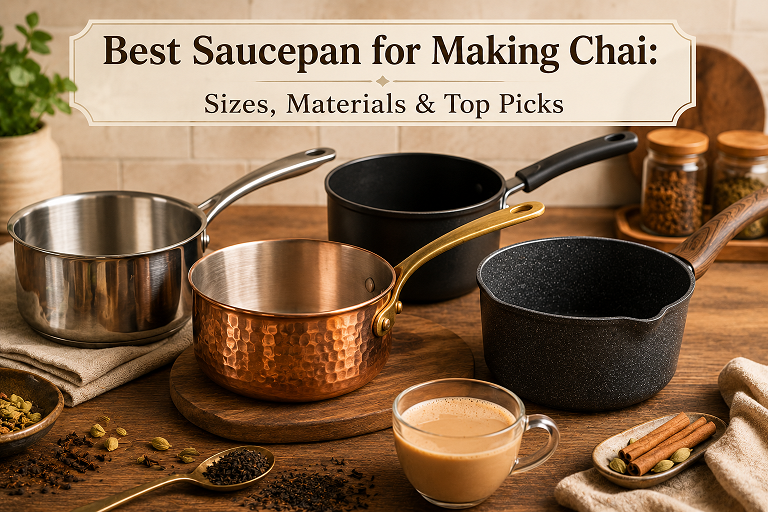
Disclosure: This editorial guide may contain affiliate links. Chaewala may earn a small commission if you buy through a qualifying link, at no added cost to you. Check current specifications and availability before purchase.
The best saucepan for making chai is not necessarily a large or expensive one. For daily stovetop chai, choose a small-to-medium stainless-steel saucepan with a thick base, a comfortable handle, a rolled pouring rim, and enough empty space above the milk. A 1.5- to 2-quart pan is the most useful size for one to four cups.
Quick recommendation
For most homes, a fully clad stainless-steel saucepan is the best long-term choice. It is non-reactive, durable, works with milk and spices, and can move from gentle simmering to washing without special care. A heavy-bottomed budget stainless pan is also excellent if it heats evenly and has a secure handle.
| Type | Best for | Watch out for |
|---|---|---|
| Fully clad stainless steel | Frequent chai and long-term durability | Higher upfront cost |
| Heavy-base stainless steel | Best everyday value | Check base thickness and handle comfort |
| Tri-ply stainless steel | Even heating on electric or induction cooktops | Usually heavier |
| Nonstick saucepan | Occasional low-heat milk warming | Not ideal for repeated high heat or vigorous boiling |
What to look for in a chai saucepan
1. Capacity matters more than people expect
Chai foams when milk reaches a boil. A pan filled close to the top is an invitation to a messy stovetop. For two regular cups, a 1.5-quart pan is usually sufficient. Choose 2 quarts when you make chai for guests or like extra room for a rolling boil. A 3-quart saucepan is useful for family batches but can feel oversized for one cup.
2. Use a thick, even-heating base
Thin steel heats quickly but can create hot spots, which makes milk catch on the bottom. Look for a heavy encapsulated base or fully clad construction. The goal is not to boil chai aggressively; it is to bring water, tea, spices, and milk together steadily without scorching.
3. Prefer stainless steel for traditional chai
Stainless steel is practical because it does not retain strong cardamom, ginger, or masala aromas, and it is simple to scrub when milk residue forms. It also makes it easy to use the same pan for plain tea, sugar-free karak chai, or spiced milk tea.
4. A pouring rim is genuinely useful
Chai is often strained directly into cups or glasses. A rounded rim reduces drips and makes the final pour safer. A small saucepan with a broad, stable handle is better than a narrow pot that feels awkward when full.
Best saucepan styles to compare
All-Clad D3 Stainless Steel Saucepan
All-Clad’s D3 stainless saucepan represents the fully clad style: stainless steel surrounding an aluminum core for even heating. It is a premium option for a kitchen that makes chai frequently and also cooks sauces, oats, and small meals. Choose the 2-quart size for versatile everyday use.
Cuisinart MultiClad Pro saucepan
The Cuisinart MultiClad Pro is a useful comparison for shoppers seeking tri-ply stainless construction at a lower price tier than premium cookware. Check the size before ordering; a smaller saucepan is usually more convenient for chai than a large stockpot.
Tramontina Tri-Ply Clad saucepan
Tramontina’s Tri-Ply Clad 2-quart covered saucepan is another sensible style for milk tea. It offers enough room for a two-to-four-cup batch and stainless construction that is easy to maintain. A lid is useful for heating water but remove it when chai is simmering so rising milk does not overflow unnoticed.
How to make chai without burning the milk
- Start with water and whole spices; bring them to a gentle simmer.
- Add black tea and let it brew briefly. For a bold base, consult our loose-leaf chai tea guide.
- Add milk and reduce the heat slightly as the mixture rises.
- Stir once or twice with a heat-safe spoon; do not walk away when the milk approaches a boil.
- Strain as soon as the chai reaches your preferred strength.
Common mistakes
- Using too small a pan: overflow is the most common chai problem.
- Boiling on maximum heat: it increases scorching risk and makes tea bitter.
- Leaving sweetened milk to dry: rinse the pan immediately after serving.
- Buying a nonstick pan only for chai: stainless steel is usually more versatile and tolerant of regular use.
Frequently asked questions
What size saucepan is best for chai?
A 1.5- to 2-quart saucepan is best for most homes. It provides room for foaming milk while staying easy to handle.
Can I make chai in a nonstick saucepan?
Yes, at moderate heat, but stainless steel is generally the better all-purpose material for boiling tea, milk, and spices regularly.
Do I need a lid?
A lid is helpful for heating water, but do not cover simmering chai. Keeping it uncovered makes it easier to prevent boil-over.
Final verdict
Buy a 1.5- to 2-quart stainless-steel saucepan with a thick base and a comfortable handle. It will give you the control needed for creamy chai, minimize scorching, and remain useful for everyday cooking. For more ways to improve the tea itself, read our loose-leaf chai guide and guide to chai styles in South Asia.
Jump to: Best size · Materials · Best saucepan types · Care tips · FAQs
+What size saucepan is best for making chai?
+For most homes, a 1.5- to 2-quart saucepan is the sweet spot. It makes one or two generous mugs of chai while leaving enough headroom for milk foam. A small pan that looks efficient can be frustrating because chai rises rapidly once milk is hot. Headroom matters more than people expect: it gives you a few seconds to lower the heat instead of cleaning a boiled-over stove.
+Choose a 3-quart saucepan if you regularly make chai for three or four people. It is also a comfortable size for cooking a larger batch of tea-and-spice base before adding milk. Avoid buying an oversized stockpot just for daily chai; it takes longer to heat, is harder to pour cleanly, and can make one serving feel awkward.
+| Household routine | Useful pan size | Why |
|---|---|---|
| One large mug | 1 to 1.5 quarts | Quick to heat, but watch foam closely. |
| Two servings | 1.5 to 2 quarts | Best balance of control and headroom. |
| Three to four servings | 2.5 to 3 quarts | Enough space to stir without splashing. |
| Frequent guests | 3 quarts plus a smaller daily pan | More flexible than using one huge pot for everything. |
Saucepan materials: stainless steel, nonstick, enamel, and copper
+Stainless steel is the best all-around material for chai. It is durable, handles boiling water and milk well, works with metal whisks and spoons, and does not require the gentle utensil care of nonstick. Look for a pan with a thick or clad base rather than the very thinnest steel. Better heat distribution reduces hot spots, which makes milk less likely to catch on the bottom.
+Nonstick saucepans can make chai, and they are easy to clean, but use moderate heat and the utensils recommended by the maker. Nonstick is most appealing to people who often scorch milk or who want the least cleanup. Its trade-off is a shorter working life and less flexibility for high heat. Do not use a damaged nonstick pan.
+Enameled cookware can be attractive and easy to wipe clean, but weight and price vary substantially. Copper heats responsively but needs more maintenance and is not necessary for ordinary chai. For a first purchase, spend your budget on a stable stainless-steel pan, a comfortable handle, and a good base rather than a decorative finish.
+Best saucepan types for chai buyers
+Best overall: 1.5- to 2-quart stainless-steel saucepan with a thick base
+This is the most sensible purchase for the majority of chai drinkers. It is large enough to manage foaming milk, compact enough for daily use, and useful for sauces, eggs, oatmeal, and reheating soup. A securely attached handle, clear capacity markings, and a rim that pours well are practical features worth paying for.
+Best budget choice: simple stainless steel with a heavier bottom
+You do not need premium cookware to make excellent chai. A basic steel saucepan can work for years if the base is reasonably thick and the handle is secure. Check that it sits flat on your cooktop, that its rim is not sharp, and that the size matches your usual batch. Buy the pan for its function, not because the label says it is made for tea.
+Best for easy cleanup: quality nonstick saucepan
+A well-made nonstick pan can suit someone who makes milk chai once in a while and dislikes soaking burnt residue. Keep the heat medium or lower, use a silicone or wood utensil, and replace the pan if the cooking surface becomes visibly damaged. For frequent, high-heat use, stainless steel remains the more versatile long-term option.
+Best for groups: 3-quart stainless saucepan
+A 3-quart pan makes family batches and guest servings more comfortable. It gives room to stir tea, spices, water, and milk without rushing. It is also helpful when making a concentrate-style tea base. If you mainly make one cup, however, it is better as a second pan rather than your only chai saucepan.
+Features that matter more than a brand name
+A thick bottom, a balanced handle, and sensible size affect your daily experience more than a fashionable logo. A lid is useful for bringing water to temperature, but keep chai uncovered once milk is simmering so you can see it rise. A flared rim helps with pouring; a narrow or sharp rim increases drips. If you use induction, confirm that the product specifically says it is induction compatible.
+Also consider weight. A very heavy pan can feel luxurious, but a manageable saucepan is safer when you are pouring hot chai through a strainer with one hand. In a store, mimic the pouring motion. Online, check product dimensions and buyer reviews for comments about balance—not just star ratings.
+How to make chai in a saucepan without scorching or boiling over
+Start with water and spices, then add tea. Bring that mixture to a gentle simmer before adding milk. Once milk is in the pan, stay nearby. Milk foam can rise suddenly, especially in a small pan or over high heat. Lower the heat as the liquid rises, stir if necessary, and do not put a tight lid over simmering chai.
+If tea tastes bitter, the issue is usually not the saucepan alone. You may be using too much tea, boiling it too long, or using stale spices. Use a strong black tea that can stand up to milk—our best Assam tea for karak chai guide is a useful starting point—and follow our masala chai from scratch method for a balanced process.
+Cleaning and care
+Wash the saucepan soon after it cools, especially after milk chai. Soaking warm water in the pan loosens residue without harsh scrubbing. For stainless steel, use a non-abrasive sponge and avoid prolonged soaking of very salty or acidic food. For nonstick, follow the manufacturer’s instructions and avoid metal tools.
+Brown marks on stainless steel do not mean the pan is ruined. A paste made for stainless cookware or a gentle baking-soda soak can often improve its appearance. Do not use a pan with a loose handle, warped base, or damaged coating. A safe, stable pan is more important than a perfectly polished one.
+Is a dedicated chai saucepan worth it?
+A dedicated pan is optional, but many regular chai drinkers enjoy it. It prevents strong spice aromas from transferring to delicate sauces and makes your morning routine faster because the right pan is always available. You do not need a specialty product: an affordable 2-quart steel saucepan can become your chai pan simply through regular use.
+Pair it with a fine-mesh strainer, measuring spoons, and a sturdy mug. Our chai equipment starter kit covers the useful basics without encouraging unnecessary gadgets.
+More frequently asked questions
+Is stainless steel safe for boiling milk chai?
Yes. Stainless steel is widely used for boiling water, milk, tea, and spices. Use a suitable heat level and clean the pan after use.
+Can I make chai in a small milk pan?
Yes, but leave plenty of headroom. A very small pan is more likely to boil over once milk foams.
+Should I use a lid while making chai?
Use a lid only to speed water heating if you wish. Remove it before milk simmers so you can watch the foam.
+Do I need a special tea pot for chai?
No. A practical saucepan and fine strainer are more useful for stovetop chai than a specialty teapot.
+What is the best saucepan for induction chai?
Choose a flat-bottom stainless-steel pan specifically marked induction compatible. Check the manufacturer’s current product details before buying.
+Final buying advice
+Buy a 1.5- to 2-quart stainless-steel saucepan with a thick base, a stable handle, and enough room for milk foam. That simple choice handles daily chai well and remains useful throughout your kitchen. Choose nonstick only when easier cleanup is your top priority, and buy a 3-quart pan when you regularly serve a group.
+A good saucepan will not make weak tea strong, but it gives you the control to brew chai calmly and consistently. Use fresh spices, a robust tea, moderate heat, and a fine strainer, then adjust the recipe—not the pan size—when you want a bolder or less-sweet cup.
1 thought on “Best Saucepan for Making Chai: Sizes, Materials & Top Picks”