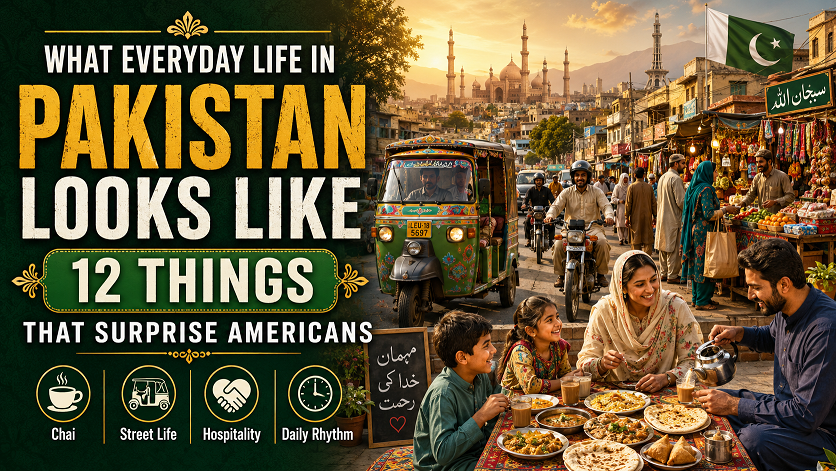
What Everyday Life in Pakistan Looks Like — 12 Things That Surprise Americans
Daily life in Pakistan revolves around family, food, and a much more flexible relationship with time than most Americans are used to. Meals are communal, dinner happens late, doors are rarely locked to relatives, and “I’ll be there in 10 minutes” can mean anywhere from 10 to 40. None of this is dysfunction — it’s a different set of defaults, shaped by climate, family structure, and a culture that prioritizes relationships over schedules. Here are 12 specific things that tend to catch Americans off guard the most.
When American friends, coworkers, or readers ask me about life in Pakistan, they’re usually picturing something between a news headline and a travel documentary — neither of which captures what an ordinary Tuesday actually looks like for most people.
The truth is both simpler and more interesting than either extreme. Life in Pakistan, for most people, looks like: getting kids to school, going to work, cooking dinner, visiting relatives, watching a drama before bed. The differences aren’t really about what happens — they’re about *how* it happens, and the small details around it. Here are twelve of those details that consistently surprise people encountering Pakistani daily life for the first time.
The 12 Things — Explained One by One
Dinner Happens Late — Often 8 to 10 PM
In the US, dinner around 6 PM is common. In Pakistan, especially in summer, dinner often doesn’t happen until 8, 9, or even 10 PM. Part of this is climate — afternoons can be too hot to cook or eat comfortably — and part of it is simply a different rhythm to the evening, which often includes visiting, prayers, or just winding down before eating.
“I’ll Be There Soon” Has a Wide Definition
Timekeeping tends to be more elastic. If someone says they’ll arrive “soon” or “in a bit,” it could genuinely mean anywhere from 10 minutes to an hour. This isn’t seen as rude — it’s just a shared understanding that exact timing matters less than the fact that someone is, in fact, coming.
Doors Are Open to Relatives — Literally
In many households, close relatives don’t knock or call ahead before visiting — they simply come over. A cousin, aunt, or grandparent showing up unannounced on a weekday afternoon is completely normal, and the household adjusts (usually starting with making chai).
Food Is Eaten Together, From Shared Dishes
Meals are often served family-style — multiple dishes placed in the center of the table (or on a floor mat in some homes), with everyone serving themselves throughout the meal. Individual plated meals, common in American restaurants, are less typical for everyday home dinners. Curious how Pakistani food actually compares to Indian food? We break down the real similarities and differences in our full comparison guide.
Bargaining Is Normal — Even Expected
At markets, with rickshaw or taxi drivers, and in many smaller shops, prices are often a starting point rather than a final number. Bargaining isn’t seen as awkward or aggressive — it’s a normal, sometimes even friendly, part of the transaction.
Multiple Generations Often Share a Home
While this is changing in cities, it’s still common for grandparents, parents, and adult children (with their own families) to live in the same house or very close by. Decisions — from what to cook to bigger life choices — often involve input from multiple generations, not just one household.
Street Food Is a Daily Thing, Not a Treat
In the US, street food or food trucks can feel like an occasional novelty. In Pakistani cities, street food stalls — for snacks, breakfast items, or late-night food — are often part of the regular weekly (or daily) routine for many people, not a special occasion.
Friday Has a Different Rhythm
Friday is the main day for congregational prayers for many Muslims, which shapes the midday rhythm of the day — many businesses adjust hours slightly, and lunch can take on a slightly different, often more relaxed, tone compared to other weekdays.
Power Outages (Load Shedding) Are a Fact of Life
In many areas, scheduled or unscheduled electricity outages — known locally as “load shedding” — are common enough that households plan around them: backup batteries, generators, or simply knowing which hours tend to be affected.
Weddings Last Days, Not Hours
A single wedding often involves multiple separate events spread across several days — each with its own dress code, traditions, and guest list. We cover this in detail in our full Pakistani wedding guide, but the short version: it’s less “one event” and more “a multi-day occasion.”
Personal Questions Are Considered Friendly, Not Nosy
Questions that might feel intrusive in American small talk — about marriage status, salary, or family plans — are often asked early and casually in Pakistan, sometimes even by people you’ve just met. This usually comes from a place of genuine interest and care, not nosiness, though it can feel jarring at first.
Dramas Are a Shared Evening Ritual
Pakistani dramas — typically airing in the evening — are often watched as a household activity, sometimes with chai and snacks, and discussed the next day with friends, family, or coworkers the way American audiences might discuss a major TV show the morning after. If you’re curious where to start, we have a complete beginner’s guide to Pakistani dramas.
Why These Differences Exist
None of these twelve things happen in isolation — they’re connected to a few underlying themes that show up again and again in Pakistani daily life.
Relationships Often Come Before Schedules
Many of the “surprises” on this list — flexible timing, unannounced visits, personal questions — come down to the same root idea: relationships are often prioritized over strict scheduling or privacy norms. A relative showing up unannounced isn’t an interruption; it’s the relationship working as intended.
Climate Shapes the Day More Than You’d Think
Pakistan’s climate — hot summers in much of the country — genuinely shapes daily rhythms. Late dinners, evening socializing, and adjusted work hours during extreme heat are practical adaptations, not just cultural preferences.
Community Infrastructure Fills Gaps
Things like load shedding or infrastructure inconsistencies have led to informal solutions — generators, community arrangements, flexible business hours — that become part of “normal” daily life rather than constant disruptions.
Pakistan vs the US — A Quick Side-by-Side
| Aspect of Daily Life | Common in Pakistan | Common in the US |
|---|---|---|
| Typical dinner time | 8 PM – 10 PM | 5:30 PM – 7 PM |
| Unannounced visits from relatives | Common and normal | Usually requires a heads-up |
| Meal style | Shared dishes, family-style | Individual plated meals |
| Bargaining at markets | Common and expected | Mostly fixed prices |
| Multi-generational households | Common, especially outside major cities | Less common, though growing |
| Evening household activity | Watching dramas together, chai | Streaming individually, varies widely |
Where Chai Fits Into All of This
If you’ve read our piece on why Pakistanis drink tea 5 times a day, a lot of this will sound familiar — chai shows up in nearly every one of these twelve points, whether it’s the unannounced guest, the late evening drama session, or the relaxed approach to time. It’s woven into the rhythm described here, not separate from it.
Think you know South Asian culture well?
Take our quiz and test your knowledge — from food and festivals to everyday customs.
Frequently Asked Questions
What is daily life like in Pakistan?
Daily life in Pakistan is centered heavily around family, food, and community. Days often start early, meals are eaten together rather than individually, extended family plays a large role in daily routines, and social visiting — both planned and unannounced — is common. Time is generally treated more flexibly than in the US, and hospitality customs like offering tea or food to guests are deeply ingrained.
Is Pakistan safe for everyday life?
Like any country, experiences vary significantly by city, neighborhood, and personal circumstances. Major cities like Karachi, Lahore, and Islamabad have areas that function much like any large city, with millions of people going about ordinary daily routines — work, school, shopping, socializing. As with travel anywhere, it’s worth researching current conditions for specific areas rather than relying on generalizations.
Do families live together in Pakistan?
Joint family living — where multiple generations or siblings’ families share a household or live very close together — remains common in Pakistan, though nuclear family households have become more common in urban areas, especially among younger generations. Even when families live separately, frequent visiting and close involvement in each other’s daily lives is typical.
What time do people eat dinner in Pakistan?
Dinner in Pakistan is often eaten later than typical American dinner times, commonly between 8 PM and 10 PM, and sometimes later on weekends or when guests are present. This is partly due to climate (evenings are cooler and more comfortable for cooking and eating) and partly due to the rhythm of the working day.
1 thought on “What Everyday Life in Pakistan Looks Like — 12 Things That Surprise Americans”