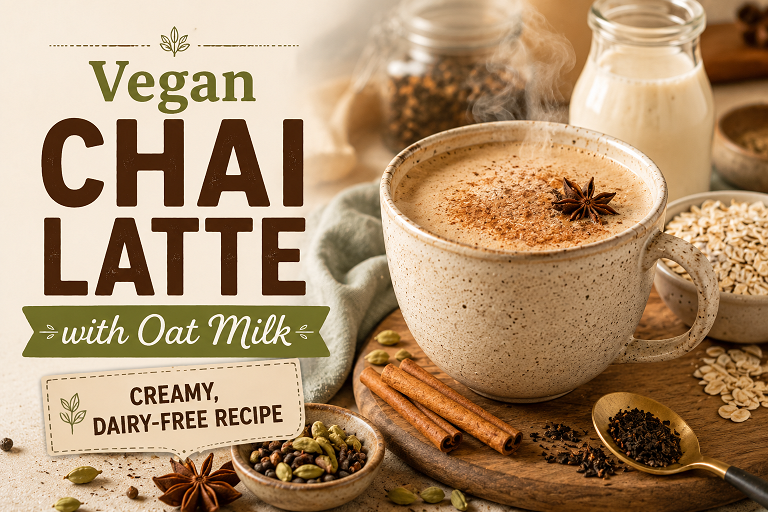
This vegan chai latte combines black tea, cardamom, cinnamon, cloves, fresh ginger and oat milk for a warm, dairy-free drink. Brew the spices and tea in water first, strain, then gently warm the oat milk into the base. The method keeps tea strength separate from milk heating, making the flavor easier to adjust.
You do not need an espresso machine, a commercial chai concentrate or a long list of specialty ingredients. A saucepan, measuring spoons and a fine strainer are enough. Foam is optional, and the same spiced tea base can be cooled for an iced oat milk chai latte.
Jump to the recipe · Choose oat milk · Make it iced · Troubleshooting
What Makes This a Vegan Chai Latte?
The drink uses a plant-based milk alternative instead of dairy and maple syrup instead of honey. The other basic ingredients are tea, water and spices. If you use flavored tea, a prepared concentrate, sweetener or topping, check its ingredients rather than assuming every chai-branded product is vegan.
“Chai” means tea, while masala chai refers to spiced tea. Many household versions are prepared with milk, but there is no single recipe that represents every family or region. This oat milk version is a dairy-free adaptation, not a claim that traditional chai must be made this way. Our guide to masala chai explains the terminology and the difference between stovetop chai and café-style lattes.
Oat milk contributes its own cereal-like flavor and sweetness. It does not taste identical to whole dairy milk, and that is not a problem. The goal is a balanced drink in which black tea remains noticeable beneath the spices and creamy finish.
Vegan Chai Latte Recipe with Oat Milk
- Preparation: approximately 5 minutes
- Cooking and steeping: approximately 12 minutes
- Total: approximately 17 minutes
- Yield: 2 modest servings, approximately 1 cup each after evaporation; final volume varies
- Equipment: small saucepan with room above the liquid, measuring cups and spoons, spoon, fine strainer and heat-safe jug
Measurements below use a rounded kitchen conversion of 1 US cup to 240 mL. Use level measuring teaspoons, not eating utensils. Brewing time is a starting guide; leaf size, the saucepan and your stove affect the result.
Ingredients
- 1 1/2 cups water (360 mL)
- 1 cup plain oat milk (240 mL), regular or barista-style
- 2 teaspoons loose black tea, or 2 standard black tea bags
- 4 green cardamom pods, gently cracked
- 1 small cinnamon stick, approximately 2 inches long
- 2 whole cloves
- 4 thin slices fresh ginger, approximately 5 g, lightly crushed
- 2 teaspoons pure maple syrup, optional, plus more to taste
Instructions
- Prepare the spices. Crack the cardamom pods enough to expose the seeds. Lightly crush the ginger slices. Leave the cinnamon and cloves whole so they are easy to strain out.
- Simmer the spice base. Combine the water, cardamom, cinnamon, cloves and ginger in the saucepan. Bring to a boil, then reduce to a gentle simmer for about 4 minutes. Keep enough water in the pan to make a tea base rather than allowing it to reduce to a small puddle.
- Brew the tea. Take the saucepan off the heat and add the loose tea or tea bags. Start checking after 3 minutes; many black teas suit about 3–5 minutes, but follow the packet if it gives different directions. Taste a cooled spoonful. Aim for a distinct tea flavor that can tolerate the oat milk without becoming harsh.
- Strain before adding milk. Pour through a fine strainer into a heat-safe jug. Remove tea bags first if using them. Discard the spent tea and spices, rinse away any particles left in the pan, and return the strained base to it.
- Add oat milk and warm gently. Shake the carton if its label instructs you to, then measure the oat milk into the base. Warm over low heat, stirring, until the drink is pleasantly hot and steaming. Avoid a prolonged rolling boil and follow any heating advice on the carton.
- Sweeten and serve. Stir in the maple syrup, if using. Taste a safely cooled spoonful before adding more. Divide between two cups and serve. Let the drink cool to a comfortable sipping temperature.
Optional foam: Reserve 1/4 cup of the measured oat milk before adding the rest to the saucepan. Warm and froth that portion separately, following your equipment instructions, then divide it between the cups. This keeps the recipe’s total milk quantity unchanged.
Why Brew the Tea Before Adding Oat Milk?
Separating the stages gives you control. The whole spices need time in hot water to release their aroma, while tea can become unpleasantly bitter if it stays in the pan too long. Adding the leaves after the initial spice simmer lets you adjust tea extraction without cutting the spices short.
Straining before the oat milk goes in stops the tea from continuing to steep during the final warming stage. It also makes the drink easier to taste and troubleshoot. If it is too strong before milk, you can make a small adjustment. If you boil everything together for an extended period, it becomes harder to tell whether the problem is the tea, the spices or the cooked milk flavor.
This is a convenient method for a plant-based latte, not a declaration that all one-pot chai is wrong. The stovetop masala chai recipe uses its own approach. Follow one complete method rather than combining the longest cooking stages from several recipes.
How to Choose Oat Milk for Chai
Start with a plain oat beverage whose flavor you enjoy on its own. If it tastes strongly sweetened or vanilla-flavored straight from the carton, those qualities will carry into your chai. Try a small carton before buying a multipack, especially if this is your first dairy-free latte.
| Feature | Why it matters | What to do |
|---|---|---|
| Plain versus flavored | Vanilla or other flavors alter the spice balance | Use plain for the base recipe; choose flavored deliberately |
| Regular versus barista-style | Formulations differ in texture and suitability for foaming | Consider barista-style for foam, but do not assume regular milk cannot work |
| Sugars per serving | The finished drink may already taste sweet before syrup | Read Nutrition Facts and taste before sweetening |
| Fortification and protein | Plant beverages are not nutritionally interchangeable | Compare the label if these nutrients matter to your choice |
| Allergen and gluten information | Vegan does not mean suitable for every dietary restriction | Check the exact product and any relevant certification |
| Storage and carton size | A large carton is useful only if you use it in time | Follow opening and refrigeration directions |
A barista formulation may be a useful starting point when you want a foamy topping. For example, Oatly’s US Barista Edition product page describes its suitability for foaming and its formulation for hot drinks. That is product-specific information, not proof that every barista oat milk performs the same or that one brand is best for every kitchen.
Ordinary oat milk can still make enjoyable chai without much foam. Its performance depends on the actual formulation and the recipe, not simply the absence of the word “barista.” If your favorite product works, there is no need to replace it solely to match a label on someone else’s carton.
Tea and Spice Choices
Black tea: strength without excessive bitterness
A plain black tea provides a straightforward base. Assam-style tea or a breakfast blend can give a substantial flavor, but you do not need a premium single-origin product to make this recipe. Tea bags are convenient; loose tea allows you to adjust the amount in smaller steps.
Small broken leaves may extract more quickly than larger leaves. Two tea bags are not guaranteed to equal two teaspoons of every loose tea because bag weight and leaf density vary. Treat the recipe as a starting point and use the same tea while adjusting your first few batches.
Cardamom and cinnamon: the main aroma
Use green cardamom here. Black cardamom has a smoky character and is not a direct flavor substitute. Cracking the pods helps expose the seeds without creating the fine sediment associated with ground cardamom. Cinnamon-stick sizes vary, so use the approximate length as a starting guide rather than an exact promise of strength.
Ginger and cloves: keep them balanced
Fresh ginger adds a sharper flavor than cinnamon. Thin slices infuse readily and strain out neatly. Cloves are potent, so begin with two for the full batch. If you want a gentler drink, reduce the ginger or use one clove rather than masking excessive spice with more sweetener.
Using ground chai spice instead
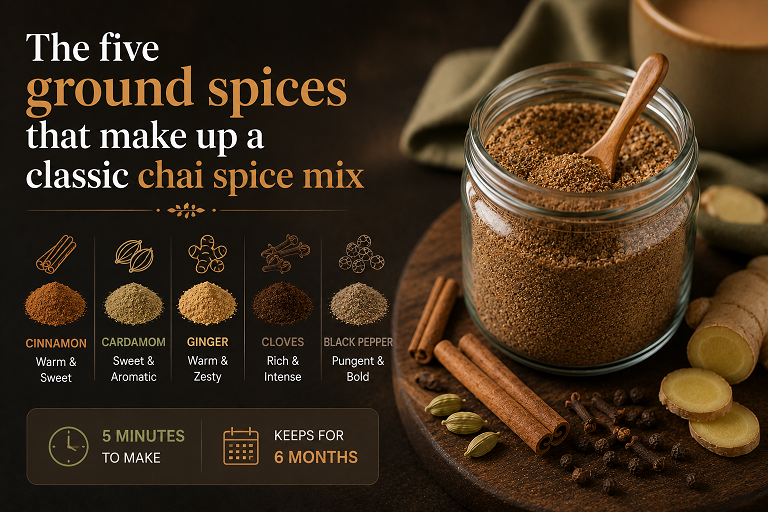
If you have our homemade chai spice mix, start with 1/4 teaspoon for the full two-serving batch, replacing the whole dried spices. Omit the fresh ginger initially because the blend already contains dried ginger, or keep a small amount if you prefer a sharper finish.
Brew the tea in water, strain, then whisk the blend into the oat milk and tea while warming gently. Ground spices do not dissolve completely. A fine strainer catches some particles, but a little settling is normal. Do not add a full dose of ground blend on top of all the whole spices and expect the same balance.
Sweeteners: Maple Syrup, Sugar and Unsweetened Chai
Pure maple syrup is the default here because it dissolves readily and keeps the ingredient list straightforward. Begin with two teaspoons for the entire batch, not two teaspoons per cup. Oat milk varies in sweetness, so you may prefer less or none.
Granulated sugar gives a more neutral result; brown sugar adds a molasses note. If your vegan preferences include how sugar is processed, choose a product labeled or certified to meet those preferences. Agave is another option, but use it to taste rather than assuming an identical amount of every sweetener tastes equally sweet.
Honey is not part of this vegan recipe. Likewise, a flavored syrup or instant chai powder should be checked for ingredients such as honey, milk powder or dairy creamer. Changing the milk alone does not automatically make a café drink or packaged mix vegan.
Leaving out the maple syrup means no syrup is added; it does not necessarily make the entire drink sugar-free. Read the oat milk label. “Natural” sweeteners also contribute sugars, so the choice is mainly about flavor and dietary preferences rather than a reason to add them freely.
Iced Vegan Chai Latte
Prepare the water, spices and tea through the straining step, but do not add oat milk. Stir the maple syrup into the warm strained base if using it. Cool the tea promptly in a suitable container, using an ice-water bath around the container if helpful, and refrigerate until chilled. Do not add bath water to the tea.
Divide the chilled tea between two glasses containing ice, then divide the measured cold oat milk between them. Stir before drinking. This keeps the same ingredient proportions as the hot recipe, although melting ice will gradually dilute the drink. Use chilled ingredients so you are not asking the ice to cool a hot saucepan’s worth of tea.
If you prefer a creamier iced latte, change the tea-to-milk ratio in your next batch or reserve some tea instead of using all of it. For a different flavor profile, our iced brown sugar chai latte can be prepared with suitable oat milk. Follow that recipe’s quantities rather than adding its syrup on top of this recipe’s sweetener automatically.
How to Make a Foamy Oat Milk Topping
Keep the reserved milk separate from the spiced tea. Froth it just before serving, because foam changes as it stands. Use a suitable handheld frother, whisk or manual milk press according to its instructions. The guide to frothing milk without an espresso machine covers the methods and common mistakes.
For a hot drink, warm the reserved oat milk gently before frothing unless the equipment heats it for you. For an iced drink, use refrigerated milk. Never shake hot milk in a sealed jar. A loose layer of bubbles is perfectly acceptable; detailed latte art is not required for a good cup.
Troubleshooting Your Oat Milk Chai
| Problem | Possible cause | Adjustment |
|---|---|---|
| Watery flavor | Tea too weak, light-bodied milk, or excess ice dilution | Check tea quantity and milk choice; chill the iced base fully |
| Bitter finish | Tea steeped too long or the leaf quantity is too high | Strain earlier; keep spice simmering separate from tea extraction |
| Too much clove or ginger | Spice balance is stronger than your preference | Reduce that ingredient in the next batch rather than increasing all the milk |
| Separation | Product formulation, heat or an acidic addition | Warm gently, avoid lemon, and try a product intended for hot drinks |
| Gritty texture | Ground spices or fine tea particles | Use whole spices and strain carefully; expect some sediment from powders |
| Little foam | Milk formulation or frothing technique | Try a foaming formulation or enjoy the latte without a topping |
Separation and spoilage are not the same thing, but you should not assume that every unusual texture is harmless. If a carton was stored improperly, is moldy or otherwise seems spoiled, discard it rather than trying to repair it through blending or reheating. When testing texture, start with a properly stored product within its labeled use instructions.
Other Plant-Based Milks You Can Try
Soy, almond, cashew and coconut beverages can all create a different version of the drink. None is universally best. Compare flavor, texture, allergens and nutrition for the particular product. Begin by replacing the oat milk with the same volume, then adjust a later batch if necessary.
Be especially careful with the term “coconut milk.” A carton of coconut beverage intended for drinking is not equivalent in richness to canned full-fat coconut milk. Replacing the whole cup with the canned version makes a substantially richer, coconut-forward drink. Treat that as a separate variation rather than an invisible swap.
Homemade plant beverages are another variable. They may lack the processing and formulation of a commercial carton, and their storage needs differ. The base recipe is written for commercially prepared oat milk; do not assume every homemade substitute will heat or foam in the same way.
Storage and Making Ahead
For the best flavor and texture, prepare only what you plan to drink. If making ahead, keep the strained tea base separate from the oat milk and add the milk when serving. For this recipe, a practical small-batch approach is to prepare the base the day before, refrigerate it promptly, and use it the following day. This is a planning suggestion, not a validated maximum shelf life.
Do not leave prepared chai on the counter all afternoon. The FDA’s food-storage guidance recommends refrigerating perishables within two hours, or within one hour when the surrounding temperature exceeds 90°F (32°C), and keeping the refrigerator at or below 40°F (4°C). Follow the oat milk carton’s storage and after-opening directions too.
Store in clean, covered food-safe containers. Reheat only the portion you need, stirring gently, and avoid repeated warming and cooling of the whole batch. Never return leftover prepared chai to the oat milk carton. If its handling history is uncertain, do not taste it to decide whether it is safe.
Caffeine and Nutrition: What This Recipe Does—and Does Not—Promise
A vegan chai latte made with ordinary black tea contains caffeine. Oat milk does not remove it. The amount depends on the tea, quantity, brewing method and serving size, so this recipe does not assign one fixed caffeine value to every version.
Decaffeinated black tea is an option if you want less caffeine, although decaf is not necessarily caffeine-free. The FDA’s caffeine guide explains that people differ in sensitivity. Follow individualized advice if pregnancy, medication or a medical condition affects your caffeine choices.
Calories, protein and sugars also vary with the oat milk and sweetener. For a label-based estimate, add the nutrients in the full cup of oat milk and the syrup used, then divide by two servings. This gives an approximate contribution from those ingredients, not a laboratory analysis of the finished drink.
Vegan does not automatically mean low-sugar, high-protein, gluten-free or suitable for every allergy. Check your ingredients and preparation environment for the dietary needs you actually have. The spices are included for flavor; this recipe makes no claim to detoxify the body or treat illness.
Cost and Shopping Tips for US Home Kitchens
The main spending decisions are usually the oat milk and whether you already own the spices. A small carton and a few tea bags may be more practical than buying several large packages for an occasional drink. If you already make chai regularly, whole spices and your usual black tea keep the shopping list short.
Compare oat milk by price per fluid ounce, but also consider how much you will use before the opened carton needs to be discarded. The recipe uses one cup for two servings, so a 32-fluid-ounce carton supplies four recipe batches if no milk is used elsewhere. Storage instructions still determine whether that purchase suits your schedule.
To estimate ingredient cost per serving, add the cost of one cup of oat milk, the measured tea, spices and optional syrup, then divide by two. This excludes energy and equipment. There is no fixed nationwide homemade price or guaranteed saving against every café. For an occasional cup, use the saucepan and strainer you own before buying a frother.
Frequently Asked Questions
Can you make a vegan chai latte with regular oat milk?
Yes. A regular oat beverage can work, especially if you do not need a large foam topping. Use one whose flavor you enjoy and warm it gently. A barista formulation is an alternative when you want different texture or better foaming performance.
Why does oat milk sometimes separate in chai?
Heat, acidity and the individual formulation can affect stability. Strain the tea, lower the heat before adding oat milk, and avoid lemon or prolonged boiling. If the milk was improperly stored or appears spoiled, discard it rather than assuming it is simply a brewing issue.
Can I use chai tea bags instead of loose black tea?
Yes, but spiced chai bags already contain seasoning. Start by omitting the whole dried spices, brew according to the packet, and add ginger only if wanted. Tea-and-spice proportions differ by brand, so adjust after tasting.
Is a chai latte automatically vegan if I order oat milk?
No. The concentrate, powder, syrup or topping may contain honey or dairy ingredients. Ask about the complete drink, not only the milk substitution. For allergy needs, also ask about preparation and shared equipment.
Can I make it without sweetener?
Yes. Omit the maple syrup and taste the finished drink. This removes that added ingredient, but the oat milk may still contain sugars. Check its Nutrition Facts if sugar content matters to you.
Can I double the recipe?
Yes. Double the ingredients and use a larger saucepan with adequate headroom. Do not automatically double steeping time; check the tea using the same flavor cues. Divide the finished drink into four servings.
Do I need to froth the oat milk?
No. The basic recipe works with gently warmed oat milk stirred into the strained chai. Foam is an optional finish, not a requirement for flavor or a reason to buy an appliance.
The simplest route to a good vegan chai latte: brew the spices first, control the tea’s steeping time, strain, and gently add an oat milk you enjoy. Adjust one ingredient at a time until the strength, spice and sweetness suit your cup.
1 thought on “Vegan Chai Latte with Oat Milk: Easy Hot and Iced Recipe”