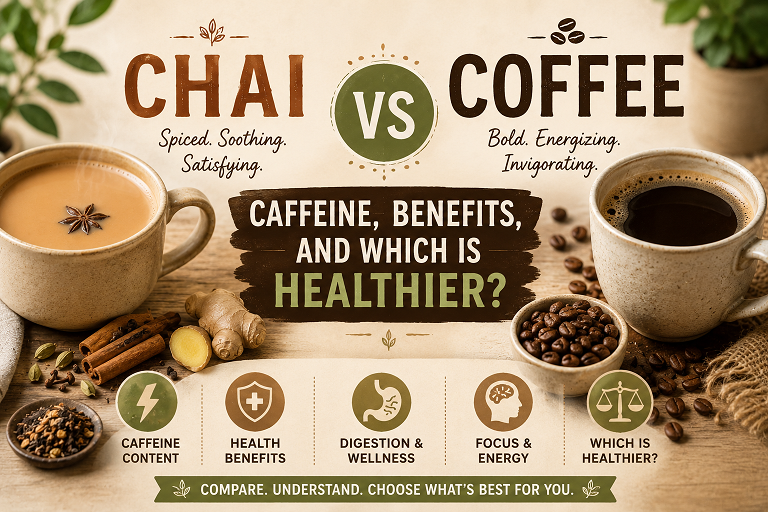
Neither chai nor coffee “wins” — they have genuinely different profiles. Coffee has more caffeine and stronger evidence for cognitive effects. Chai has additional beneficial spices, less caffeine, a gentler effect on the stomach, and the L-theanine in black tea produces a smoother energy curve. The right choice depends on what you’re optimizing for: raw alertness, digestive comfort, caffeine sensitivity, or flavor. Here’s the full comparison across every relevant dimension.
🍵 Chai
Black tea + whole spices
25–50mg caffeine
☕ Coffee
Roasted coffee beans
80–120mg caffeine
Caffeine — How They Compare
The most straightforward difference between chai and coffee is caffeine content. A standard cup of drip coffee contains roughly 80–120mg of caffeine. A cup of chai made with black tea contains roughly 25–50mg — typically about half to a third as much. This difference has real implications for how each drink affects you.
Coffee’s higher caffeine produces a faster, more pronounced alertness effect. For many people this is exactly what they want from a morning drink. But it also means a harder crash, more potential for jitteriness or anxiety, and a longer window during which caffeine is still affecting sleep if consumed in the afternoon.
Chai’s lower caffeine produces a gentler alertness boost. Black tea also contains L-theanine — an amino acid not found in coffee — that works alongside caffeine to produce a more sustained, calmer alert state. Many people describe the effect as “focused without being wired,” which is the L-theanine doing its job.
| Drink | Avg Caffeine (8oz) | L-theanine? | Energy Profile |
|---|---|---|---|
| Drip Coffee | 80–120mg | No | Fast onset, strong, shorter duration |
| Espresso (1 shot) | 60–80mg | No | Fast, very concentrated |
| Chai (black tea base) | 25–50mg | Yes | Gentler, more sustained, smoother |
| Dirty Chai (chai + espresso) | 90–130mg | Yes | High caffeine with L-theanine smoothing |
Antioxidants and Polyphenols
Both chai and coffee are rich sources of polyphenols — antioxidant compounds associated with reduced inflammation and a range of health markers. They just contain different types.
Coffee’s primary polyphenols are chlorogenic acids, which are well-studied for metabolic and cardiovascular effects. Black tea (chai’s base) contains theaflavins and thearubigins, which have their own research-backed antioxidant profile. Neither drink is clearly superior on antioxidants — they’re complementary rather than competitive.
Where chai gains a meaningful edge here is in the spices. Cardamom, cinnamon, cloves, and ginger each contain their own antioxidant compounds — cloves in particular have among the highest antioxidant content of any commonly used spice. Coffee has none of these. If you’ve read our full chai health benefits breakdown, these spice contributions are where the added value of chai beyond basic black tea comes from.
Digestion and Stomach Effects
This is where the difference is most consistently felt in practice. Coffee is highly acidic and stimulates gastric acid production, which causes digestive discomfort, heartburn, or acid reflux in a significant portion of regular coffee drinkers — especially when consumed on an empty stomach.
Chai is considerably less acidic, and its spice content actively supports digestion. Ginger — one of the most researched spices in chai — has multiple clinical studies supporting its effects on gastric emptying, nausea reduction, and digestive comfort. Cardamom also has traditional and some clinical use as a digestive aid.
For Anyone With Coffee-Related Stomach Issues
One of the most consistently reported reasons people switch from coffee to chai is digestive sensitivity. If coffee causes you heartburn, nausea, or stomach discomfort, chai is generally much better tolerated — the lower acidity and ginger content both contribute to a gentler digestive experience.
Energy and Mental Alertness
Coffee produces a faster, more pronounced cognitive boost that many people depend on for morning alertness or focus during demanding work. The research on coffee’s cognitive effects is substantial and largely positive for moderate consumption. If raw alertness is your primary goal, coffee has an edge simply because of its higher caffeine content.
Chai’s combination of caffeine and L-theanine produces what many users describe as cleaner, more sustained focus without the sharp peak and crash cycle that can follow strong coffee. This profile suits tasks requiring sustained attention better than the quick jolt of high-caffeine coffee for some people — though this is genuinely individual.
Full Side-by-Side Comparison
| Factor | Chai | Coffee | Edge |
|---|---|---|---|
| Caffeine content | 25–50mg/cup | 80–120mg/cup | Coffee for alertness |
| L-theanine | Present (from black tea) | Absent | Chai |
| Antioxidant variety | Tea polyphenols + spice compounds | Chlorogenic acids | Chai (more variety) |
| Stomach acidity | Lower acidity, gentler | High acidity, can irritate | Chai |
| Digestive support | Yes — ginger, cardamom | Can stimulate acid production | Chai |
| Cognitive boost strength | Moderate, sustained | Strong, faster onset | Coffee |
| Anxiety/jitteriness risk | Lower | Higher at large doses | Chai |
| Sleep disruption risk | Lower (less caffeine) | Higher (more caffeine) | Chai |
| Added sugar risk | Medium (traditional chai is sweetened) | Medium (coffeehouse drinks often heavily sweetened) | Even |
| Research depth | Growing, strong for spices | Extensive, well-established | Coffee |
Who Should Consider Switching
Consider switching to chai if you…
- Experience jitteriness or anxiety from coffee
- Have digestive issues — acid reflux, heartburn, stomach sensitivity
- Want to reduce caffeine intake without eliminating it
- Have trouble sleeping and drink coffee in the afternoon
- Want more flavor complexity in your daily hot drink
- Are pregnant or breastfeeding and reducing caffeine
Stick with coffee if you…
- Need strong, fast-onset alertness in the morning
- Have no digestive sensitivity to coffee
- Rely on high caffeine for demanding cognitive work
- Simply prefer the flavor and don’t want to change
- Drink black coffee without added sugar (very low calorie)
The Middle Option: Dirty Chai
If you love coffee but want the benefits of chai too, a dirty chai latte (chai plus a shot of espresso) gives you both. You get the higher caffeine of espresso, the L-theanine smoothing effect from black tea, and all the spice benefits of chai in one cup.
Ready to explore chai? Find your style first.
Take our quick quiz to discover which chai variety suits your personality and taste preferences.
Frequently Asked Questions
Is chai healthier than coffee?
Neither is definitively healthier — both have genuine health properties and different tradeoffs. Chai contains additional beneficial spices (ginger, cardamom, cinnamon, cloves) that coffee lacks, and has less caffeine, which suits people sensitive to stimulants. Coffee has stronger evidence for cognitive benefits and contains different antioxidant compounds. The healthiest choice depends on individual factors including caffeine tolerance, digestive sensitivity, added sugar habits, and personal health goals.
Does chai have as much caffeine as coffee?
No — chai typically contains roughly 25-50mg of caffeine per cup compared to 80-120mg in a typical drip coffee. This makes chai a lower-caffeine alternative for people who want some alertness boost without the higher caffeine load of coffee. However, a dirty chai (chai plus espresso) would contain caffeine from both sources and approach or exceed typical coffee caffeine levels.
Can chai replace coffee?
For some people, yes — especially those reducing caffeine intake, experiencing coffee-related anxiety or jitteriness, or looking for a hot drink with more flavor complexity. Chai provides real alertness from caffeine plus L-theanine from black tea, which produces a smoother energy effect for many people. However, for those who rely on coffee’s higher caffeine content for strong alertness effects, chai alone may not fully replicate the experience.
Is chai better than coffee for your stomach?
For many people, yes. Coffee is highly acidic and stimulates gastric acid production, which can cause stomach discomfort, acid reflux, or irritation, especially on an empty stomach. Chai is less acidic overall, and its spices — particularly ginger — have well-documented properties that support digestion and reduce nausea. People who find coffee harsh on their stomach often tolerate chai better, though individual responses vary.