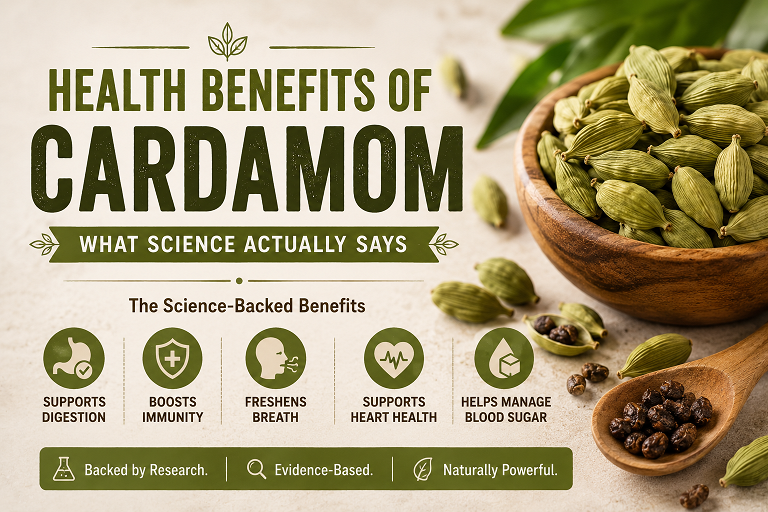
Cardamom is one of the most nutrient-rich spices in chai — and one of the more studied. Research supports its properties as a high-antioxidant spice, a digestive aid, a potential mild blood pressure supporter, and an oral health ally due to its antimicrobial compounds. Most studies are preliminary or small-scale, so the evidence should be understood as promising rather than conclusive. But cardamom genuinely earns its place in chai on more than flavor alone.
More Than a Flavoring — What Cardamom Actually Contains
Cardamom is one of the world’s most expensive spices by weight, behind only saffron and vanilla, and it’s been used in South Asian, Middle Eastern, and Scandinavian cuisines and medicine for thousands of years. In chai specifically, it’s typically the first spice added and the one whose aroma is most immediately recognizable in a freshly brewed cup.
Its flavor is distinctive — floral, slightly citrusy, with a cooling quality despite being warm in nature — and it’s this unique compound profile (including cineole, limonene, and various flavonoids) that gives cardamom its studied health properties alongside its irreplaceable role in masala chai.
What Cardamom Is — and What’s In It
Cardamom comes from the seeds of plants in the ginger family, native to South Asia. The small green pods used in chai each contain several tiny black seeds — most of the flavor and active compounds are concentrated in these seeds rather than the outer pod shell, which is why recipes call for lightly crushing the pods rather than using them whole.
The primary active compounds in cardamom include:
- 1,8-cineole (eucalyptol) — an aromatic compound with anti-inflammatory and antimicrobial properties, also found in eucalyptus
- Limonene — a terpene found in citrus peels with antioxidant and potential digestive properties
- Alpha-terpinyl acetate — contributes to cardamom’s distinctive floral aroma
- Flavonoids — antioxidant plant compounds present in meaningful amounts
- Minerals — including manganese, iron, and zinc, in useful concentrations relative to serving size
Studied Benefits — With Evidence Levels
Digestive Support
Good EvidenceCardamom has traditional and clinical backing for reducing bloating, gas, and digestive discomfort. The active compounds are thought to support digestive enzyme activity and reduce intestinal muscle spasms. One of the most reliable benefits and the reason it features prominently in chai after meals.
Antioxidant Activity
Good EvidenceCardamom has measurably high antioxidant activity across multiple assay methods. Flavonoids and other compounds in cardamom seeds neutralize free radicals that contribute to cellular damage and aging-related processes.
Blood Pressure Effects
Preliminary EvidenceA small clinical study found that daily cardamom supplementation over 12 weeks reduced blood pressure in participants with stage 1 hypertension. Effect sizes were meaningful but the study was small — more research needed before strong conclusions can be drawn.
Oral Health
Moderate EvidenceCardamom’s antimicrobial properties — particularly its cineole content — have been studied for effects on oral bacteria. It’s traditionally chewed after meals as a breath freshener, and there is laboratory evidence supporting antimicrobial activity against common oral bacteria.
Anti-Inflammatory Properties
Moderate EvidenceSeveral compounds in cardamom have demonstrated anti-inflammatory activity in laboratory research. Human clinical studies are limited, but the anti-inflammatory compound profile is well-characterized at a biochemical level.
Blood Sugar Effects
Early-Stage ResearchSome animal studies and limited human research suggest cardamom may affect glucose metabolism, but the evidence is too preliminary and inconsistent to draw meaningful conclusions. More research is needed in this area.
Green vs Black Cardamom — Are They Different?
Most people are familiar with green cardamom — the small bright green pods used in masala chai and most baking. Black cardamom is a related but different species with a distinctly smoky, slightly camphor-like flavor — much more intense and less floral. They’re not interchangeable in recipes.
| Type | Flavor | Common Uses | Used in Chai? |
|---|---|---|---|
| Green Cardamom | Floral, citrusy, slightly sweet, cooling | Chai, desserts, rice dishes, baking | Yes — standard chai spice |
| Black Cardamom | Smoky, bold, camphor-like, earthy | Savory dishes, biryani, some spice blends | Occasionally, for a bolder variation |
For our masala chai recipe, green cardamom is always the right choice. Black cardamom is an interesting variation for experienced chai makers who want a deeper, smokier flavor profile, but it’s not traditional in most home chai preparations.
How Much Cardamom Is in Chai?
A typical cup of chai uses 2–3 crushed green cardamom pods — a relatively small amount of cardamom by weight. Most of the clinical studies on cardamom used larger supplemental doses (often several grams daily) than what’s present in a cup or two of chai.
This means the health benefits you get from chai’s cardamom content should be understood as part of a cumulative daily spice intake rather than as a therapeutic dose. Two cups of chai a day provides some cardamom exposure, but the main impact on the body comes from the full combination of spices rather than any single ingredient in isolation.
To Get More From Cardamom
If you want more cardamom in your diet beyond chai, it’s also excellent in baked goods like chai-spiced banana bread, sprinkled on oatmeal, stirred into coffee, or used in rice pudding. Ground cardamom is more concentrated than whole pods, so a small amount goes a long way.
How to Use More Cardamom in Your Diet
- In chai — increase the cardamom slightly in your regular chai recipe (3–4 pods instead of 2) for a more cardamom-forward cup
- In baking — ground cardamom works in banana bread, muffins, cookies, and cakes anywhere cinnamon is used
- In coffee — a small pinch of ground cardamom in your coffee grounds before brewing is a Middle Eastern tradition that significantly changes the flavor profile
- In rice — whole cardamom pods added to rice while cooking is standard in many South Asian rice dishes
- As a breath freshener — simply chewing a cardamom pod after a meal is the simplest, most direct way to use cardamom for oral health
Are you a cardamom chai person? Find out.
Take our quick quiz to discover which chai variety matches your taste and personality.
Frequently Asked Questions
What are the health benefits of cardamom?
Cardamom has several studied health properties including high antioxidant content, digestive support, potential mild blood pressure lowering effects in preliminary research, antimicrobial properties relevant to oral health, and anti-inflammatory compound content. Research is ongoing and most studies are preliminary, but existing evidence supports cardamom as a genuinely health-supportive spice.
Is cardamom good for digestion?
Yes — cardamom has a long history of use as a digestive aid and some clinical evidence supporting its use for reducing bloating, gas, nausea, and general digestive discomfort. The active compounds in cardamom are thought to support digestive enzyme activity and reduce intestinal muscle spasms that can cause cramping.
Does cardamom lower blood pressure?
Some preliminary research suggests cardamom may have mild blood pressure lowering effects — a small clinical study found reductions in blood pressure readings after 12 weeks of daily cardamom supplementation. However, research is limited in scope and scale, and cardamom should not be considered a treatment for hypertension. Consult a healthcare professional for any blood pressure concerns.
How much cardamom is in a typical cup of chai?
A typical cup of chai uses 2-3 crushed cardamom pods, which is a relatively small amount by weight. While this provides flavor and some beneficial compounds, the amounts are much smaller than doses used in most clinical studies. Benefits from chai’s cardamom content should be understood as contributing to an overall healthy spice profile rather than providing therapeutic doses.