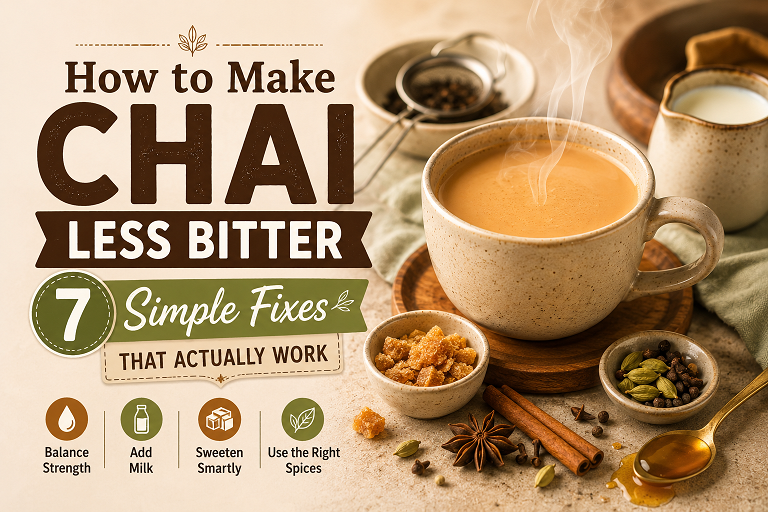
Bitter chai almost always comes down to one of three things: too much tea, boiled for too long, or at too high a heat. Each of these causes the tea leaves to over-extract their tannins into the liquid, which is what produces bitterness. The seven fixes below address each specific cause with an exact adjustment — not just “use less tea” but how much less, and when in the process it makes the most difference.
Bitterness Is Almost Always a Process Problem, Not an Ingredient Problem
The first thing to understand about bitter chai is that it’s rarely caused by bad ingredients — it’s almost always caused by something in the brewing process. The same tea that produces a smooth, balanced cup one morning can produce an unpleasantly bitter one the next if something in the timing, temperature, or ratio is off.
This is actually good news, because it means bitter chai is fixable — and usually by changing just one specific thing rather than overhauling your whole recipe. The seven fixes below are organized by cause, so you can identify which one applies to your situation rather than trying all of them at once.
Why Chai Gets Bitter — The Short Science
Black tea leaves contain tannins — natural compounds that contribute to the tea’s flavor and color. In the right amount, tannins add depth and a slight astringency that balances the milk and sugar. In too large an amount (which happens when tea is over-extracted), they produce an unpleasant bitterness that sits at the back of the throat.
Over-extraction happens when tea is brewed at too high a temperature, for too long, or with too much tea relative to liquid. Any one of these can push the flavor from “bold and rich” to “bitter and harsh” — which is why identifying the specific cause is more useful than just accepting that “the chai was bitter.”
The 7 Fixes — One for Each Cause
Reduce Your Tea Quantity by a Third
The most common single cause of bitter chai. If your recipe calls for 2 teaspoons per cup but consistently tastes bitter, try 1.5 teaspoons and see if that resolves it. You can always build back up if the flavor feels too weak — but start by reducing rather than adjusting anything else first.
Add Tea Later and Watch Your Timer
If you’re boiling the tea for more than 2-3 minutes before adding milk, that’s likely enough time to over-extract bitterness into the water. Add the tea after the spices have already infused (as in our masala chai recipe), and keep the tea stage to 1-2 minutes maximum before adding milk.
Lower the Heat as Soon as the Tea Goes In
A hard boil after adding tea dramatically speeds up tannin extraction. Once you add tea to the water, reduce the heat to a steady simmer rather than maintaining a rolling boil. The flavor development is gentler and more controlled at a lower temperature.
Add Milk Earlier in the Process
Milk proteins bind to tannins and actively reduce bitterness — this is part of why chai made with milk is much less bitter than the same tea brewed in water alone. If you’re adding milk right at the end after a long water-and-tea boil, try adding it earlier (sooner after the tea goes in) and simmering the whole mixture together instead.
Switch to a CTC or Assam-Style Black Tea
Some black teas — particularly more delicate, high-grade loose-leaf varieties — become noticeably bitter when boiled with milk. They’re designed for shorter, cooler infusion. For chai, a CTC (crush-tear-curl) black tea or a strong Assam-based tea is much more suited to the boiling method and holds up without going bitter as quickly.
Check Your Spice Quantities — Cloves in Particular
Cloves can add a bitter, medicinal note if used in excess — even 1-2 extra cloves more than the recipe calls for can tip the flavor. If you’ve been increasing spice quantities and the bitterness appeared around the same time, try reducing the cloves first and see if that fixes it before adjusting the tea.
Try Filtered Water If Your Tap Water Is Heavily Chlorinated
This is the least common cause but worth mentioning: heavily chlorinated or minerally hard tap water can interact with tea tannins and amplify bitterness. If you’ve addressed all the brewing factors above and the chai is still consistently bitter, try brewing with filtered water and see if it makes a difference.
Quick Reference Table
| Symptom | Most Likely Cause | Fix |
|---|---|---|
| Bitter every time, regardless of other changes | Too much tea | Reduce tea quantity by 1/3 and adjust from there |
| Gets more bitter the longer it sits on heat | Over-boiling the tea | Add tea later, keep tea stage to 1-2 minutes max |
| First cup fine, later cups from the same pot bitter | Tea continues extracting in the pot | Strain immediately after brewing rather than leaving tea in the pot |
| Bitter with a medicinal edge | Too much clove | Reduce cloves to 1-2 maximum per serving |
| Bitter when making a large batch but fine for single cups | Scaled-up tea quantity is proportionally too high | Scale tea more conservatively than other ingredients when increasing batch size |
What to Do If Your Chai Is Already Bitter
If you’ve already made a cup and it’s bitter, a few things can help right now without starting over:
- Add more milk. Milk proteins bind to tannins and reduce the perception of bitterness — even a small splash of extra milk can noticeably soften a bitter cup.
- Add a little more sugar. Sugar doesn’t remove bitterness but counters it perceptually — a slightly bitter chai with enough sweetness often tastes balanced.
- Add a small pinch of salt. A tiny pinch of salt (barely perceptible as salty) can reduce the perception of bitterness in tea — the same technique used in some coffee brewing methods.
Prevention Is Much Easier Than Fixing
The most reliable long-term solution is adjusting your process so the bitterness doesn’t develop in the first place — the fixes above applied to future batches — rather than correcting an already-bitter cup. Our masala chai recipe is built around the specific order and timing that avoids most of these causes from the start.
Curious which chai style matches your personality?
Take our quick quiz to find out whether you’re a Karak, Doodh Pati, Sulaimani, or Masala chai person.
Frequently Asked Questions
Why does my chai taste bitter?
Bitter chai is most commonly caused by boiling the tea leaves for too long, using too much tea relative to the liquid, boiling at too high a temperature after adding tea, or using water that is too hot before the tea is added. Each of these causes tannins from the tea leaves to over-extract into the liquid, producing a bitter rather than balanced flavor.
Does adding more milk reduce bitterness in chai?
Yes — adding more milk can help balance bitterness in chai, both by diluting the bitter compounds and because milk proteins bind to tannins, reducing the perception of bitterness. However, this is a fix for chai that’s already been made rather than a solution to the underlying cause. Adjusting the tea quantity or boiling time in future batches is a more reliable long-term fix.
Does sugar help with bitter chai?
Sugar reduces the perception of bitterness rather than eliminating the bitter compounds themselves — a slightly bitter chai can taste well-balanced with the right amount of sweetness added. This is why sweet chai (with enough sugar) often masks bitterness that would be obvious in an unsweetened version of the same cup.
What kind of tea makes the least bitter chai?
CTC (crush-tear-curl) black teas, which are the style commonly used in South Asian chai, are designed for bold, quick infusion with milk rather than a delicate flavor. Assam-based teas are similarly robust and well-suited for chai. These teas do have more tannins than delicate loose-leaf styles, but they balance well with milk and sugar when brewed correctly — the key is not over-brewing them.