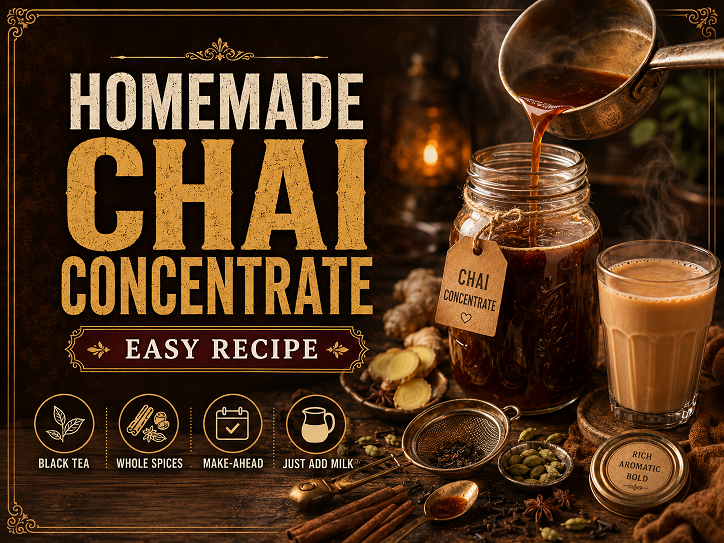
This homemade chai concentrate is a make-ahead black tea base infused with cardamom, cinnamon, cloves and fresh ginger. Keep the milk separate, then mix a measured portion with dairy or plant-based milk whenever you want a hot or iced chai latte. The recipe below makes 4 cups of concentrate: enough for eight drinks when each uses ½ cup concentrate and ½ cup milk.
The useful part is control. You can leave the batch unsweetened, change the milk from one cup to the next, and freeze portions you will not use soon. Measuring the finished liquid also makes the recipe easier to repeat than relying on how far a saucepan happens to boil down.
Jump to the recipe · Milk ratios · Cooling and storage · Frequently asked questions
Homemade Chai Concentrate Recipe
Prep: 5 minutes. Cooking and steeping: approximately 20 minutes. Total: approximately 25 minutes, plus cooling if storing or serving iced. Yield: 4 cups (960 mL) concentrate, providing eight ½-cup portions. Each portion makes approximately one 8-fluid-ounce drink with equal milk, before ice or foam.
Measurements use a rounded US kitchen cup of 240 mL. Use the same measuring system throughout. This is a flexible home recipe, not a laboratory-tested shelf-stable product.
Ingredients
- 4½ cups (1,080 mL) water, plus a little freshly boiled water if needed to adjust the final volume
- 16 g plain loose black tea, approximately 8 level teaspoons depending on leaf size, or eight plain black tea bags containing about 2 g each
- 10 green cardamom pods, lightly cracked
- Two cinnamon sticks, each approximately 3 inches long
- 6 whole cloves
- 20 g fresh ginger, washed and thinly sliced
- Optional: ¼ cup granulated sugar, approximately 50 g, for a lightly sweetened batch
For each finished drink: ½ cup (120 mL) concentrate and ½ cup (120 mL) milk. Add sweetener to taste if the batch is unsweetened. For all eight drinks, allow 4 cups (960 mL) milk; milk is not included in the stored concentrate.
Equipment
Use a saucepan with room for at least 2 quarts, a fine-mesh strainer, a heatproof measuring jug and clean food-safe storage containers. A kitchen scale is useful for the tea and ginger. You do not need a coffee machine, blender or special concentrate bottle.
1. Prepare the spices
Press the cardamom pods with the flat side of a knife or the bottom of a sturdy cup until their shells split. Leave the seeds inside or add any loose seeds to the pan. Slice the ginger thinly so its cut surfaces contact the water. There is no need to grind everything into powder.
2. Simmer the spice base
Put the water, cardamom, cinnamon, cloves and ginger in the saucepan. Bring to a boil, then lower the heat and simmer gently, partially covered, for 8–10 minutes. Keep a little space for steam to escape. The aim is an aromatic infusion, not a large reduction.
3. Steep the black tea
Remove the pan from the heat. Add the loose tea or tea bags, stir once and steep for 3–5 minutes, using the tea package guidance as your starting point. Small-cut tea often needs less time than large leaves. Start checking at the shorter end; a longer steep does not automatically make a better concentrate.
4. Strain and measure
Strain into the heatproof jug, removing all leaves and spice pieces. Let the liquid drain without forcefully squeezing tea bags. Check the volume. If it is below 4 cups (960 mL), add freshly boiled water to reach that mark. If it is slightly above, reserve the excess separately and measure 4 cups for this batch. Do not boil tea leaves again to force a particular yield.
5. Sweeten, if using sugar
Stir the optional sugar into the warm, measured liquid until dissolved. It adds a small amount of volume, so the sweetened batch may give a little more than eight portions. Alternatively, leave the concentrate unsweetened and add sugar or syrup when making each drink. This is the easiest option when people have different preferences.
6. Serve now or cool promptly
To try the batch immediately, combine ½ cup concentrate with ½ cup milk and warm gently. Taste the diluted drink before changing the recipe: the concentrate alone should be stronger than the finished cup. For later use, divide into smaller heat-safe containers and refrigerate promptly; see the storage section below. Do not wait for a large pan to become completely cold on the counter.
What Makes It a Concentrate?
A chai concentrate carries the tea and spice flavor before milk is added. It is designed for dilution, so sipping it straight is not a fair test of the final balance. This version starts at one part concentrate to one part milk, but that ratio is a starting point rather than a rule for every homemade or commercial product.
It is also different from chai syrup. Syrup usually contributes a substantial amount of sweetness in a small serving. This recipe works without sugar and supplies half the liquid in the finished drink. Swapping syrup and concentrate spoon for spoon will change both strength and sweetness.
If you prefer tea, spices and milk cooked together in one saucepan, follow our masala chai recipe. Keeping the milk separate here is a practical batch-making choice, not a claim that it reproduces every household’s freshly simmered chai.
Choosing Tea and Spices
Start with plain black tea
Use a plain black tea you enjoy with milk. Assam or a robust breakfast blend is a practical starting point. Tea labeled “chai” may already contain spices or flavorings, which makes it harder to control the balance when you add this recipe’s whole spices as well.
Weight is more repeatable than spoon volume. Eight teaspoons of fluffy whole leaves may weigh much less than eight teaspoons of small-cut tea. If the first batch tastes weak after adding milk, check how much tea you actually used before doubling the steeping time. For bags, check the package weight when available rather than assuming every bag is the same size.
Use whole spices for a cleaner pour
Whole cardamom, cinnamon and cloves are easier to strain than powders. Ground spices can leave sediment even after passing through a kitchen sieve. That is not automatically a failed drink, but it produces a different texture and can make the final mouthful gritty.
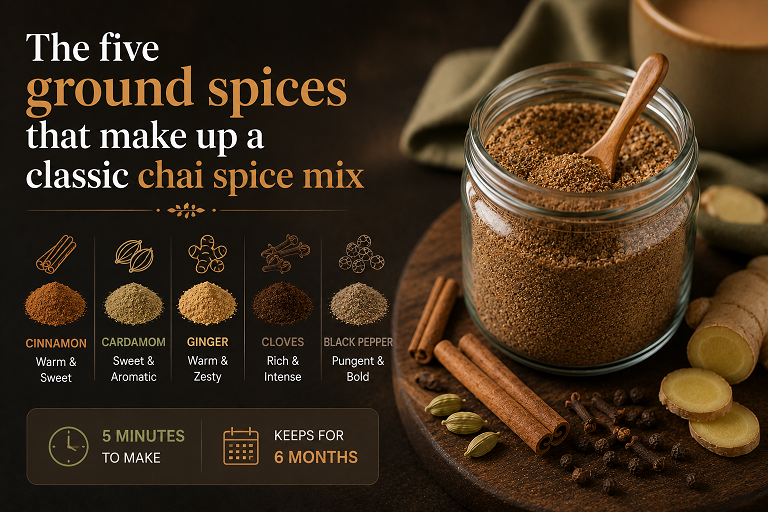
For a pantry blend intended for several uses, see our chai spice mix recipe. Do not substitute a tablespoon of powder for a tablespoon of whole spices: their volume, extraction and intensity differ.
Change one flavor at a time
For more ginger heat, increase the ginger slightly in the next batch. For more cardamom aroma, add two extra cracked pods. If cloves dominate, reduce them from six to four. Small changes let you identify what helped; increasing every spice at once can obscure the tea.
Cinnamon sticks vary in thickness and intensity. Treat their listed length as a useful starting measure, not a guarantee that every brand tastes identical. Keep a brief note of your tea, spice quantities and steep time if you want to repeat a favorite batch.
Chai Concentrate-to-Milk Ratios
These examples all make 1 cup (240 mL) before foam or ice. They show how to adjust the same batch without changing the total drink size.
| Style | Concentrate | Milk |
|---|---|---|
| Balanced starting point | ½ cup (120 mL) | ½ cup (120 mL) |
| More tea-forward | ⅔ cup (160 mL) | ⅓ cup (80 mL) |
| Milder and milkier | ⅓ cup (80 mL) | ⅔ cup (160 mL) |
The eight-serving yield applies only to the first row. Larger concentrate portions use the batch faster. Also, milk does not remove caffeine: adding more milk to the same amount of concentrate changes its concentration in the drink, not the total caffeine you consume.
For hot chai
Combine the measured concentrate and milk in a small saucepan. Heat while stirring, and avoid an extended boil that reduces the drink or scorches the milk. If reheating refrigerated portions, a cautious leftover-handling approach is to heat thoroughly to 165°F (74°C), then let the drink cool to a comfortable sipping temperature. Microwave only in a suitable mug, in short intervals with stirring, and never in a sealed container.
Foam is optional. If you want a latte-style finish, reserve some of the measured milk for frothing rather than adding an unmeasured extra cup. Our guide to frothing milk for chai without a machine covers simple options.
For iced chai
Start with chilled concentrate and cold milk. Combine ½ cup of each, then pour over ice in a glass with enough room for both the liquid and cubes. Hot concentrate poured straight onto ice melts it quickly and makes strength harder to predict. Chill the base first instead of compensating with extra tea every time.
If you prefer a sweeter iced drink, dissolve sugar in the warm base before chilling or use a little liquid sweetener in the glass. Granulated sugar dissolves less readily in a cold drink. For another flavor direction, try our iced brown sugar chai latte, adjusting sweetness to account for any sugar already in your concentrate.

Sweetened, Unsweetened or Dairy-Free?
Leaving the base unsweetened gives the most flexibility. One person can use sweetened oat milk, another can choose dairy milk and sugar, and someone else can skip added sweetness. Taste after dilution because milk and sweetener both change how strongly the spices come through.
The optional ¼ cup sugar contributes roughly 1½ teaspoons per serving if the batch is divided into eight equal portions. That is a recipe calculation, not a complete nutrition label. Milk, syrup and other additions change the finished drink’s sugar and energy content.
The concentrate itself contains no dairy. To keep the drink vegan, use a suitable plant-based milk and vegan sweetener. Honey is not vegan. Oat, soy and almond beverages vary in sweetness, body and foaming ability, so choose according to your needs and check allergen information. Our vegan chai latte with oat milk explains the milk-based version in more detail.
Cooling and Storing Homemade Chai Concentrate
This is a refrigerated homemade drink base, not a canning recipe. A tightly closed jar, added sugar or a hot fill does not establish that it is shelf-stable.
For this recipe, use a cautious 3–4-day refrigerated planning window and freeze surplus promptly. That approach borrows from USDA’s general leftovers guidance; it is not a chai-specific tested shelf life. The same source recommends small, shallow containers for prompt cooling and thorough reheating of leftovers to 165°F (74°C).
Refrigerate at 40°F (4°C) or below. Do not leave the prepared batch out longer than two hours, or one hour above 90°F (32°C). These limits and the warning that unsafe food can appear normal come from the FDA’s food storage guidance. Do not taste a questionable batch to decide whether it is safe.
A practical storage routine
- Strain the freshly prepared base into heat-safe equipment.
- Divide it into smaller containers for faster cooling. Avoid pouring very hot liquid into cold glass that may crack.
- Refrigerate promptly, covered appropriately for the container. Label with the preparation date.
- Pour out only the portion you need using clean utensils; keep the remainder refrigerated.
- Discard a batch with mold, an unusual smell or uncertain handling history. Normal appearance does not prove safety.
Freeze portions for later in the week
If eight drinks are more than you will use in a few days, freeze the extra concentrate in ½-cup portions in freezer-safe containers, leaving expansion space. Ice cube trays also work, but measure their capacity first so you know how many cubes make one portion. Once frozen, transfer cubes to a suitable sealed freezer container and label them.
Thaw the amount you need in the refrigerator. As a simple planning habit, use the thawed portion the next day rather than repeatedly thawing and refreezing a large batch. Freeze freshly prepared surplus, not a jar that has already become questionable. For quality, plan to rotate your chai portions regularly instead of treating the freezer as permanent storage.
Troubleshooting the Finished Drink
| Problem | What to check | Next adjustment |
|---|---|---|
| Bitter or drying | Tea quantity and steeping time | Shorten the tea steep; keep the separate spice simmer |
| Weak after adding milk | Actual tea weight and final batch volume | Measure both, then try a slightly larger concentrate portion |
| Cloves overpower the drink | Spice balance rather than tea strength | Use four cloves in the next batch |
| Gritty texture | Ground spices or fine leaf particles | Use whole spices and strain more finely |
| Iced drink becomes watery | Warm ingredients and melting ice | Chill both concentrate and milk before assembly |
| Too sweet | Sweetener in both base and milk | Make the next batch unsweetened; choose unsweetened milk |
Judge adjustments in a small diluted sample. For example, combine 2 tablespoons concentrate with 2 tablespoons milk before making a full mug. This lets you compare ratios without committing a whole serving. If the sample is a little weak, try more concentrate; if it is unpleasantly bitter, adding sugar may soften the impression but will not undo over-extraction.
Making a Smaller or Larger Batch
For four drinks, halve every ingredient and adjust the strained base to 2 cups (480 mL). Use 8 g tea, five cardamom pods, one cinnamon stick, three cloves and 10 g ginger. Start with 2¼ cups (540 mL) water. The optional sugar becomes 2 tablespoons.
For sixteen drinks, double the ingredients and adjust the finished unsweetened base to 8 cups (1,920 mL). Use a larger saucepan with comfortable headroom. Keep the same steeping window rather than doubling it: more tea does not require twice as much time. Heating and cooling will take longer, so divide the batch for storage.
Final volume matters because wide pans evaporate more quickly than narrow ones. If a batch is consistently far below its target, lower the simmer and cover the pan more fully next time. Repeatedly topping up a heavily reduced brew can restore volume without restoring the aroma lost during prolonged boiling.
Frequently Asked Questions
Can I use tea bags?
Yes. Use plain black tea bags totaling approximately 16 g of tea for the full batch. Eight bags are appropriate if each contains about 2 g. Follow their brewing guidance and remove them after steeping; do not leave the bags in the storage jar.
Does homemade chai concentrate contain caffeine?
Yes, when made with regular black tea. The amount varies with the tea, brewing method and concentrate portion, so this recipe does not claim an exact milligram value. Decaffeinated tea reduces caffeine but is not necessarily caffeine-free. The FDA’s caffeine guidance explains these distinctions. Adding milk does not cancel caffeine, and a mild-tasting drink should not automatically be considered suitable for children or someone limiting caffeine.
Can I add espresso?
Yes, for a dirty chai variation. First make a small cup with concentrate and milk, then add espresso to taste. Remember that it introduces another caffeine source. Our dirty chai latte recipe has separate hot and iced instructions.
Should the concentrate be thick?
No. Unsweetened concentrate is closer to strong brewed tea than syrup. A thin, pourable texture is expected. Do not keep reducing it solely to make it thick; that changes the yield and can make the tea taste harsh.
Can I leave out a spice?
Yes. Leave out cloves for a gentler profile or reduce ginger if you prefer less heat. Keep the water and tea measurements unchanged for the first trial. The recipe is a starting blend, not a requirement that every cup of chai contain the same ingredients.
Why keep milk out of the storage batch?
It lets you choose a different milk or serving ratio each time and freeze the tea base separately. It does not mean the milk-free concentrate can stay on the counter. Continue to follow the cooling and refrigeration guidance above.
Bottom line: simmer the spices, steep the tea separately from that simmer, measure the finished concentrate and start with equal milk. Make a manageable batch, refrigerate promptly, and freeze extra portions so convenience does not depend on keeping an open jar for an entire week.