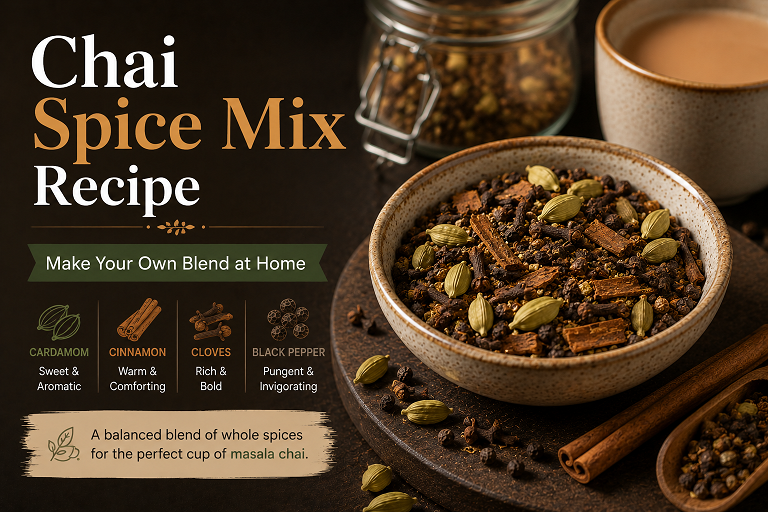
This chai spice mix recipe combines ground cinnamon, cardamom, ginger, cloves and black pepper into a dry blend you can keep beside your tea. It takes about five minutes to measure and mix, and gives you a convenient way to flavor homemade chai, oatmeal, pancakes and baked treats.
The blend contains spices only: no tea, milk powder or added sugar. That makes it flexible, but it also means a spoonful stirred into water will not become a complete cup of chai. Use it alongside tea and milk, or add a small amount to another recipe.
Jump to the recipe · How much to use · Storage advice
What Is Chai Spice Mix?
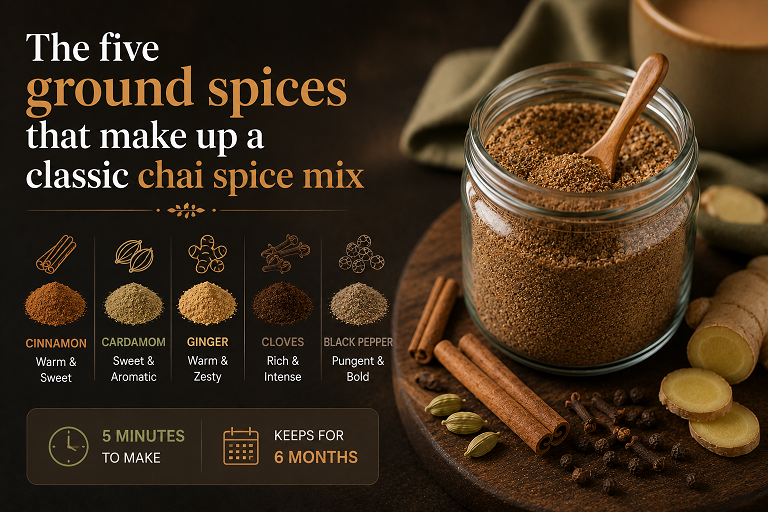
Chai spice mix, often called chai masala, is a combination of spices used to flavor tea. The ingredients and proportions vary between households and products. Some blends emphasize cardamom and ginger; others contain more cinnamon, pepper, fennel or cloves.
This version is cinnamon-forward, with a substantial amount of cardamom and smaller amounts of the sharper spices. It is suited to experimenting with both drinks and baking. It is not intended to represent the only authentic formula, or to replace every family’s preferred whole-spice method.
If you want to start with whole spices instead, follow our masala chai recipe from scratch. Whole spices can be strained out more easily, while a ground blend saves measuring time and disperses quickly.
Chai Spice Mix Recipe
- Preparation time: approximately 5 minutes using ready-ground spices
- Cooking: none required for mixing
- Yield: approximately 6 tablespoons plus 2 teaspoons, before optional nutmeg
- Equipment: measuring spoons, small bowl, spoon or whisk and a clean, completely dry jar
Use level measuring spoons rather than cutlery. In this recipe, one tablespoon is 15 ml and equals three 5 ml teaspoons. The ingredient volumes add up to 20 teaspoons; the final level in your jar can vary slightly as powders settle.
Ingredients
- 3 tablespoons ground cinnamon
- 2 tablespoons ground cardamom
- 1 tablespoon ground ginger
- 1 teaspoon ground cloves
- 1 teaspoon ground black pepper
- Optional: 1/2 teaspoon ground nutmeg
With the optional nutmeg, the measured ingredient volume is 20 1/2 teaspoons. No sweetener or tea leaves are included. Use commercially dried ground ginger, not grated fresh ginger, for this dry storage blend.
How to Make It
- Prepare the container. Choose a food-safe jar with a tight-fitting lid. If you wash it first, let the jar and lid dry completely before adding spices.
- Check the ingredients. Use spices with good aroma and no signs of moisture, mold or pests. Combining old, faded ingredients will not make them fresh again.
- Measure into a bowl. Add the cinnamon, cardamom, ginger, cloves and black pepper. Add nutmeg only if you want its additional flavor.
- Mix thoroughly. Stir or whisk gently until the color looks reasonably even. Break up dry powder lumps with the back of a spoon. Avoid raising a cloud of spice dust.
- Transfer and label. Spoon into the dry jar and close the lid. Label it with the name, ingredients and mixing date. Note any changes you made to the base recipe.
- Try a small amount. Use the starting quantities below in a drink or cooked food. Adjust future portions rather than immediately adding more spice to the entire jar.
Mixing is all this recipe requires. There is no need to toast ready-ground spices, add oil or heat the finished jar. Those steps would create a different preparation and can make a simple pantry blend harder to manage.
A Smaller Batch for Occasional Use
If you make chai only occasionally, begin with half the recipe. You will use less cardamom upfront and can change the balance sooner if you decide you prefer a different flavor. The half batch contains:
- 1 1/2 tablespoons ground cinnamon
- 1 tablespoon ground cardamom
- 1 1/2 teaspoons ground ginger
- 1/2 teaspoon ground cloves
- 1/2 teaspoon ground black pepper
- Optional: 1/4 teaspoon ground nutmeg
This makes approximately 10 teaspoons before optional nutmeg. Use the same mixing method and storage precautions. A small jar that you finish regularly is often more practical than a large decorative jar that stays open in a warm kitchen.
What Each Spice Contributes
Cinnamon: the Main Background Flavor
Cinnamon forms the largest share of this recipe and gives the blend a familiar warm aroma. Ground cinnamon products vary in strength, so the same spoonful can taste different between brands. Use the one you normally enjoy in cooking, and avoid treating a particular variety as necessary for success.
Cardamom: a Distinctive Aroma
Ground green cardamom is the intended choice. Check the label when buying it, especially if the package simply says cardamom. Black cardamom has a different, smoky profile and is not a direct flavor match. McCormick’s cardamom guide explains the distinction between the two.
Ginger: a Sharper Note
Dried ground ginger adds a different kind of warmth from cinnamon. Fresh ginger is useful in a saucepan of chai, but it introduces moisture into a stored dry blend. Keep fresh additions for brewing time rather than mixing them into this jar.
Cloves and Pepper: Use a Light Hand
Cloves give the blend depth but can become overpowering. Black pepper adds a peppery finish, especially noticeable in an unsweetened drink. Their smaller quantities are deliberate. If your first cup tastes too sharp, use less blend before concluding that you need to remove either ingredient entirely.
How Much Chai Spice Mix Should You Use?
The right amount depends on the spice freshness, recipe size and your preferences. The following quantities are conservative starting points for this particular blend, not fixed rules for every commercial chai masala.
| Use | Start with | How to add it |
|---|---|---|
| Two servings of homemade chai | 1/4 teaspoon total | Add with the milk and simmer briefly; adjust a later batch if needed |
| One mug of warm milk | A small pinch, up to 1/8 teaspoon initially | Whisk into a little warm milk, then add the rest |
| One serving of oatmeal | 1/8–1/4 teaspoon | Stir in during cooking |
| Pancakes made with about 1 cup flour | 1/2 teaspoon | Mix with the dry ingredients |
| French toast custard made with 2 eggs | 1/4–1/2 teaspoon | Whisk into the custard before dipping bread |
| One standard loaf of banana bread | 1 teaspoon initially | Replace some existing spice rather than automatically adding extra |
For two servings of chai, you can try 1/2 teaspoon in a later batch if 1/4 teaspoon is too subtle. Jumping straight to a teaspoon per cup may overwhelm the drink, particularly with a fresh clove-and-pepper blend. Taste the finished food or a safely cooled spoonful of tea, not raw batter.
Using the Blend in Chai
Brew your black tea as usual, add milk, then stir in the spice mix and simmer gently. For the linked masala chai recipe, use this blend instead of its whole dried spices; keep or omit fresh ginger to taste. Strain before serving, although fine spice particles may still pass through.
Do not add the full spice blend on top of a complete whole-spice recipe without reducing something. That can double the seasoning unintentionally. The blend provides spice flavor only; tea quantity, milk ratio and sugar still need their own adjustments.
Using It in Lattes and Food
For a latte, whisk a small amount into the warm tea-and-milk base rather than dumping dry powder onto foam. The powder can clump when added to a cold drink. Mixing it into a small amount of warm liquid first helps disperse it, but does not make it dissolve completely.
For a breakfast application, try the chai French toast recipe. For a seasonal drink, see our pumpkin chai latte. In either case, use the blend as a substitute for appropriate spices already listed, not an automatic additional dose.
How to Adjust the Flavor
Before altering the entire jar, mix a small trial portion in a separate bowl. That way, an experiment with extra cloves or pepper does not affect several weeks of chai.
- More cardamom-forward: increase the cardamom slightly while leaving pepper unchanged.
- Less sharp: halve the pepper and cloves in your next batch.
- More ginger-forward: increase ground ginger gradually, or add fresh ginger to the tea while brewing.
- Less cinnamon-heavy: reduce the cinnamon rather than increasing every other ingredient.
- No nutmeg: simply leave it out; nothing needs to replace it.
Changing the ratios changes the total yield. If you use the recipe for portion calculations or gifting, update your label accordingly. Keep a note of the quantities instead of relying on the color of the powder to identify your preferred version.
Chai Spice, Pumpkin Spice and Instant Chai: The Differences
Names on packets can be confusing. Chai spice and pumpkin spice may overlap in cinnamon, ginger, cloves and nutmeg, but chai blends often emphasize cardamom and may include pepper. Pumpkin spice blends commonly include allspice. Recipes vary, so read the actual ingredients rather than assuming either formula is universal.
| Product | What it supplies | What to check |
|---|---|---|
| This chai spice blend | Dry spices only | You still need tea, milk and any sweetener for chai |
| Spiced loose-leaf tea | Tea leaves mixed with spices | Brewing directions and the tea-to-spice balance |
| Instant chai powder | Often tea extract, sweetener and milk or creamer ingredients | Ingredients, allergens and preparation directions |
| Chai concentrate | A liquid tea-and-spice base, sometimes sweetened | Dilution ratio and storage directions |
For baking, pumpkin spice can provide a different but workable flavor when chai masala is unavailable. For tea, it will not reproduce the same cardamom note. Avoid adding garam masala as an assumed equivalent: its savory spices may give a result very different from the drink you intended.
Storage and Shelf Life
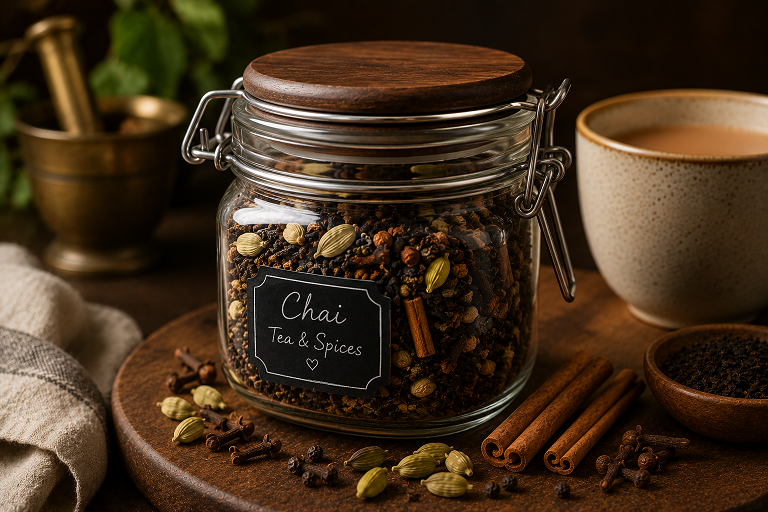
Store the mixture in a tightly capped container in a cool, dry, dark cupboard. Avoid the shelf directly above the cooker or kettle. Measure with a dry spoon away from steam, then close the jar before you begin stirring the saucepan.
McCormick’s spice-storage guidance recommends protecting spices from heat, moisture and direct sunlight, and following the product’s best-by information. Repeatedly moving a container between a freezer and a warm room can introduce condensation; a suitable cupboard is simpler for a small everyday batch.
There is no guaranteed six-month shelf life for every homemade jar. Freshness depends partly on how old each ingredient was before mixing and how the blend is handled afterward. The mixing date does not reset the age of the spices. Keep the original package dates or record the earliest relevant date on the jar.
Make only what you expect to use while the aroma remains enjoyable. Faded aroma mainly tells you about flavor quality, not whether a questionable jar is safe. Discard the mixture if there is mold, pest activity, obvious contamination or evidence that moisture has entered it; do not taste suspicious powder to decide.
The University of Minnesota Extension’s pantry-pest guidance recommends tightly closed containers and clean storage areas. If you find insects or webbing, inspect nearby dry foods too rather than simply transferring the same mixture into a new jar.
Homemade vs Store-Bought: Comparing Value
A homemade blend lets you adjust the spice balance and avoid ingredients you do not want. A prepared blend saves the cost and effort of buying several separate packets. Neither is automatically cheaper for every household.
If cinnamon and ginger are already in your cupboard, making a small batch may require little additional spending. If you need to buy five new jars for an occasional cup, a small ready-made chai masala packet may have a lower upfront cost. Cardamom prices and pack sizes can make a noticeable difference.
Compare products by the same weight, not by jar size alone. Check whether you are paying for pure ground cardamom, a mixed seasoning, or an instant drink powder containing sugar. A low price per kilogram is not useful if the product is unsuitable for the recipe.
To estimate your own batch cost, add the cost of the actual quantities used, then divide by the number of portions you use from the jar. Keep powder weight and spoon volume separate: different spices have different densities, so one teaspoon should not automatically be treated as a fixed number of grams.
You do not need a new appliance to mix ready-ground spices. A small bowl, measuring spoons and a reused food-safe jar with a sound lid are sufficient. Buy a spice grinder only if you plan to grind whole spices regularly and can clean it according to its instructions.
Troubleshooting
The Drink Feels Gritty
Ground spices do not dissolve like sugar. Use less powder, whisk it into warm liquid and strain where practical. If a clear cup matters more than convenience, use whole spices in the saucepan instead. Blending harder does not guarantee a sediment-free drink.
The Flavor Is Too Strong
Reduce the amount per serving before changing the whole jar. A small splash of milk may soften a drink, but it also changes the tea strength. For future batches, reduce pepper or cloves if those are the specific flavors you dislike.
The Blend Has Little Aroma
Check the individual spices. Increasing the quantity of a tired blend may add more gritty powder without producing the aroma you want. Replace faded ingredients and make a smaller batch next time.
The Powder Has Clumps
Loose dry lumps can result from settling and may break apart during mixing. Hard damp clumps or other signs of moisture deserve more caution. Do not assume that drying a questionable blend on the stove will make it suitable to keep.
Giving Chai Spice Mix as a Gift
Use a clean, dry food-safe jar and label it clearly as a spice blend, not instant tea. Include the ingredients, mixing date and a simple direction: start with 1/4 teaspoon for two servings of chai, then adjust to taste.
If the recipient has allergies, retain the original ingredient labels so they can check the manufacturer’s information. Do not claim the mix is allergen-free merely because the recipe does not intentionally contain a particular allergen. Keep decorative materials outside the food container.
Frequently Asked Questions
Does this chai spice mix contain caffeine?
No tea or coffee is included in this recipe. The caffeine in a cup made with ordinary black tea comes from that tea, not from this spice blend. Read commercial blend labels because some products also contain tea.
Can I add sugar to the jar?
You can make a separate spiced-sugar preparation, but it is no longer this spice-only recipe. Keeping sugar separate makes it easier to use the blend in sweetened foods and adjust drinks individually.
Can I use fresh ginger?
Add fresh ginger while brewing tea, not to the dry jar. This recipe relies on dried ingredients for pantry storage. Mixing fresh ginger into it would require a different preparation and storage approach.
Can I grind whole cardamom?
Yes. For a fine seed-based powder, remove the seeds from green pods and grind them with suitable equipment. Measure the resulting powder rather than substituting the same spoon volume of whole pods. Grind only what you need and keep utensils dry.
Is this the same as a complete chai latte mix?
No. This jar contains only spices. A complete instant latte mix may also contain sweetener, tea extract and milk powder or creamer. Use each product according to its ingredients and instructions.
Can I leave out black pepper?
Yes. The blend will be less peppery and the measured yield will be one teaspoon smaller. You do not need to replace it with another spice. Adapt the recipe to your taste rather than forcing an ingredient you dislike.
Start Small and Keep Notes
A useful chai spice mix is one you enjoy enough to use. Begin with the base or half-batch recipe, keep the jar dry, and start with a small quantity in drinks. Once you know how it behaves, adjust the cardamom, ginger or cinnamon to suit your kitchen. For more ways to use tea and spices, explore our chai and recipes collection.
9 thoughts on “Chai Spice Mix Recipe: Homemade Blend for Tea and Baking”