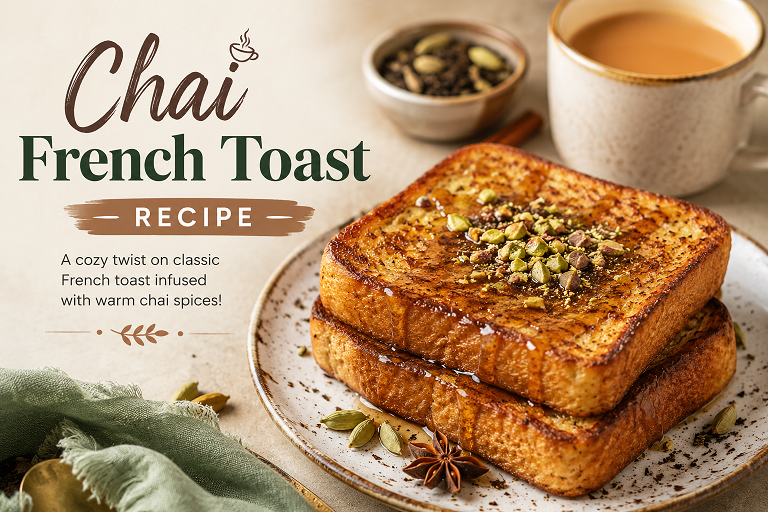
This chai French toast recipe adds cinnamon, cardamom, ginger and cloves to a simple egg-and-milk custard. The bread cooks in butter until golden outside and softly set inside, ready for berries, maple syrup or a light dusting of icing sugar.
You do not need brewed tea or a bottled chai concentrate. This is a chai-spiced breakfast inspired by the spices used in masala chai, rather than French toast soaked in a finished cup of tea. Four thick slices make two generous servings, and the stovetop method takes about 25 minutes.
Jump to the recipe · Choosing bread · Troubleshooting · Storage and reheating
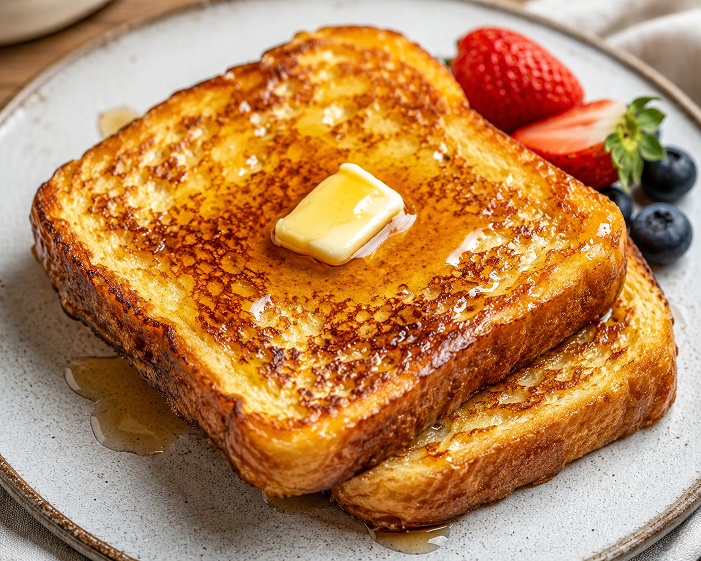
What makes this French toast chai-spiced?
The flavor comes from four ground spices: cinnamon supplies a sweet, woody base; cardamom adds a floral aroma; ginger brings warmth; and a small amount of cloves gives depth. They go into the custard before the bread is dipped, so the seasoning is part of the toast rather than only a topping.
There is no single spice formula that represents every cup of chai. This combination is a breakfast-friendly interpretation, not a claim that French toast is a traditional Pakistani dish. If you would like to make the drink alongside it, follow our stovetop masala chai recipe.
The base recipe is fairly spice-forward. For a gentler version, halve all four spice quantities while keeping the eggs, milk and bread unchanged. You can adjust your next batch after tasting the cooked toast; do not taste raw egg custard to check the seasoning.
Chai French toast recipe
Yield: 4 thick slices, or 2 servings
Preparation: approximately 10 minutes
Cooking: approximately 15 minutes in two batches
Total: approximately 25 minutes
These times assume a pan large enough for two slices. Smaller pans, very thick bread and lower heat can extend the cooking time. Use doneness, not the timer alone, to decide when the toast is ready.
Ingredients
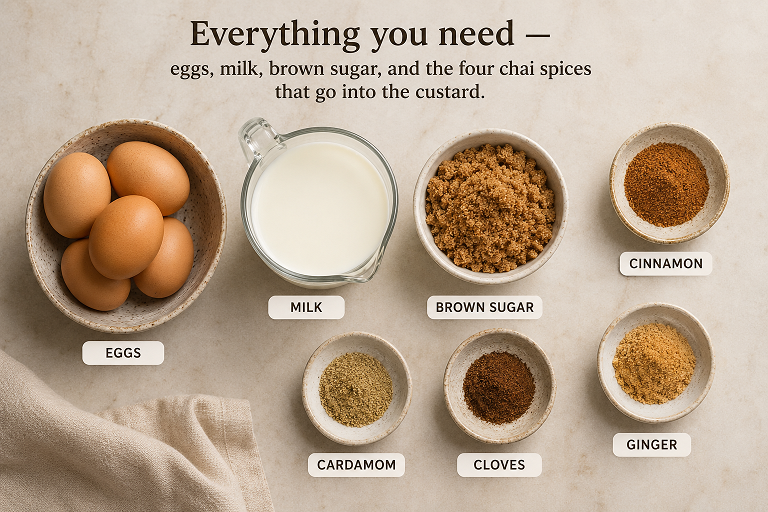
- 4 slices brioche, challah or sturdy white bread, about 2–2.5 cm (¾–1 inch) thick
- 2 large eggs
- 120 ml (½ US cup) whole milk
- 1 tablespoon brown sugar
- 1 teaspoon ground cinnamon
- ½ teaspoon ground cardamom
- ¼ teaspoon ground ginger
- ⅛ teaspoon ground cloves
- ½ teaspoon vanilla extract, optional
- A small pinch of salt
- 2 tablespoons unsalted butter, divided between batches
Optional toppings: maple syrup, fresh berries, sliced banana, icing sugar or a spoonful of plain yogurt. Start with one or two toppings so the spices remain noticeable.
Equipment
Use a shallow dish wide enough for one slice, a whisk, a large frying pan or griddle, a spatula and measuring spoons. An instant-read food thermometer helps check the middle of thick slices. A wire rack on a baking tray is useful if you want to keep the first batch warm.
Instructions
- Mix the custard. In the shallow dish, stir the brown sugar, cinnamon, cardamom, ginger, cloves and salt together. Add the eggs and whisk until the whites and yolks are combined. Whisk in the milk and optional vanilla. Break up any obvious spice clumps.
- Warm the pan. Set the pan over medium-low to medium heat. Add 1 tablespoon of butter and let it melt and foam gently. It should not smoke or turn dark before the bread goes in.
- Dip two slices. Whisk the custard briefly again, then dip the bread on both sides. For sturdy, slightly dry slices, start with about 15–20 seconds per side, extending toward 30 seconds only if needed. Fresh or thin bread may need just a quick dip. Lift each slice carefully and let excess custard drip into the dish.
- Cook the first side. Lay the slices in the pan with space between them. Cook for approximately 3–4 minutes, until the underside is golden and releases with a spatula. Lower the heat if the surface darkens rapidly.
- Turn and finish. Flip and cook for approximately 2–3 minutes more, or longer as needed for the center to set. Check the thickest part from the side with a food thermometer: this egg-containing dish should reach 160°F (71°C). A brown crust alone does not confirm that the middle is cooked.
- Repeat. Transfer the finished slices to clean plates or briefly hold them on a rack in a low oven, about 200°F (95°C), while making the second batch. Carefully remove any burnt butter residue from the pan, add the remaining butter and repeat with the remaining bread. Re-whisk the custard before dipping.
- Serve. Add your chosen toppings just before eating. Discard leftover dipping custard and wash utensils and surfaces that touched the raw egg mixture.
The cooking-temperature advice follows the FDA’s egg-safety guidance. The aim is a tender, fully cooked center, not a wet layer of raw custard.
Which bread works best?
Choose bread that can absorb some custard without collapsing when lifted. Slice thickness and freshness matter as much as the name on the loaf. A very soft, fresh brioche can be more fragile than a sturdy slice of ordinary white bread.
| Bread | What to expect | Adjustment |
|---|---|---|
| Brioche | Rich, soft and slightly sweet | Use thick slices and handle gently, especially when fresh. |
| Challah | Enriched bread with a tender crumb | Let the slice absorb custard without becoming floppy. |
| Thick white bread | A practical, less rich alternative | Choose a sturdy loaf and check absorption after a short dip. |
| Sourdough | A tangier flavor and potentially firmer crust | Use a loaf with a reasonably even crumb; large holes hold less custard. |
| Thin sandwich bread | A lighter, more delicate result | Dip briefly and start checking the underside sooner. |
Slightly dry bread is useful, but it does not need to be rock hard. If the loaf is very fresh, you can lightly dry the slices in a low oven before starting, then let them cool. The goal is to firm the surface, not make crisp toast that resists the custard.
Do not force every last drop of custard into the four slices. Bread sizes differ, and a little unused mixture is better than bread that disintegrates. Equally, if unusually large slices use up the mixture early, stop rather than stretching it with enough milk to weaken the egg-to-milk balance.
How to adjust the chai spices
For a milder breakfast
Use ½ teaspoon cinnamon, ¼ teaspoon cardamom, ⅛ teaspoon ginger and a very small pinch of cloves. This halves the main spice quantities and is a sensible starting point for anyone who prefers a subtle flavor.
For more cardamom flavor
Make the standard version first. If you want a more floral result next time, increase the cardamom from ½ teaspoon to ¾ teaspoon without increasing the cloves. Cardamom strength varies with freshness, so a small change is more useful than doubling everything.
Using a ready-made chai spice blend
You can replace the four individual spices with an unsweetened blend. For our homemade chai spice mix, start with ¼–½ teaspoon for this two-egg batch. That makes a milder version than the individual-spice recipe above; it is a starting dose, not an equal-strength substitution.
Do not add the blend on top of all the listed spices. Commercial blends vary, so check whether yours contains sugar, milk powder or instant tea. A chai latte powder is not the same ingredient as ground chai spices and should not be substituted spoon for spoon.
Why ground spices work here
The custard is not simmered long enough to extract much flavor from whole cinnamon sticks or cardamom pods. Ground spices are more practical for a quick dip-and-fry recipe. They remain suspended rather than fully dissolving, so small specks are normal. Whisking between batches helps prevent the last slices from collecting most of the spices.
Common problems and how to fix them
The outside is dark but the middle is wet
The pan is likely too hot for the thickness of the bread, or the slices absorbed too much custard. Reduce the heat so the center has time to cook. If the outside is already browned, finish the slices in a moderate oven and check the center temperature rather than continuing to scorch them in the pan. Use a shorter soak next time.
The bread breaks when I lift it
Shorten the dip and use a broad spatula to support the slice. Thin bread and very fresh enriched loaves are especially delicate. Soak only what you can cook immediately; leaving all four slices sitting in the custard makes the later batch harder to handle.
The toast tastes too eggy
Whisk thoroughly so there are no loose strands of egg white clinging to the bread. Let excess mixture drip off before frying. Do not pour leftover custard into the pan around the slices, where it can cook as a separate egg layer. Vanilla is optional, but it can help round out the aroma.
The spices taste gritty or overpowering
Use finely ground spices and level measuring spoons. Break up clumps before dipping. If you prefer less spice, choose the milder quantities rather than adding extra milk, which changes the custard ratio. Cloves can become dominant quickly, so keep that measurement small.
The crust goes soft on the plate
Stacking hot slices traps steam, and syrup adds moisture. Hold cooked slices in a single layer on a rack, then plate and top them just before serving. French toast has a soft center, so expect a lightly crisp surface rather than the dry crunch of plain toast.
Substitutions and dietary adjustments
Milk: Whole milk gives a richer custard, but a lower-fat milk can be used in the same volume. Unsweetened oat or soy drink is another option, although flavor and browning may change. Avoid adding extra liquid simply because a plant-based drink looks thinner.
Butter: A cooking-suitable dairy-free alternative can replace the butter. Check the bread too: brioche commonly contains dairy, and changing the frying fat alone does not make the recipe dairy-free.
Sugar: White sugar can replace brown sugar in the same amount. You can reduce or omit the tablespoon if you prefer less sweetness, especially when using sweet bread and syrup. That does not make the entire dish sugar-free.
Gluten-free bread: Use a sturdy gluten-free loaf and dip briefly at first. Absorption varies considerably between brands. Check all packaged ingredients for your dietary requirements and avoid cross-contact where necessary.
Egg-free: Simply leaving out the eggs will not produce the same custard. An egg-free version needs a separately developed binding mixture, so this recipe should not be presented as vegan with only a milk substitution.
What to serve with chai French toast
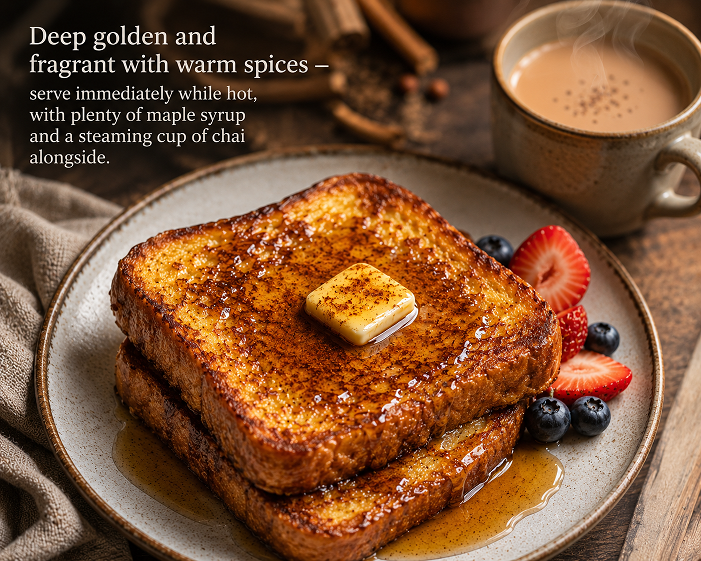
Fresh berries or sliced banana are easy additions. Plain yogurt adds a tangy contrast, while a little maple syrup gives sweetness without burying the spices. For a more dessert-like plate, add whipped cream, but keep toppings separate if everyone wants a different level of richness.
A cup of strong cardamom karak chai pairs well with the sweet breakfast. Water, coffee or an unsweetened drink are equally reasonable choices; serving chai is an option, not a requirement.
Making breakfast for more people
For four servings, double every ingredient and use eight similar-sized slices. The preparation remains straightforward, but cooking time increases unless you have more pan space. A large griddle can help; it is useful equipment, not a requirement or a reason to buy a particular pan.
Prepare the toppings first, set out clean serving plates and cook in manageable batches. Keep the uncooked mixture refrigerated during extended pauses. Briefly holding finished slices on a rack in a low oven is more practical than piling them on a plate.
A baked overnight casserole is a different method. Pan size, bread weight, custard depth and refrigeration all affect its cooking time, so the stovetop recipe should not be transferred to a large baking dish with a fixed baking-time promise.
Make-ahead, storage and reheating
For simpler preparation, measure the dry spices and sugar the evening before and keep them covered. Slice the bread and prepare any suitable toppings separately. Mix the eggs and milk shortly before cooking so you can control each slice’s soaking time.
For cooked leftovers, refrigerate promptly in a shallow covered container at 40°F (4°C) or below. Do not leave egg dishes out for more than two hours, or one hour when the temperature is above 90°F (32°C).
Use refrigerated leftovers within 3–4 days. Reheat to 165°F (74°C) in the center, following USDA guidance on leftovers. An oven or skillet can help restore the surface; a microwave is convenient but usually leaves the bread softer. Add fresh toppings after reheating.
You can also freeze cooked slices without syrup, separating them with baking parchment once chilled and packing them in a freezer-safe container. Label with the cooking date, thaw in the refrigerator and reheat thoroughly. Freeze portions you are unlikely to use promptly rather than waiting until the end of their refrigerator life.
Frequently asked questions
Does chai French toast contain tea or caffeine?
This recipe uses spices, not tea leaves, brewed tea or concentrate. The listed spice-and-custard ingredients do not introduce tea caffeine. Check any packaged chai blend or added topping separately.
Can I add brewed chai instead of milk?
It is not a direct equivalent: brewed chai varies in water, milk, sugar and tea strength. Adding it can change both texture and flavor. Use the measured milk and spices for this recipe, and serve brewed chai alongside.
Can I use ordinary sandwich bread?
Yes. Use a quick dip rather than a long soak, support the bread when moving it and check cooking progress early. The result may be less thick and custardy, but you do not need a specialty loaf to make breakfast.
Should I soak the bread overnight?
Not for this stovetop method. Prolonged soaking can make individual slices difficult to lift and cook evenly. Prepare the dry ingredients ahead or refrigerate cooked portions for reheating instead.
Can I omit the cloves?
Yes. Leave them out if you dislike their flavor or do not have them. Keep the other measurements unchanged; there is no need to compensate with extra cinnamon or cardamom.
How do I keep the first batch warm?
Place fully cooked slices in a single layer on a rack in a low oven while you cook the next batch. Keep the hold brief to avoid drying them out, and add toppings only when you are ready to serve.
More chai recipes to try
- Homemade chai spice mix for a convenient blend to use in drinks and baking.
- Masala chai from scratch made with black tea, milk and whole spices.
- Karak chai for a creamy, cardamom-led cup alongside breakfast.
1 thought on “Chai French Toast Recipe: Easy Spiced Breakfast”