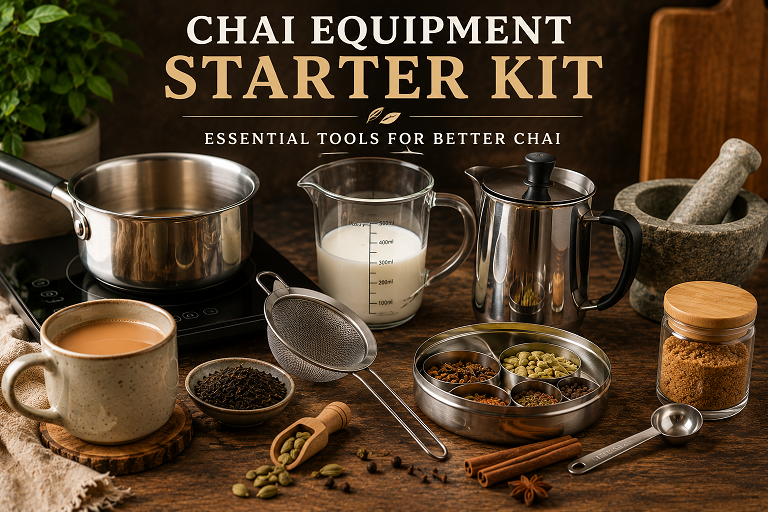
A practical chai equipment starter kit does not require an espresso machine or expensive specialty tools. A small saucepan, fine-mesh strainer, measuring spoon, sturdy cups and a good black tea are enough for traditional chai, karak chai and simple chai lattes at home.
This guide explains which tools are worth buying first, which items are optional, and how to choose useful sizes without filling your kitchen with single-purpose gadgets.
Starter essentials · Optional upgrades · Budget kit · Care and storage · FAQs
<The essential chai equipment starter kit
| Item | Why it matters | What to choose |
|---|---|---|
| Small saucepan | Lets tea, spices and milk simmer together safely. | 1.5–2 quart stainless-steel pan with room for milk to rise. |
| Fine-mesh strainer | Removes leaves and crushed spices cleanly. | Stainless steel, fine enough for CTC tea. |
| Measuring spoons | Helps repeat a recipe you enjoy. | A basic teaspoon and tablespoon set. |
| Heat-safe spoon or whisk | Prevents milk catching on the pan and mixes sweetener. | Silicone, wood or stainless steel. |
| Two heatproof mugs or glasses | Make serving safer and easier to portion. | At least 300 ml for chai lattes; smaller glasses for karak chai. |
1. A small stainless-steel saucepan
This is the most important item. Choose a pan large enough that milk will not boil over. A 1.5- to 2-quart stainless-steel saucepan suits one to four cups and is easy to clean after milk tea. Read our saucepan guide for chai before choosing a size.
2. A fine-mesh strainer
A fine strainer is more useful than a decorative teapot for stovetop chai. It catches tea leaves, cardamom skins and ginger fibers before they reach the cup. Rinse it immediately after use so fine tea particles do not dry in the mesh.
3. Measuring tools
Measuring tea and spices helps you learn what you actually prefer. Start with one teaspoon of tea per 8-ounce cup, then adjust for your milk ratio. Measuring matters particularly with ground cardamom, which becomes strong quickly; see our cardamom guide.
Tea and spices belong in the kit too
Equipment alone cannot make flavorful chai. Keep a small supply of fresh black tea, whole green cardamom and an optional cinnamon stick or ginger. Whole spices keep their aroma longer than pre-ground powders, and they let you change the flavor without buying a different ready-made blend every time.
For strong milk tea, choose the type of tea described in our best Assam tea for karak chai guide. Loose tea gives the most control, while tea bags remain useful for a quick single cup.
Useful optional upgrades
Milk frother
A frother is optional. It improves the texture of chai lattes, but it is not required for traditional chai. Froth warm milk separately, then pour it over concentrated tea. A whisk is enough for most starters; our milk frother guide compares handheld and automatic options.
Thermometer
A thermometer is helpful if you regularly heat milk for lattes, but not essential. For ordinary stovetop chai, keep the heat moderate, stir occasionally and do not leave milk unattended as it nears a boil.
Tea storage tin
An opaque airtight tin protects loose tea from light, moisture and cooking smells. Do not store tea directly above the stove. A clean jar can work if kept in a closed cupboard away from heat.
A sensible budget kit
Start with a saucepan, fine strainer, measuring spoon and two mugs. Use a whisk or spoon you already own. This setup handles masala chai, karak chai and concentrated tea for iced drinks. Buy a frother or special glasses only after you know you will use them often.
Avoid buying a “chai kit” merely because it contains many accessories. Check whether it includes the tools you will actually use, whether the pan works on your cooktop, and whether replacement parts or cleaning are practical.

How to use the kit for basic chai
- Add water and lightly crushed whole spices to the saucepan and simmer briefly.
- Add black tea and brew for the time suited to its leaf size.
- Add milk and sweetener, then heat gently until hot and aromatic.
- Stir across the bottom of the pan and watch for rising milk.
- Strain into heatproof cups and serve.
For a full method with quantities, follow our masala chai recipe from scratch. The equipment should make the process easier, not turn it into a complicated project.
Care, cleaning and storage
Rinse the saucepan soon after serving, especially when chai contains sugar or condensed milk. Wash strainers immediately and brush the mesh gently if needed. Keep electric frothers dry at the handle and follow the maker’s instructions for jug cleaning.
Replace a warped saucepan, damaged electric cord or cracked cup. Normal tea staining is not a safety issue, but burnt milk residue should be soaked and cleaned rather than cooked over repeatedly.
Frequently asked questions
Do I need a teapot to make chai?
No. Stovetop chai is commonly brewed in a saucepan and strained before serving. A teapot is optional for serving or steeping tea separately.
What is the one tool worth buying first?
A small stainless-steel saucepan with enough headroom for milk. It gives you the most control over heat and flavor.
Can I make chai without a strainer?
You can use tea bags and remove them, but a fine strainer is inexpensive and much more versatile for loose tea and whole spices.
Build slowly, brew better
Begin with the essential five items, then add a frother, storage tin or dedicated serving glasses only when they match how you drink chai. Better tea, fresh spices and careful brewing will make more difference than a crowded collection of gadgets.
Choosing a saucepan by batch size and cooktop
A small saucepan is the centre of a chai kit because it determines how easily you can control heat. The right size is based on the volume you serve, not simply the number of people in the household. For one or two cups, a 1.5-quart saucepan gives enough empty space for milk to rise. For two to four cups, 2 quarts is often more comfortable. A larger pan works for family batches, but a very wide pan can allow a small amount of milk to evaporate more quickly.
Stainless steel is usually the simplest choice. It does not retain cardamom or ginger aromas, it is durable, and it tolerates the regular stirring required when heating milk. A pan with a heavy or tri-ply base helps distribute heat more evenly. That does not mean chai must be cooked at high heat; gentle heating is still the safest way to avoid a scorched layer on the bottom.
Before buying, confirm that the saucepan suits your cooktop. Flat-bottom induction-compatible pans are required for induction hobs. Gas and electric cooktops offer more flexibility, but a stable base and a handle that stays manageable are still important. A lid is helpful for bringing water to temperature, although it should be removed when milk tea is simmering so you can see any foam rising.
How a fine-mesh strainer changes the finished cup
Straining may look like a small final step, but it changes both texture and flavor control. It removes leaves immediately, stopping extraction at the point you choose. This is especially useful with CTC tea, where small particles brew very quickly. It also catches cardamom skins, cloves, cinnamon fragments and fresh ginger fibers.
Choose a strainer with a handle long enough to sit safely over your mug or heatproof jug. A very coarse colander will not catch fine tea dust, while a very small tea-ball infuser is inconvenient for a saucepan batch. A compact stainless-steel fine-mesh strainer is more versatile than a specialist tea gadget because you can also use it for spices, cocoa and baking.
Rinse the strainer from the back after each use. If dark tea residue builds up, soak it briefly in warm soapy water and use a soft brush. Avoid forcing a hard metal object through the mesh, which can stretch it and leave gaps for leaves to pass through.
Choosing cups, glasses and serving vessels
Use cups that suit the way you drink chai. A 200–250 ml heatproof glass is traditional and appropriate for a small karak chai. A 300–350 ml mug gives space for a chai latte, including foamed milk and a small topping. The drink may be hot enough to burn, so avoid thin decorative glass that is not designed for hot beverages.
Serving chai in small portions is not merely presentation. It allows the tea to stay hot while you drink it and makes it easier to judge strength before pouring a large batch. If you make tea for guests, a heatproof jug lets you strain the chai once, then divide it evenly without holding a hot saucepan over each glass.
Do not confuse attractive tea glasses with equipment that improves brewing. Buy them when you enjoy the serving experience, but prioritize a safe pan and strainer first. See our upcoming tea-glass guide before choosing a dedicated set.
Starter tea, spice and milk checklist
| Ingredient | Starter choice | Why it works |
|---|---|---|
| Black tea | Assam or a robust breakfast blend | Strong enough for milk and spices. |
| Cardamom | Whole green pods | Fresh aroma; crush just before brewing. |
| Ginger | Fresh ginger or a small amount of ground ginger | Adds warmth; adjust gradually. |
| Milk | Whole milk or unsweetened preferred plant milk | Lets you choose creaminess and sweetness. |
| Sweetener | Sugar, honey or none | Add only after considering how sweet the milk or concentrate is. |
Keep the kit simple at the beginning. Buy plain black tea rather than a different pre-flavored product for every recipe. A plain tea gives you the freedom to make cardamom chai one day, ginger chai the next, and a less-sweet karak chai when you prefer. Our loose-leaf versus tea bags comparison can help you choose the format.
Equipment you can safely skip at first
You do not need a pressure cooker, espresso machine, electric kettle with temperature control, spice grinder, professional steam wand, or a special chai maker to begin. These may fit particular routines, but none replaces a good tea base and gentle saucepan brewing. Avoid buying a large appliance solely because it promises “café style” drinks if you normally make one small cup.
A mortar and pestle is pleasant for crushing cardamom and ginger, but the back of a spoon or a small rolling pin can handle a few pods. A digital scale is useful for serious recipe development, but measuring spoons are adequate for a home starter kit. The goal is consistent enough brewing, not laboratory precision.
Making hot chai, iced chai and chai lattes from one kit
Traditional stovetop chai
Use the saucepan, strainer, spoon, black tea, spices and milk. Simmer the water and spices briefly, brew the tea, add milk, then strain. This is the best method when you want the spices integrated into the drink.
Iced chai
Brew the tea base a little stronger because ice dilutes it. Strain it, cool it promptly, then pour it over ice with cold milk. Do not pour a boiling saucepan directly into a thin glass full of ice. A jug or heatproof bowl is useful for cooling the base safely before serving.
Chai latte
Make a concentrated tea base in the saucepan, then add steamed or frothed milk. A whisk is enough for basic texture; a frother is optional. Avoid putting sugar, tea leaves and whole spices inside an automatic milk frother unless its manufacturer explicitly allows that use.
Cleaning routine after every batch
Milk residue becomes much harder to remove once it dries. After serving, fill the warm saucepan with water and rinse it before washing. If milk has caught on the bottom, soak the pan rather than scraping aggressively. Use a soft sponge suitable for the pan’s surface. Wash the strainer separately and check the mesh for trapped leaf fragments.
For wooden spoons, wash promptly and dry fully. For a handheld frother, rinse the whisk section while keeping the electrical handle dry. For an automatic frother, follow the maximum-fill, cleaning and descaling instructions in its manual. The appliance may look simple, but leaving milk inside it after use can cause odors and residue.
When it is worth upgrading your kit
Upgrade only in response to a real habit. Buy a larger saucepan if your pan overflows when serving guests. Add an automatic frother if you make chai lattes several times a week. Choose an airtight tea tin if your tea loses aroma before you finish it. Get a second strainer if you prepare tea daily and want one always clean.
Buying better tea is often a more noticeable upgrade than buying another gadget. Fresh tea and spices affect aroma immediately, while many accessories only alter convenience. For a quick option on busy days, compare the choices in our chai concentrates guide.
Safety reminders
Milk can boil over suddenly. Keep the saucepan under observation as it heats, use a pan with headroom, and turn the handle away from the edge of the stove. Use a dry cloth or proper oven mitt when a metal handle is hot. Keep children away from the hot pan and from pouring chai.
Do not shake hot chai in a sealed jar or blender. Steam pressure can build up. Cool a tea base in an open heatproof container before refrigerating it, and refrigerate milk-containing leftovers promptly. These basic practices make a simple home chai routine safer and less messy.