Disclosure: Chaewala’s recommendations are editorially independent. If you buy through a qualifying link, we may earn a commission at no extra cost to you. Prices and availability can change.
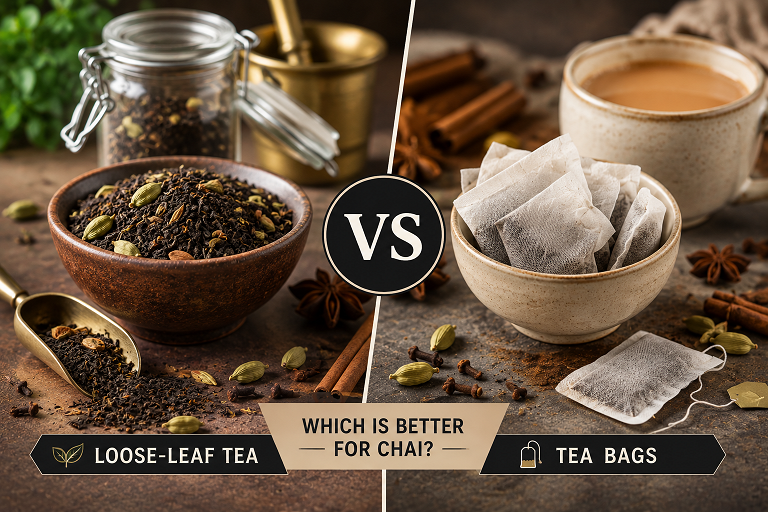
Loose-leaf tea versus tea bags is not a simple quality contest. For a quick morning cup, a well-made tea bag is convenient, clean, and perfectly reasonable. But for stovetop chai—especially a strong karak chai made with milk—loose tea usually gives you better control over strength, aroma, and value per cup.
The best choice depends on how you make tea, how often you make it, and what you expect in the cup. This practical guide explains the differences without treating either format as automatically superior. You will learn what leaf size means, when tea bags are genuinely useful, how each option performs with milk and spices, and how to buy tea confidently in the United States.
Jump to: Quick answer · What actually differs · Best for chai · Cost and value · Buying guide · FAQs
Loose-leaf tea vs tea bags: the quick answer
Choose loose-leaf tea when you make chai at home, want to adjust strength precisely, enjoy tasting the tea itself, or brew more than one serving at a time. Choose tea bags when you need a fast single cup, are traveling, have no strainer, or prefer pre-measured portions. For traditional karak chai, robust loose CTC Assam is usually the more reliable starting point.
| What matters to you | Better choice | Why |
|---|---|---|
| Strong stovetop chai with milk | Loose tea | You can add exactly enough tea to keep the flavor bold after milk. |
| One fast cup at work or while traveling | Tea bags | They are portioned, portable, and need no measuring. |
| Learning tea flavor and aroma | Loose tea | You can see the leaf and choose a grade, origin, or blend. |
| Minimal cleanup | Tea bags | Remove and discard or compost the bag where appropriate. |
| Daily family-size chai | Loose tea | It is often better value and easier to scale in a saucepan. |
| Consistent portion sizes | Tea bags | Each bag delivers a repeatable starting amount. |
There is room for both in a thoughtful tea cupboard. I keep loose black tea for the chai I want to savor and a small box of dependable bags for rushed mornings. That is a more useful approach than forcing every tea drinker into one format.
What actually differs between loose tea and tea bags?
The visible difference is packaging: loose tea is sold as free leaves, while tea bags contain a measured amount of tea inside paper, plant-fiber, or mesh material. The meaningful differences can be leaf size, blend design, freshness after opening, brewing room, and the amount of control you have—not merely whether tea is in a bag.
Loose tea can contain large whole leaves, broken leaves, small granules, or fine particles. A quality tea bag can also contain good tea, including whole-leaf sachets. Conversely, a loose tea sold in a large unlabeled bin can be stale or poorly stored. Avoid judging the format alone; look at the tea type, ingredient list, packing date when available, and how it smells once opened.
Leaf grade changes how tea brews
Tea leaf size affects extraction. Larger leaves generally open gradually and can offer more layered aroma. Broken leaves and fine CTC granules expose more surface area, so they brew quickly and produce a strong, dark cup. That fast extraction is exactly why CTC black tea is popular for milk tea and karak chai.
| Tea style | Typical appearance | How it performs in chai |
|---|---|---|
| Orthodox leaf | Twisted or larger leaf pieces | Fragrant and nuanced; may need a longer brew or more leaf with milk. |
| Broken-leaf black tea | Smaller irregular pieces | Balanced option for everyday masala chai. |
| CTC black tea | Small roundish granules | Fast, brisk, dark, and especially good for karak chai. |
| Fine tea particles | Very small pieces or dust-like tea | Brews quickly but can turn harsh if over-extracted. |
For a deeper explanation of tea grades and brewing choices, read our complete loose-leaf chai guide. If karak chai is your goal, our best Assam tea for karak chai guide helps narrow the search to bold black teas that stand up to milk.
Why loose-leaf tea is often better for chai
Loose tea is the more flexible choice for a real stovetop chai routine. You decide the amount, the tea style, the spices, the milk ratio, and the steeping time. That control matters because chai is rarely made with plain water alone. Milk, sugar, ginger, cardamom, cinnamon, and simmering all change how the final cup tastes.
You can tune the strength instead of guessing
With loose tea, you can increase from one teaspoon to one and a half teaspoons per 8-ounce serving, then adjust at the next brew. If the tea tastes thin after milk, use more tea first rather than simply boiling it longer. More time can pull out bitterness; a modest increase in leaf often creates a fuller cup with less harshness.
That is particularly helpful when making a pot for several people. Add the measured tea directly to water and spices, simmer gently, add milk, then strain. You are not limited to whole bags or stuck deciding whether to use one bag, two bags, or an awkward half-bag.
You can see, smell, and select the tea
Opening a bag of loose tea tells you a great deal. You can check whether the tea has a bright, clean aroma, whether the leaves appear appropriately dry, and whether the blend includes visible spices. These signals do not guarantee quality, but they make shopping and repeat buying more informed. You can also buy small amounts while you discover what suits your palate.
It gives you more recipe freedom
A loose black tea base lets you build chai from scratch rather than accepting a pre-set flavored blend. Some days you may want plenty of fresh ginger; other days, a little cardamom and cinnamon is enough. Start with our masala chai from scratch method, then make one change at a time until the recipe is yours.
It can be better value for regular drinkers
Loose tea often costs more at checkout because you are buying several ounces at once. Yet when you calculate the price by brewed cup, a sturdy everyday tea can be economical—especially for a household that makes chai daily. You use only the quantity your recipe needs, and a larger batch is simple to measure.
Loose tea is not automatically cheap, though. Rare single-origin leaves and elaborate blends may cost substantially more than basic tea bags. Compare like with like: black tea to black tea, similar flavor quality, and the amount actually needed to make a satisfying milky cup.
Where tea bags are the smarter choice
Tea bags deserve more credit than they sometimes receive. They solve genuine problems: no scale, no measuring spoon, no strainer, and almost no cleanup. A good bag can make a comforting cup in a dorm, office break room, hotel, or airport lounge where loose leaf would be unrealistic.
They make a single serving easy
For a simple mug of black tea, a bag delivers a repeatable portion. Use water just off the boil, steep according to the brand’s guidance, and remove the bag before it becomes unpleasantly tannic. If you add milk and the result is weak, use a stronger black tea bag or two bags in a large mug rather than over-steeping one bag.
They travel well
Individually wrapped bags keep portions tidy in a work bag or suitcase. This is one of the best reasons to buy them even if you usually prefer loose tea at home. Pack a few familiar bags, and you can make a decent cup with a hotel kettle and a mug.
They can reduce decision fatigue
Not every cup needs to be an experiment. A favorite bag offers a reliable baseline for people who value routine. The trade-off is less flexibility: you cannot easily use three-quarters of a bag, inspect the tea before brewing, or alter the ratio as neatly as you can with loose leaf.
Which format makes the best chai?
For most homemade chai, loose black tea wins. It lets the tea remain present after milk and spices are added, and it works naturally in a saucepan. For karak chai, choose a robust loose CTC Assam or another bold black tea. Its quick extraction and brisk body help create the dark, creamy profile people expect.
Tea bags can still make good chai. They are most successful when you use a strong, unsweetened black tea bag and treat the bag as the tea base—not as a complete chai recipe. Add fresh ginger or cardamom yourself if you like. Read the label carefully: many “chai latte” bags have a mild profile, and some chai mixes contain sweeteners or flavors that may not match a traditional stovetop cup.
A practical starting ratio for loose tea
For two 8-ounce servings, begin with 1½ to 2 teaspoons of strong loose black tea, 1 cup water, 1 cup milk, and your preferred spices. Bring the water and spices to a gentle simmer, add tea, then add milk and watch closely. Strain when the color and aroma are right. If it tastes too strong, use a little more milk next time; if it tastes flat, use slightly more tea rather than substantially longer simmering.
A practical starting ratio for tea bags
For one large mug, use one strong bag for a lighter cup or two bags for a richer chai with milk. Brew in less water than you would drink plain—about 6 ounces for an 8- to 10-ounce finished drink—then add warmed milk. This keeps the tea from disappearing behind the dairy.
If you are reducing added sugar, strength becomes even more important. A flavorful tea, fresh spices, and well-chosen milk can make a cup feel satisfying without relying on sweetness. See our guide to making karak chai without sugar for practical adjustments.
Flavor, freshness, and quality: avoid the common myths
Myth: loose tea is always premium. It can be wonderful, but it can also be old, dusty, or poorly blended. Myth: every bag contains “tea dust.” Some conventional bags do use very fine tea for speed, while pyramid sachets and specialty bags may hold larger leaves. Quality varies across both categories.
Freshness is often the deciding factor. Tea does not spoil like fresh food under normal dry storage, but it can lose fragrance and pick up odors. Once a package is opened, air, heat, light, and kitchen steam slowly dull the flavor. A fresh, modestly priced bag may taste better than an expensive loose tea that has been open beside the stove for a year.
- Keep tea in an airtight, opaque container or its well-sealed original package.
- Store it in a cool, dry cabinet away from sunlight, steam, and strong cooking odors.
- Buy an amount you can realistically finish within a few months of opening.
- Use a dry spoon; moisture is the enemy of good tea storage.
- Do not refrigerate everyday tea unless the producer specifically recommends it—condensation and odors can be problems.
Loose-leaf tea vs tea bags: cost and value in the US
There is no universal winner on price. Tea bags make portion cost obvious: divide the box price by the bag count. Loose tea needs a more honest calculation: divide the package price by the number of satisfying servings your recipe produces. A teaspoon of delicate leaf and a teaspoon of dense CTC tea do not weigh or brew the same way, so cup count on a package is only a guide.
For daily chai, loose CTC black tea is often a strong value because it makes a bold cup in a small amount. For an occasional drinker, individually wrapped bags can prevent a half-used loose pouch from going flat. Your best buy is the tea you enjoy enough to use before its aroma fades.
| Cost question | How to compare fairly |
|---|---|
| Box price vs pouch price | Ignore it initially; calculate cost per satisfying brewed serving. |
| Milk tea strength | Compare how much tea each option needs after milk is added. |
| Waste | Choose smaller loose packs for occasional use and bags for travel or backup. |
| Specialty blends | Pay for flavor you can taste, not only decorative packaging. |
How to buy the right tea for your routine
Start with the drink you make most often. If you want bold, creamy, sweet-spiced chai, look for plain Assam, CTC black tea, or a strong black tea blend. If you enjoy tea without milk, you may appreciate a larger-leaf orthodox tea with more aroma. For convenience, choose black tea bags with a flavor profile strong enough for your usual milk and sweetener.
For karak chai
Buy loose CTC Assam first. It is designed by its character—not by marketing—to brew quickly and stay sturdy with milk. You can explore recommended options in our Assam tea guide. Use a small fine-mesh strainer and a saucepan; that is enough equipment to begin.
For chai lattes
Use a concentrated loose-tea brew or a quality tea bag base, then froth milk separately. The foam should complement the chai rather than dilute it. If you are choosing a tool, our milk frother guide explains the useful types for home kitchens.
For plain afternoon tea
Either format can be excellent. Prioritize a tea you like without extra sugar and buy the amount your routine supports. A loose-leaf sampler can be a fun way to learn what you enjoy; a quality bag can be ideal when you want the same result with no thought.
Brewing tips that improve either format
Good tea does not need complicated equipment. Fresh water, a clean pot or mug, sensible steeping, and proper storage make a bigger difference than most gimmicks. Use water that has not been sitting in the kettle all day, and do not repeatedly reboil the same water if it has picked up a flat taste.
With plain black tea, steeping too long can make both loose leaf and bags taste dry or bitter. With chai, simmering is traditional, but the same principle applies: keep the heat controlled and taste as you learn your tea. If you struggle with a sharp or bitter cup, our guide to making masala chai from scratch offers a dependable framework.
Caffeine varies by tea type, serving size, and brewing method. If you are monitoring caffeine for personal reasons, check the brand information and speak with a clinician for individualized advice. The U.S. Food and Drug Administration’s caffeine guidance is a helpful general reference for adults.
Frequently asked questions
Is loose-leaf tea healthier than tea bags?
Neither format is automatically healthier. Look at the tea itself, added ingredients, caffeine, and how the drink is prepared. Unsweetened black tea in a bag and unsweetened loose black tea can both fit a balanced routine. Avoid treating broad health claims as a substitute for checking labels and your own needs.
Can I open tea bags and use the tea in a saucepan?
Yes. Emptying a bag into the pot works if you do not have loose tea, although the particles may require a fine strainer. It is usually less tidy than measuring loose leaf, and one bag may not provide enough tea for milk-heavy chai.
Do tea bags make weaker chai?
Not always. A strong black tea bag can make a flavorful cup. But loose CTC tea makes it easier to set the exact strength needed for a saucepan batch, so it is more forgiving when milk and spices are involved.
Are pyramid tea bags the same as loose leaf?
They are still tea bags, but their larger shape can give leaves more room to expand than a flat paper bag. The result depends on the tea inside, not the pyramid shape alone. Read the tea description and try a small box before buying in bulk.
How much loose tea should I use instead of one tea bag?
A useful starting point is about one teaspoon of standard loose black tea per 8-ounce cup, but the right amount depends on leaf size and the drink. For milky chai, begin a little stronger and adjust to taste. A scale is helpful but not required.
Which is better for the environment?
The answer depends on the bag material, wrapper, shipping, how the tea is grown, and local waste rules. Loose tea creates no individual bag waste, while some tea bags and wrappers may be recyclable or compostable only in certain systems. Check the manufacturer’s current packaging instructions and your local guidance rather than assuming a label applies everywhere.
Final verdict: keep both, but choose loose tea for serious chai
Loose leaf is the better all-around choice for people who make chai regularly. It gives you control over strength, handles milk and spices well, and can offer excellent value when you buy the right amount. For a traditional, dark karak chai, loose CTC Assam is the clear place to start.
Tea bags remain useful for single cups, travel, work, and mornings when a strainer feels like too much effort. A well-stocked kitchen can hold both: a good loose black tea for the saucepan and a trusted box of bags for convenience. Choose the format that helps you make tea you genuinely look forward to drinking.